
Livraison le jour même ou le lendemain

Qualité garantie

Débloquez vos offres de bienvenue: Livraison GRATUITE | Jusqu'à -80 % | 30 jours d'essai gratuits à JoyPlus
Téléchargez l'application
Switching to an electric or plug-in hybrid car unlocks a new level of freedom. But that freedom is only worthwhile if charging is simple and flexible. The Type 2 portable charger has emerged as the ideal solution: charge your car at home without a costly installation, on holiday, or simply keep one as a backup plan. The only problem is that the market is a jungle of products with tempting promises that can quickly turn into costly disappointments.
As the head of product selection at Joybuy, my mission is to help you see clearly. We've broken down the most common pitfalls and the essential criteria to check to make the right choice with complete peace of mind.
The 2 pitfalls to absolutely avoid when buying:
To avoid any unpleasant surprises, a few technical parameters need to be examined closely. These are the true guarantors of a portable electric car charger's quality and suitability.
Most portable chargers for domestic sockets offer a maximum power of 3.5 kW on a single phase, which corresponds to a current of 16 A. This is the ideal compromise for an overnight charge without tripping the circuit breaker.
But the real game-changer is the ability to adjust the charging current. A charger that offers several levels (e.g., 8 A, 10 A, 13 A, 16 A) is a key advantage. Why?
A good 16 A Type 2 charging cable must therefore offer this modularity.
When it comes to connectors, the rule is simple and non-negotiable. Your mobile charging station must have two specific connectors:
A portable EV charger is, by definition, exposed to the elements.
Rather than an impersonal list, we've matched each product to a user profile to help you find the equipment that truly fits your daily life.
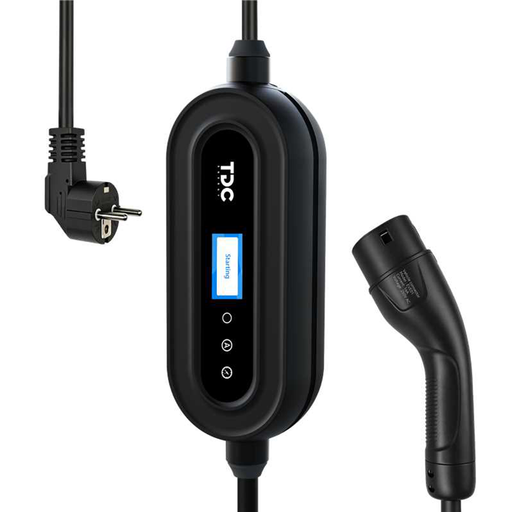
Ideal profile: For those who want something solid and simple, without the fuss. Perfect for a second home, holidays, or as a reliable backup charger that works right out of the box.
This model gets straight to the point: safety (IP66, comprehensive protections, CE) and flexibility (adjustable current), without being bogged down by superfluous smart features that are often a source of failure.
Its adjustable current with 4 levels (8/10/13/16 A) to adapt to any socket. The clear LCD screen lets you monitor the charge at a glance.
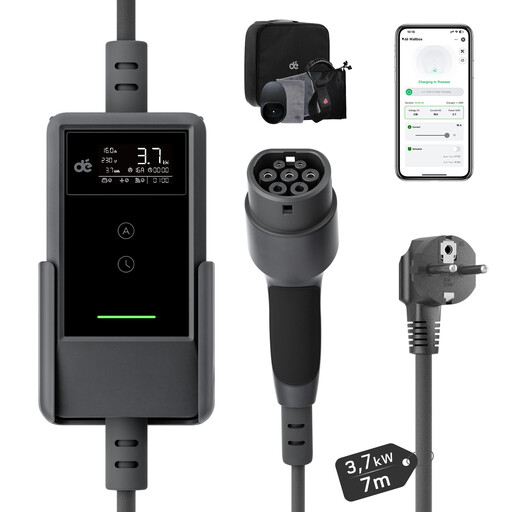
Ideal profile: Designed for those who love to optimise everything. Perfect for scheduling off-peak charging, reducing electricity bills, and tracking consumption from their smartphone.
Here, connectivity isn't a gimmick. It provides real added value (scheduling, consumption tracking) and turns the charger into a smart management tool, not an overly complicated system.
Control via a well-designed app for precise charging management. Its 7-metre cable offers excellent flexibility for parking.
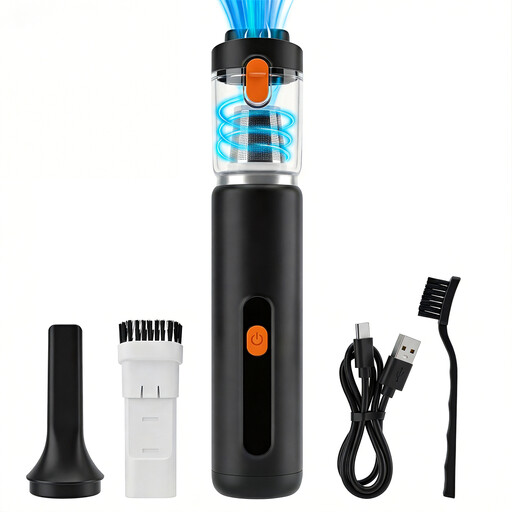
Ideal profile: For the EV driver who treats their car like an extension of their living room. It's the perfect accessory to complete the modern traveller's kit, ensuring a pristine interior in all circumstances.
This accessory avoids the trap of being a bulky, underperforming car gadget. Its ultra-compact design and USB-C charging integrate seamlessly into any EV owner's ecosystem.
A design so compact it fits in a cup holder. Formidable suction power (10,000 Pa) for a truly effective clean.
We have curated a complete selection of products that meet our strict selection criteria and current safety standards.
The answer is no. The use of an extension cord is strictly advised against by all manufacturers and electricians. An unsuitable extension cord, especially if the cable is too thin, creates a major risk of overheating, voltage drop (which slows down charging), and even fire. Always plug your charger directly into a compliant, grounded wall socket.
The lifespan obviously depends on the manufacturing quality and usage. A well-made, certified model used correctly will easily last for many years. A warranty of two years or more is an excellent indicator of the manufacturer's confidence in its product.
A 3.5 kW charger can add about 20 to 25 kilometres of range per hour of charging. To fully charge a nearly empty 50 kWh battery, it will take between 14 and 15 hours. It's the perfect solution for topping up the battery overnight.