
Livraison le jour même ou le lendemain

Qualité garantie

Débloquez vos offres de bienvenue: Livraison GRATUITE | Jusqu'à -80 % | 30 jours d'essai gratuits à JoyPlus
Téléchargez l'application
Switching to an electric car is a game-changer, but the question of home charging quickly becomes a key concern. Relying solely on public stations often proves costly and inconvenient. Installing a home charging station completely changes the game, offering convenience, speed, and real savings.
With an overwhelming number of options on the market, choosing the right equipment can quickly become a headache. This guide breaks down the essential criteria and presents a selection of proven solutions to help you find the perfect Type 2 charging station for your vehicle and your electrical setup.
Before diving into our top picks, let's cover a few technical basics to help you make an informed choice.
The speed at which your car "fills up" depends on two factors: the charger's power output and your home's electrical system.
Warning: Before opting for a high-power charger, it is essential to have your electrical panel inspected by a professional.
The choice will primarily depend on your lifestyle and living situation.
A smart EV charger can significantly lower your electricity bill. Prioritise models with a Wi-Fi connection, which allow you to:
We have selected several models that cater to different needs and budgets. All are, of course, compatible with the Type 2 connector, the prevailing standard for almost all electric cars in Europe.
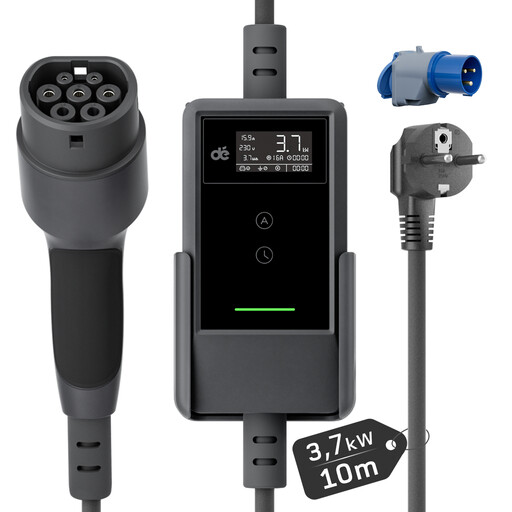
Why it stands out?? This portable charger is all about flexibility. No installation is required: just plug it into a heavy-duty socket and you're good to go. It offers precise control via its LCD screen and adjustable current. Its main advantage remains its extra-long 10-metre cable, a rare feature that is a real-life game-changer.
The pros?:
Who is it for?? For EV drivers looking for a secondary solution, for renters who can't install a fixed charger, or simply as a backup plan to keep in the boot.

Why it stands out?? This 7 kW wallbox ticks all the boxes for the ideal home solution. It combines a convenient charging power for daily use with genuinely useful smart features. Its large 4.3-inch screen and compatibility with the Tuya Smart app make it an excellent smart EV charger.
The pros?:
Who is it for?? Homeowners with a single-phase installation who want a primary charging solution that is powerful, smart, and helps them control their budget by taking advantage of off-peak hours.
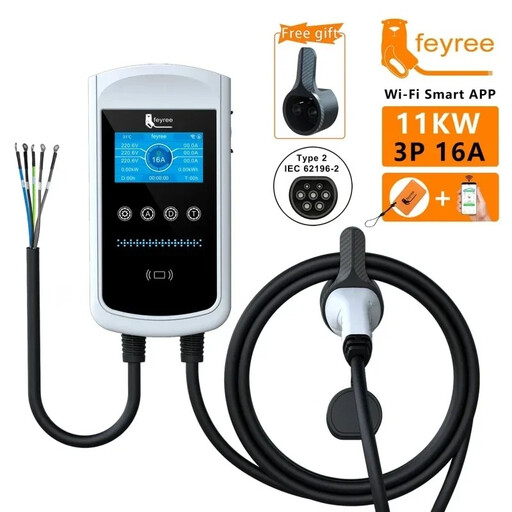
Why it stands out?? For homes equipped with a three-phase supply, this 11 kW wallbox is the clear choice to take things to the next level. It offers the same excellent smart features as its smaller sibling, but with more power. This allows you to add hundreds of kilometres of range in just a few hours.
The pros?:
Who is it for?? Those lucky enough to have a three-phase supply at home who want the pinnacle of charging speed without sacrificing smart features.
Beyond the charger itself, the right cables and adapters make all the difference in being prepared for any situation, both at home and on the go.
? Discover our selection of charging cables and adapters
The Type 2 connector is the European standard for charging electric cars with alternating current (AC). Unlike a standard domestic socket (limited to 2.3 kW), it is specifically designed to safely handle much higher power levels (from 3.7 kW to 22 kW), which drastically reduces charging time.
For a portable charger, no installation is required. However, for a wallbox (wall-mounted charger), using a qualified electrician is not only recommended but often mandatory to ensure a compliant, safe installation that is covered by your insurance.
In the vast majority of cases, yes! A 7 kW charger is more than sufficient. It can charge a 50 kWh battery in about 7 to 8 hours, which is ideal for a full charge overnight. Only high-mileage drivers or owners of vehicles with very large batteries (over 80 kWh) might feel the need to upgrade to 11 kW for more flexibility.