
Same-day & Next-day Delivery

Quality Guaranteed

Unlock Your Welcome Offers: FREE Delivery | Up to 80% OFF | Free 30-day JoyPlus trial
Download the APP
So, you've made the switch to an electric or plug-in hybrid vehicle. An excellent move! But a question quickly arises: how do you charge your new car efficiently and safely, whether at home or on the go? The market for Type 2 electric car chargers is a real jungle, and it's easy to get lost between marketing promises and sometimes opaque technical jargon.
As the Head of Product Recommendations at Joybuy, my mission is to help you see things more clearly. Together, we'll break down the most common pitfalls so you can make a truly informed decision that's perfectly suited to your needs and your electrical system.
Navigating the vast array of EV chargers can quickly become a headache. Too many buyers regret an initial impulse purchase, falling into traps that are actually easy to avoid.
To make the right choice, you just need to focus on a few essential technical points. Ignoring them can lead to disappointment, unnecessary expenses, or compatibility issues.
Power, measured in kilowatts (kW), determines how fast your vehicle's battery recharges. It must be compatible with two things: your car's onboard charger and, of course, your electrical system.
Your daily usage will dictate the most suitable format.
To illustrate our guide, here are a few products that meet specific user profiles while avoiding the pitfalls we've just discussed.
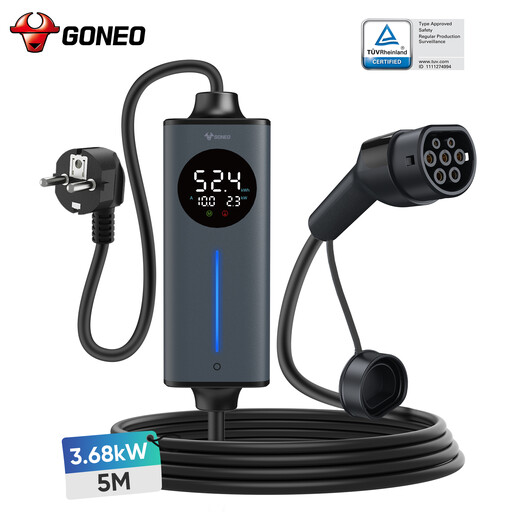
Why we chose it: Perfect for owners of plug-in hybrids or small electric city cars looking for a simple, cost-effective solution for overnight charging from a standard socket.
It delivers 3.68 kW of power, which is suitable for a Schuko socket, avoiding the risk of overheating and the unnecessary expense of an oversized charger.
"Plug & Play" simplicity and a timer to schedule charging during off-peak hours for cost savings.
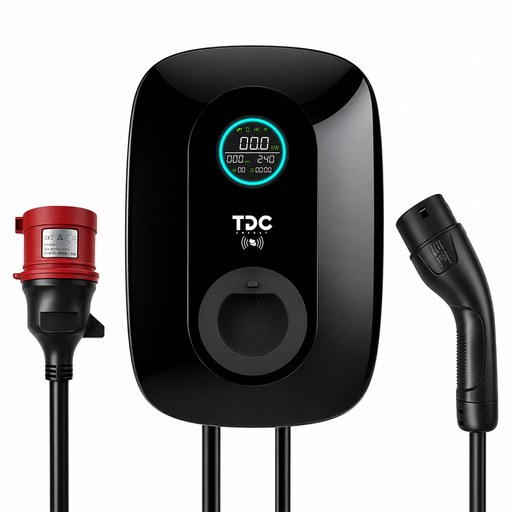
Why we chose it: The ideal solution for homeowners with a three-phase supply who want to leverage the maximum charging power of their 22 kW-compatible vehicle.
As a fixed wallbox, its installation by a professional ensures compliance and safety, unlike the risky use of a high-power portable charger.
22 kW power for lightning-fast charging and access control via app or RFID card for secure management.
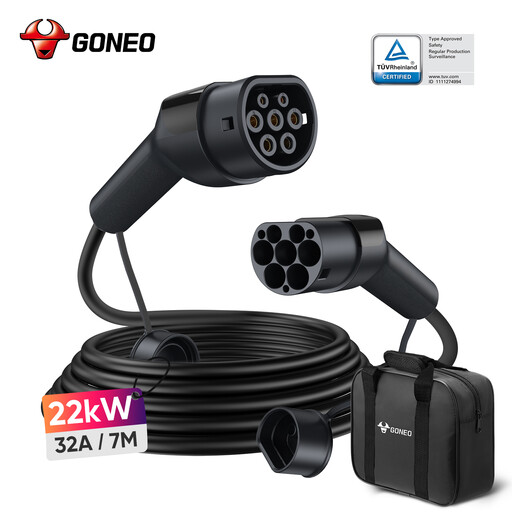
Why we chose it: This is the accessory every driver should have in their trunk. It's essential for connecting to the majority of public AC stations, which don't have a tethered cable.
It prevents you from being unable to charge at a public station—a common problem for those who assume all stations have a built-in cable.
A 7-metre T2-T2 charging cable offers great parking flexibility. This model is T?V certified, and its TPU sheath ensures excellent durability.
We have selected a full range of products that meet our selection criteria and European safety standards.
A Type 2 charger (whether portable or wall-mounted) is an electronic device that converts power from the grid to charge your vehicle. It includes safety and communication systems that interact with the car. A Type 2 cable (or T2-T2) is a simple connection cable with no charging electronics. It is used to link your car to a charging station, which itself contains the power electronics.
No, that is technically impossible. A 22?kW station requires a three-phase power supply (400?V). On a standard single-phase home installation (230?V), the maximum power you can typically install is 7.4?kW. Attempting to connect three-phase equipment to a single-phase supply will not work and can be dangerous.
Yes, provided you follow strict safety rules. Use a high-quality, CE-certified charger and limit the amperage to what your socket can handle continuously (typically 10?A, or 2.3?kW). For added safety, never exceed this value on a non-reinforced socket and absolutely avoid using extension cords. For regular charging at 16?A (3.7?kW), it is essential to have a reinforced socket (like a Green'up type) installed by a qualified electrician.