
Livraison le jour même ou le lendemain

Qualité garantie

Débloquez vos offres de bienvenue: Livraison GRATUITE | Jusqu'à -80 % | 30 jours d'essai gratuits à JoyPlus
Téléchargez l'application
A universal travel adapter may seem like a straightforward purchase. But an appealing product listing doesn’t necessarily guarantee compatibility with your destination, devices or intended use. The wrong model could prove unusable when you arrive, take up unnecessary space in your luggage or be mistaken for a voltage converter.
Here are the features to check before choosing a universal travel plug, along with a selection to suit different types of travellers in France.
An international travel adapter generally changes the shape of the plug, but not the voltage supplied by the mains. For example, a French appliance plugged in in the UK will still receive the local mains voltage, which is generally around 230 V.
Before you travel, check the label on each of your devices. A marking such as “Input 100–240 V” indicates that the device can work with several power networks. However, if your device only accepts a specific voltage, a universal mains adapter alone won’t be enough.
The claim “more than 150 countries” doesn’t necessarily mean that all the plugs will suit your equipment. You need to identify both the standard used at your destination and the one used by your device:
A UK, EU, US and Australia plug adapter should therefore include clearly identifiable mechanisms for each format, rather than simply making a vague promise of international compatibility.
The adapter’s power rating must suit the device you plug into it. An adapter designed to charge a phone won’t necessarily be suitable for a hairdryer, kettle or iron.
Check the ratings in volts (V), amps (A) and watts (W). Child protection, safety shutters, a heat-resistant casing or a locking mechanism can also make a difference. The CE marking indicates the manufacturer’s declaration of conformity with European requirements, but it’s still essential to observe the limits stated on the product.
For a stay in the UK, choose an international travel adapter with a Type G socket. In mainland Europe, check that it’s compatible with Type E and Type F plugs. If you regularly travel between continents, a sliding or modular system is often more practical than carrying a selection of separate plugs.
A travel adapter with USB ports can reduce the number of chargers you need to pack. However, check the total power available and how it’s distributed across the different ports. A 20 W USB-C port may be enough for a phone or some smaller devices, while a laptop may need more power.
A compact model is easy to carry, but an adapter with a bulky casing may block neighbouring sockets. In a hotel room or coworking space, a built-in switch also means you won’t have to keep unplugging your cables. When powering a high-wattage device, the adapter should sit securely, without wobbling in the wall socket.
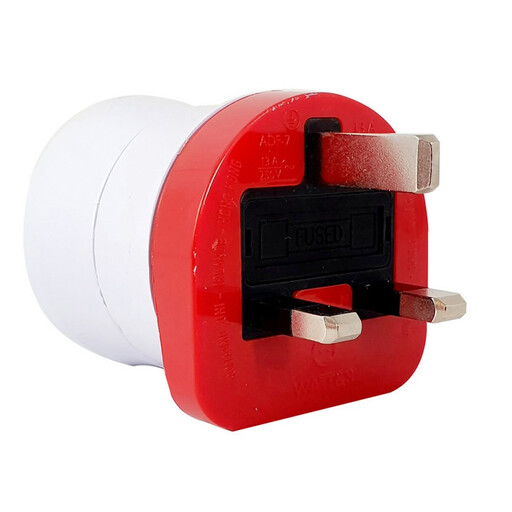
Why it suits this type of traveller : This design is ideal for a first trip to the UK or another destination that uses a Type G socket. Its specific purpose means you won’t pay for international mechanisms you don’t need.
It’s described as a France-to-UK adapter, not a voltage converter. Its specifications state a limit of 13 A, 250 V and 3 200 W.
A compact design, an earthed connection and stated compatibility with the UK and several other countries that use Type G plugs.
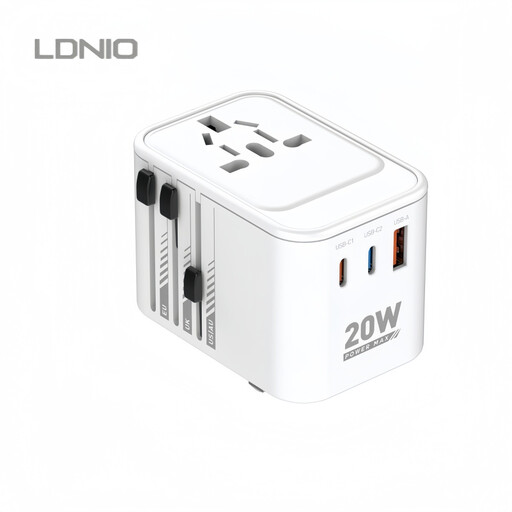
Why it suits this type of traveller : Its GaN technology and stated 20 W output make it a good choice for travellers who want to combine several charging needs in one accessory.
The 20 W output is clearly stated, so you can compare it with your devices’ requirements instead of relying on a vague fast-charging claim.
GaN technology, a multiport design and a European plug for international travel.
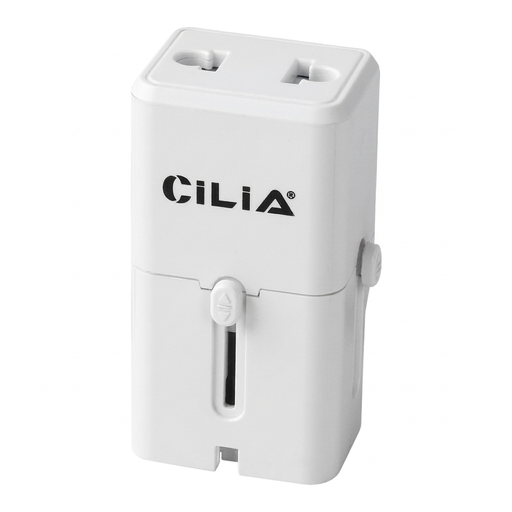
Why it suits this type of traveller : A pack of two is ideal for couples, families and professionals who need to charge their devices in several rooms or destinations.
The listing specifies that this is a plug adapter, not a converter. It recommends checking that your devices are compatible with 100–240 V.
US, UK, EU and AUS sockets, safety shutters and a PC casing described as fire-resistant.
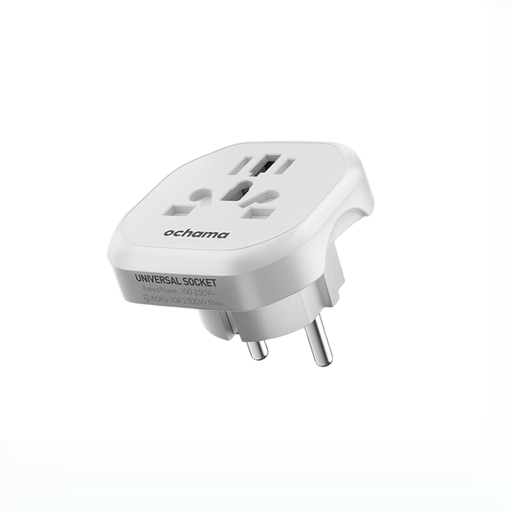
Why it suits this type of traveller : This model is designed for travellers moving between Europe, the United States, the UK, Australia or China who want to pack just one accessory.
The description reminds you not to use it as a converter and advises against connecting high-wattage appliances unless they’re explicitly stated to be compatible.
Stated compatibility with over 150 countries, child protection and a material described as shock- and fire-resistant.
We’ve put together a comprehensive, regularly updated list of products that meet these strict selection criteria and comply with European safety regulations.
Not automatically. It needs to include the mechanism for the local socket, and your device must accept the voltage used in the country you’re visiting. Always check the Type E, Type F, Type G, A, B or I standards for your itinerary.
It depends on the rating shown on the adapter. A model rated at 10 A and 230 V has a theoretical capacity of 2 300 W. However, you also need to consider the device you’re using, the quality of the wall socket and the manufacturer’s recommendations. Avoid using heating appliances unless their compatibility is clearly stated.
Its lifespan depends on how often you travel, the conditions it’s carried in and the state of its contacts. Replace it if it gets unusually hot, has a crack or damaged cable, gives off an unusual smell, or has a mechanism that no longer locks properly. A visual check before each trip can help reduce the risks associated with wear and tear.