
Livraison le jour même ou le lendemain

Qualité garantie

Débloquez vos offres de bienvenue: Livraison GRATUITE | Jusqu'à -80 % | 30 jours d'essai gratuits à JoyPlus
Téléchargez l'application
Mounting your TV on the wall promises a more modern living room, significant space savings, and better viewing comfort. But faced with a jungle of models, choosing the right TV wall mount can quickly become a headache. And a poor choice isn't just money down the drain: it's a real risk to your precious television and your safety.
To help you avoid common pitfalls, here are the 3 most common traps to sidestep:
To guide you through this jungle, here are the technical criteria you must check before pulling out your credit card.
Choosing the right TV wall mount comes down to three technical checks. Ignoring them means you're risking a useless, or even dangerous, purchase.
The VESA (Video Electronics Standards Association) standard is simple: it defines the distance (in millimetres) between the four screw holes on the back of your television. It is THE universal standard that ensures compatibility between a screen and its mount.
While the screen size (e.g., for 55-inch TVs, for 65-inch TVs) gives a preliminary idea, the only safety criterion that truly matters is the weight.
The wall that will hold your installation is as crucial as the mount itself. Do not overlook it.
To help you choose, here are some models that tick all the boxes for safety and compatibility, each designed for a specific need.
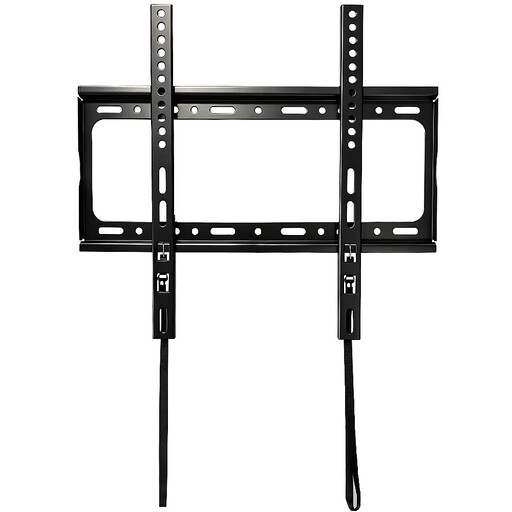
Who is it for? For those who want a simple, solid, and discreet solution. Perfect for a bedroom or a living room where you always watch TV from the same spot and don't need to adjust the angle.
Being fixed, it eliminates all the complexity of an articulating arm. Its wide wall plate and VESA compatibility up to 400x400 mm cover the vast majority of mid-sized TVs, drastically reducing the risk of error.
Its ultra-slim profile places the TV flush against the wall for a sleek "picture frame" effect. Its steel structure supports up to 45 kg, providing a very comfortable safety margin for 32 to 55-inch screens.
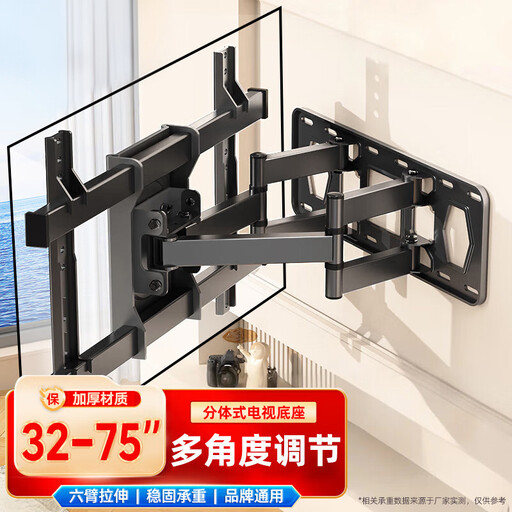
Who is it for? For those who like to angle the TV towards the dining table, or simply tilt it to eliminate annoying glare. For them, a swivel and tilt TV wall mount isn't an option, it's a necessity.
Thanks to its full versatility (swivel, tilt, extension), it will save you from ever regretting choosing a fixed mount. Its wide compatibility (32-75 inches) and clear installation instructions minimize the risk of making a mistake.
Its articulating arm allows you to pull the TV away from the wall, a real bonus for easily accessing the connections on the back. The vertical tilt is perfect if you plan to install it a bit higher up.
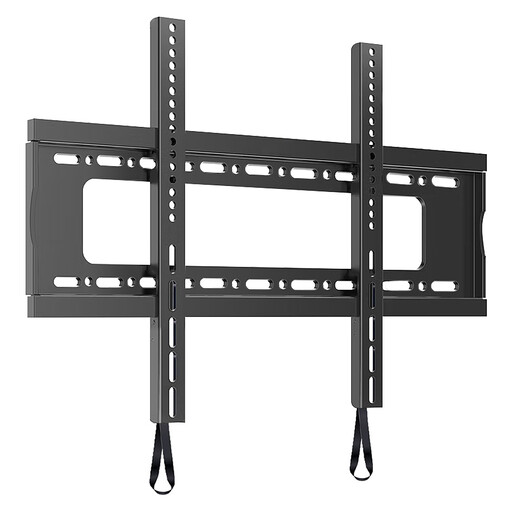
Who is it for? For owners of very large and heavy televisions (up to 90 inches), for whom safety and robustness are the only criteria that matter. Here, you're buying peace of mind above all else.
Its ultra-robust design and load capacity (up to 85 kg) are built for the heavyweights on the market. Its wide wall plate distributes the load perfectly, provided it's fixed to a load-bearing wall.
VESA compatibility up to 600x600 mm. A 2.8 mm thick steel structure and a locking system that prevents any accidental dislodging. Reassuring.
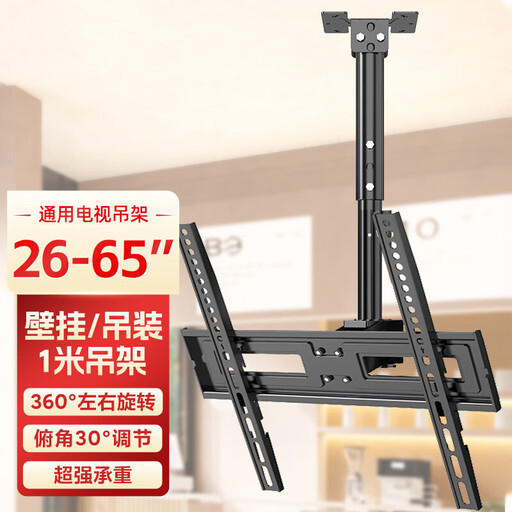
Who is it for? When walls aren't an option (glass walls, fragile partitions...) or for professional use (waiting rooms, retail), the ceiling TV mount is the smartest solution.
It bypasses the problem of an unusable wall by moving the anchor point to the ceiling. Be aware, the instructions rightly insist on the need for a solid ceiling (concrete, beam): this is a non-negotiable safety point.
Adjustable height and 360° rotation for absolute versatility. It allows you to place the TV in the middle of a room or in a corner, completely bypassing the walls.
Explore our complete selection of products that meet our strictest safety and quality criteria.
Yes, but it's a delicate operation that requires precision. The golden rule: NEVER fix the mount directly into the plasterboard. You must use a stud finder to locate the metal rails or wooden studs of the structure and screw into them. Expansion anchors (like Molly bolts) are a backup solution, to be reserved for the lightest TVs. For everything else, fixing into the studs is the only truly safe method. If in doubt, call a professional.
It's simple, just check these three points:
Not necessarily. For a fixed TV wall mount on a concrete wall, an amateur DIYer with a drill can handle it without a problem. The kits are often well-designed, with a spirit level and drilling template included. However, for a heavy articulating TV arm, a ceiling installation, or mounting on a drywall wall, things get more complicated. It's better to have two people and a solid understanding of DIY. Safety first: if you have any doubt, calling a professional installer isn't an expense, it's an investment in your peace of mind.