
Livraison le jour même ou le lendemain

Qualité garantie

Débloquez vos offres de bienvenue: Livraison GRATUITE | Jusqu'à -80 % | 30 jours d'essai gratuits à JoyPlus
Téléchargez l'application
So, your new television has arrived. The idea of mounting it on the wall is tempting: it saves space, offers a minimalist look, and provides the perfect viewing angle... But be careful, choosing the right TV wall mount is more complex than it seems. Faced with a jungle of options, it's easy to fall into common traps that compromise your comfort and, worse, your safety.
As a product expert for our editorial team, my mission is to help you see things more clearly. Let's cut through the marketing jargon and get straight to the point. Here are the three most common mistakes and our advice on how to avoid them, ensuring a confident purchase and a flawless installation.
Pitfall #1?: Ignoring your wall type. A mount designed for a concrete wall won't hold up the same way on a plasterboard partition. Using the wrong wall anchors is, by far, the leading cause of falls.
Pitfall #2?: Relying only on screen size. The "for 55 to 75-inch TVs" label is just a suggestion. The two absolutely non-negotiable criteria are the maximum weight capacity of the mount and its compatibility with your television's VESA standard.
Pitfall #3?: Underestimating the need for flexibility. Trying to save a few pounds by choosing a fixed mount is a classic move... often followed by regret. If your living room has multiple seating areas or if glare is an issue, a swivelling and tilting TV mount isn't a luxury—it's a necessity.
To get it right, you just need to methodically check three technical points. This is your guarantee for perfect compatibility and rock-solid security.
The VESA (Video Electronics Standards Association) standard defines the standardised spacing of the four mounting holes on the back of your television. It is THE number one compatibility criterion.
While screen size is a good indicator, the weight of your television is the deciding factor.
The stability of your TV wall mount depends entirely on the wall supporting it.
If you have any doubt about your wall type or the correct procedure, don't take any risks: call a professional TV mount installation service.
To help you see how these criteria apply in practice, here are a few models that meet specific needs.
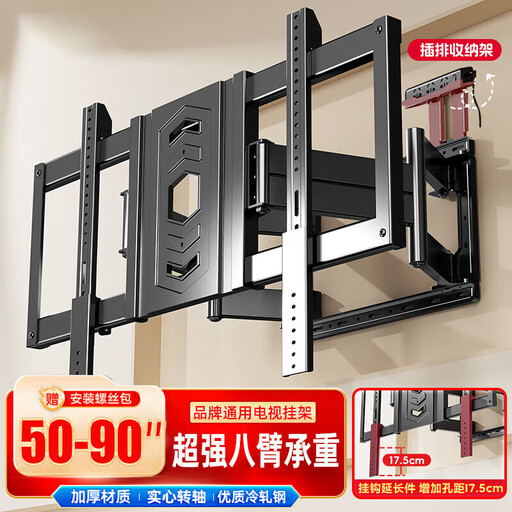
Why we chose it: Perfect for very large home cinema screens. Its telescopic arm and wide range of motion allow you to adjust the viewing angle to perfection, whether you're in the centre of the sofa or in a chair off to the side.
It avoids pitfall #3 by offering total flexibility (swivel, tilt, extension) to adapt to any room layout and eliminate glare.
Extended VESA compatibility (up to 600x400 mm) and a telescopic function for pinpoint placement, even with the largest screens.
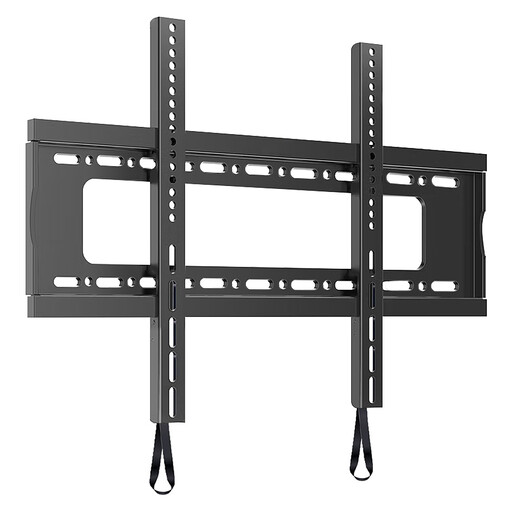
Why we chose it: The perfect option for a minimalist, art-like aesthetic. Its ultra-slim profile places the television as close to the wall as possible for a nearly invisible integration into your decor.
It addresses pitfall #2 by focusing on robustness. Made of cold-rolled steel, it supports up to 85 kg and accepts a VESA pattern up to 600x600 mm, ensuring even the most massive screens are secure.
Ultra-flat profile (28 mm from the wall) and a locking system for a foolproof fit and maximum space-saving. Designed for installation on solid walls (concrete or brick).
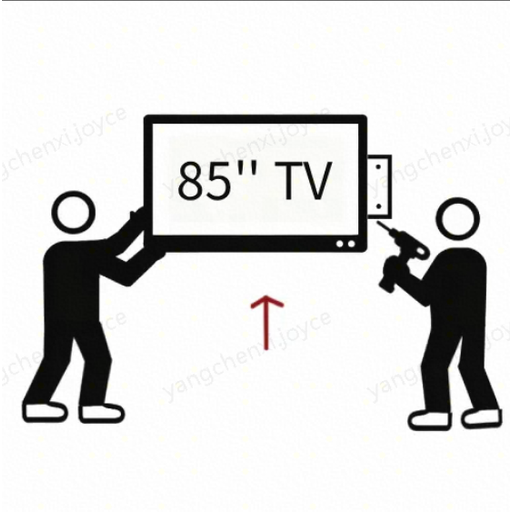
Why we chose it: For anyone who isn't DIY-savvy, is short on time, or simply wants an absolute guarantee of safety. The service includes a suitable mount and its installation by a professional.
It eliminates pitfall #1 (misdiagnosing the wall type) by entrusting the analysis and installation to a qualified technician, who will choose the perfect fixings.
Zero stress. The mount is provided, and the installation is guaranteed. It's the turnkey solution for mounting your television with complete serenity.
We have curated a complete selection of products that meet these strict selection criteria and European safety standards.
Yes, but with certain precautions. For lightweight televisions (under 25 kg), using expansion anchors (like Molly bolts), designed for hollow walls, is essential. For heavier screens, it is imperative to locate the metal studs in the wall structure and screw the mount directly into them. This is the only way to guarantee stability. If in doubt, calling a professional is the wisest solution.
It's very simple; just check three things: