
Livraison le jour même ou le lendemain

Qualité garantie

Débloquez vos offres de bienvenue: Livraison GRATUITE | Jusqu'à -80 % | 30 jours d'essai gratuits à JoyPlus
Téléchargez l'application
Mounting your TV on the wall is a popular solution to save space, modernise your interior, and optimise your viewing comfort. But faced with the jungle of available models, finding the right TV wall bracket can quickly become a headache. A poor choice can not only damage your precious television or your wall but, more importantly, compromise your safety.
As the Head of Product Recommendations at Joybuy, my mission is to help you see things more clearly. This guide breaks down the essential criteria for choosing a reliable and suitable TV wall mount and presents our top selections to help you complete your project with total peace of mind.
Before you get out the drill, there are three points you must check to ensure optimal compatibility and safety.
This is THE essential starting point.
Your choice will depend on your room's layout and your viewing habits.
The safety of your entire setup depends on the strength of the wall.
To guide you, here are three models that meet distinct needs, selected for their design and technical specifications.
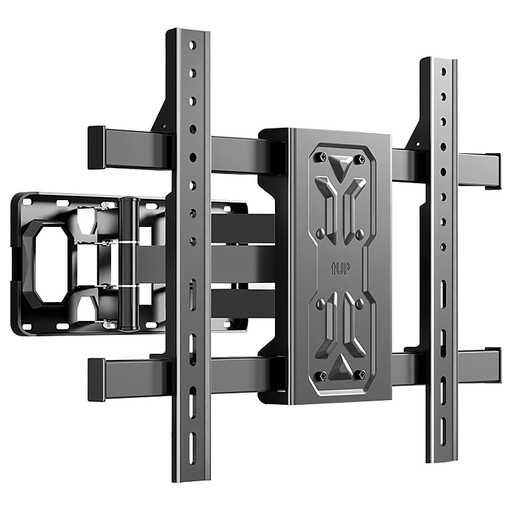
Why it stands out?: This model is a beast of sturdiness and flexibility. Its dual articulating arms allow for an impressive extension of up to 67?cm from the wall, offering unparalleled placement freedom, even for the largest screens.
Key features?:
Who is it for? Ideal for owners of extra-large TVs who want maximum flexibility to position their screen in a large living room. Please note, its installation is exclusively for load-bearing walls (concrete, cinder block).
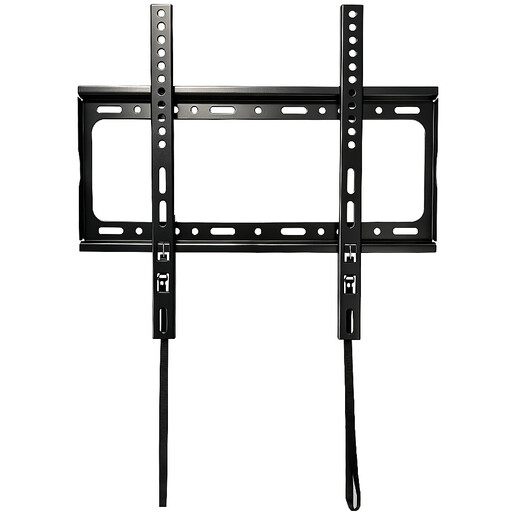
Why it stands out?: This mount focuses on a discreet and secure setup. With a wall distance of only 29?mm, it provides an ultra-clean look while ensuring a rock-solid hold thanks to its single-piece frame and locking system.
Key features?:
Who is it for? Perfect for those who want a minimalist and ultra-secure installation in a living room where the viewing position is fixed. To be installed on a concrete or solid brick wall.
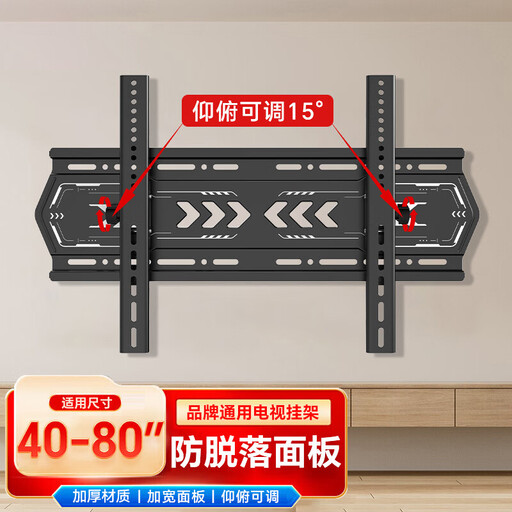
Why it stands out?: The excellent compromise between a fixed model and a fully articulating arm. Its tilting function allows you to adjust the viewing angle and counter glare, without the complexity (and cost) of a mobile arm.
Key features?:
Who is it for? The smart solution for a bedroom, where the TV is often placed higher than eye level, or for a living room where window glare spoils the picture at certain times of the day.
Our selection covers the most common scenarios, but every setup is unique. If you're looking for a mount for a specific configuration (beam mounting, reinforced solutions for plasterboard...), other models are available.
Discover our full range of TV mounts for beams to find the perfect solution for your setup.
1. How do I know if my TV is compatible with a wall mount? Check your TV's manual or inspect the device itself to find three crucial pieces of information: its VESA standard (the spacing of the mounting holes on the back), its weight, and its size (diagonal). The wall mount you choose must be compatible with all three of these criteria.
2. Can I install a TV wall mount on a plasterboard (drywall) wall? This is THE recurring question, and it's crucial for your safety. For a large screen TV mount or an articulating TV arm, direct installation on plasterboard is strongly discouraged. The weight and leverage effect (especially with an extended arm) could simply rip the mount out of the wall. For a secure installation, it is imperative to screw the mount into the studs (metal rails or wooden beams) of the wall's framework, using appropriate screws. For the lightest TVs with a fixed mount, using expansion anchors (like Molly bolts) is an option, but extreme caution is still advised.
3. What is the benefit of a full-motion (swivel and tilt) TV wall mount? This type of mount, also known as an articulating arm, offers unbeatable versatility. It allows you to watch TV comfortably from any angle in the room (from the sofa, the dining table, or even the kitchen). It's also extremely practical for accessing the connections on the back of the TV or for adjusting the screen's orientation to eliminate sun glare throughout the day.