
Livraison le jour même ou le lendemain

Qualité garantie

Débloquez vos offres de bienvenue: Livraison GRATUITE | Jusqu'à -80 % | 30 jours d'essai gratuits à JoyPlus
Téléchargez l'application
So, your new television is taking pride of place in your living room. But a crucial question arises?: should you place it on a stand or hang it on the wall?? A well-chosen TV wall mount does more than just free up floor space?; it enhances your interior design and optimises your viewing experience.
Fixed, tilting, swivelling… The market is flooded with options, and it's easy to get lost. Don't panic, this guide is here to break down the key criteria and help you find the perfect mount for your TV, your wall, and your viewing habits.
Before you decide, three essential points must be checked to ensure flawless compatibility and safety.
The VESA (Video Electronics Standards Association) standard is THE benchmark that guarantees a mount and a TV are made for each other. It simply corresponds to the distance in millimetres between the four mounting holes on the back of your television (for example, 200?x?200?mm or 400?x?400?mm).
Before you even look at models, check this information in your TV's manual or measure the gap yourself. The mount you choose must explicitly mention this compatibility. By the same token, check the weight of your television and opt for a mount whose maximum load capacity is comfortably higher. It's a matter of basic safety.
Your choice will depend on the layout of your room and the level of flexibility you're looking for.
The entire safety of your installation depends on the strength of your wall. A TV mount for a concrete or solid brick wall guarantees rock-solid anchoring, which is essential for large televisions and articulated arms that exert significant leverage.
Warning?: NEVER install a wall mount on a simple plasterboard wall (drywall), especially for a large screen like a 75-inch TV wall mount. These walls are not load-bearing and are not designed to support such a load. The risk of the mount being torn out, the TV falling, and causing material (or even physical) damage is very real. If in doubt, take no risks and call a professional.
To move from theory to practice, here are a few models that have caught our attention for their sturdiness, ingenuity, and value for money.
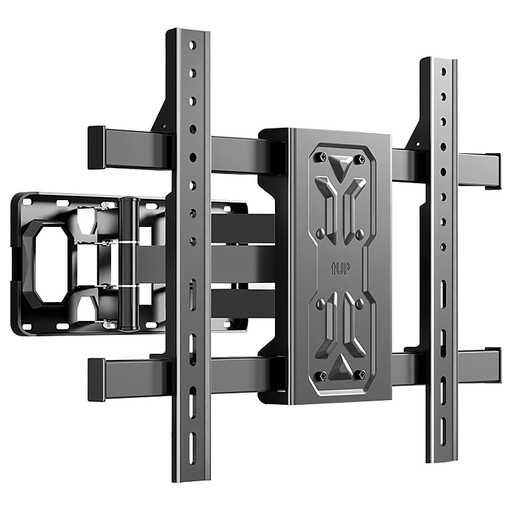
Why it stands out?: Its versatility is its key strength. Thanks to its dual articulated arm, it allows you to adjust the viewing angle with pinpoint accuracy. Perfect for living rooms where the armchairs aren't all neatly lined up in front of the screen. Its 5.5?mm thick steel construction and wide wall plate exude sturdiness.
Advantages?:
Who is it for???: For those who want complete freedom of movement, are considering a corner installation, or are tired of twisting and turning to plug in an HDMI cable.
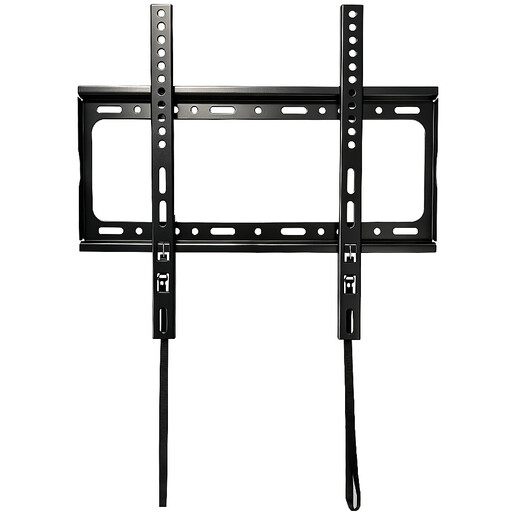
Why it stands out?: It plays the card of absolute discretion. With a distance from the wall of only 29?mm, it gives the impression that the TV is levitating, for a clean, designer look. Its single-piece steel structure and safety locking system make it a safe and long-lasting choice.
Advantages?:
Who is it for???: For design purists who want an "art gallery" effect and whose viewing area is well-defined (sofa facing the wall in the living room, bed facing the wall in the bedroom).
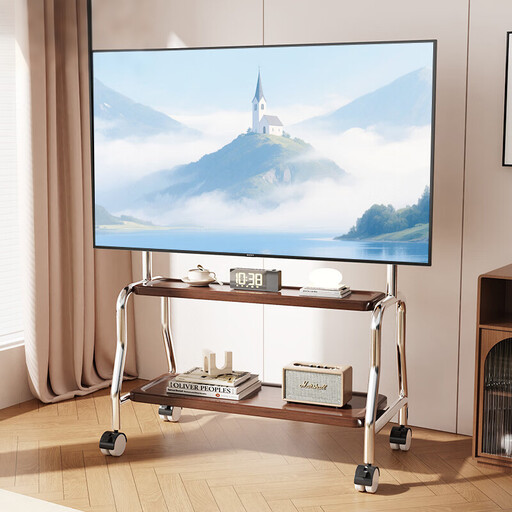
Why it stands out?: More than just a stand, it's a true design piece. Its sculptural stainless steel structure gives it the look of a modern artist's easel. Its main asset remains its mobility?: move your large screen from one room to another, without ever taking out the drill.
Advantages?:
Who is it for???: For professionals (meeting rooms, exhibition stands), those who are allergic to drilling, and anyone who likes to rearrange their interior or move the TV from the living room to the patio for big game nights.
With their extreme thinness and sometimes off-set connectivity, OLED TVs deserve special attention. Some mounts are specifically designed to hug their lines and respect their very specific weight distribution.
? Discover our selection of mounts for OLED televisions to find the perfect model.
It's simple! The information can be found in your television's manual. If you no longer have it, grab a tape measure?: measure the horizontal, then the vertical distance (in millimetres) between the centres of the four screw holes on the back of the screen. The result (e.g., 400?x?400) is your TV's VESA standard. The mount must be compatible with this measurement.
The answer is no. A 55-inch TV wall mount (or larger) exerts an immense pulling force that plasterboard alone cannot support. The risk of it being torn from the wall is too high. A secure installation must be done in a load-bearing wall (concrete, solid brick, cinder block). For plasterboard, you must use special anchors (like Molly bolts) for light objects, but never for a television.
This crucial information is always indicated by the manufacturer on the packaging and in the instructions. Weigh your television (or find its weight on its spec sheet) and choose a mount whose maximum authorised load is significantly higher. It's your best insurance against accidents.