
Livraison le jour même ou le lendemain

Qualité garantie

Débloquez vos offres de bienvenue: Livraison GRATUITE | Jusqu'à -80 % | 30 jours d'essai gratuits à JoyPlus
Téléchargez l'application
Mounting your new television on the wall is the finishing touch for a modern, streamlined living room. Besides the minimalist look, the space-saving benefits are undeniable. But choosing the right TV wall mount can quickly become a headache. Faced with a jungle of models, it's easy to fall into traps that could compromise the safety of your setup.
I'm a Product Recommendation Manager at Joybuy, and my mission is simple: to bring clarity to your choice. Let's skip the marketing jargon and focus on what matters: the objective criteria that guarantee a safe and long-lasting purchase. Here's how to avoid the most common mistakes.
To ensure you make the right choice, three technical points must be scrupulously checked. They are the foundation of a successful and durable TV mount installation.
The VESA (Video Electronics Standards Association) standard is an international benchmark that guarantees your TV wall mount will fit your television perfectly. It's expressed in millimetres as "width x height" (for example, 200x200 mm or 400x300 mm).
Safety first. Always check the maximum supported weight of the mount and compare it to your television's weight (found in its technical specifications). Always allow for a safety margin, especially if you're choosing an articulating arm, which puts much greater stress on the fixings.
The type of wall is just as crucial:
Your choice will depend on your room's layout and your viewing habits.
Rather than just a list of products, we've matched specific solutions to well-defined user profiles.
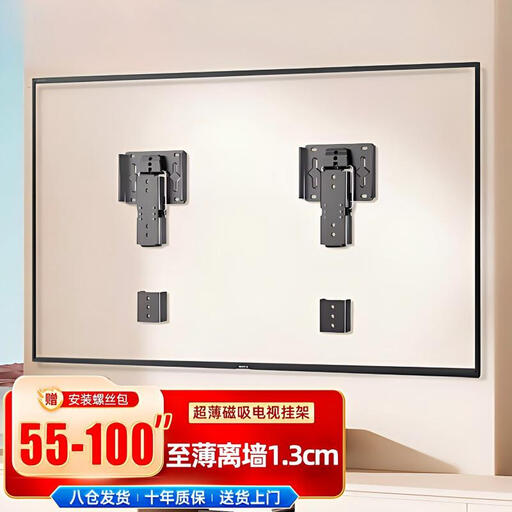
Why we chose it: This mount covers an extremely wide range of screen sizes (from 32 to 100 inches), making it a future-proof, all-rounder solution. Its fixed design is a guarantee of sturdiness and simple installation.
By clearly displaying its VESA compatibilities and load capacity, it eliminates the ambiguity of vague "universal" mounts.
Its great versatility makes it a future-proof choice: it will suit your current TV as well as your next one.
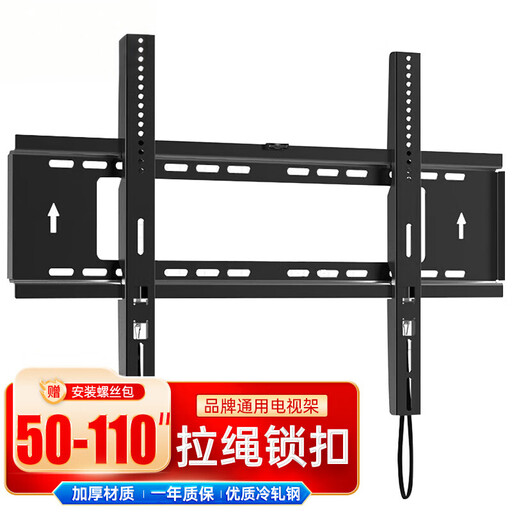
Why we chose it: When you invest in an XXL television, safety is non-negotiable. This mount is specifically designed for screens from 50 to 110 inches, with a reinforced structure to handle significant weight without ever faltering.
It directly addresses the pitfall of underestimated weight. It is calibrated for heavy loads, where a standard mount would risk bending.
An oversized build for the peace of mind of large-screen TV mount owners.
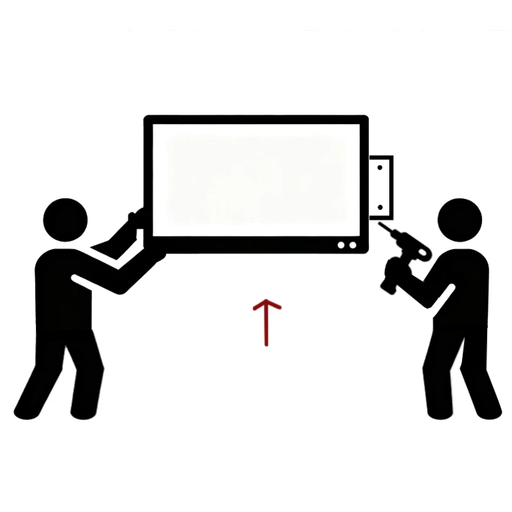
Why we chose it: For those who aren't DIY-savvy, are short on time, or simply want an absolute guarantee of safety, delegating the installation is the ultimate solution. This service ensures the mount is installed to professional standards.
It eliminates all risks: incorrect wall assessment, wrong choice of anchors, handling errors... Entrusting the TV mount installation to a professional is a zero-defect guarantee.
A professional, fast, and guaranteed installation, without you having to lift a finger.
We have put together a complete selection of mounts that meet our criteria for safety and reliability.
For a plasterboard ("drywall") wall, test it by knocking: a hollow sound indicates the board alone, while a dull, solid sound signals a metal stud. Aim for these studs for maximum strength. If that's not possible, it is imperative to use high-quality expansion anchors (like Molly bolts), checking the maximum load they can support. For a concrete or brick wall, strength is rarely an issue, provided you use the appropriate wall plugs. When in doubt, getting a professional's opinion is always a good idea.
Yes, if you are reasonably handy and have the right tools (a drill, spirit level, screwdriver). Make sure you have double-checked the VESA compatibility, the TV's weight, and the nature of your wall. The job is ideally done with two people to handle the screen safely. If you have any doubts, especially with a heavy and expensive television, calling a professional is a small investment for total peace of mind.
In the vast majority of cases, yes. A fixed TV wall mount is a reliable, discreet, and cost-effective solution. It's perfect if your sofa is directly opposite the television. However, if your screen is placed high up or if you want to be able to swivel it (towards a dining area, for example), a tilting or swivelling model will be necessary for greater daily comfort.