
Livraison le jour même ou le lendemain

Qualité garantie

Débloquez vos offres de bienvenue: Livraison GRATUITE | Jusqu'à -80 % | 30 jours d'essai gratuits à JoyPlus
Téléchargez l'application
Mounting your TV on the wall promises a more modern living room, valuable space savings, and enhanced safety, especially with children around. But with the vast array of wall mounts available, making the right choice can be a real headache. A simple miscalculation can ruin not only the aesthetics but also put your precious television (and your wall!) at serious risk.
As a Product Expert at Joybuy, my goal is simple: to help you make sense of it all. Let's cut through the marketing jargon and focus on what truly matters to find THE perfect wall mount for your TV and your living room.
Before you pull out your credit card, watch out for these three common mistakes that can turn your project into a disaster.
To ensure you get it right, focus on these three characteristics. They are your guarantee of a reliable and long-lasting installation.
The VESA (Video Electronics Standards Association) standard defines the distance in millimetres between the four mounting holes on the back of your television. It's a nearly universal standard.
Every TV wall bracket is designed to support a maximum load.
The choice depends on your room's layout and your viewing habits.
To put theory into practice, here are a few concrete examples of mounts suited for different scenarios.
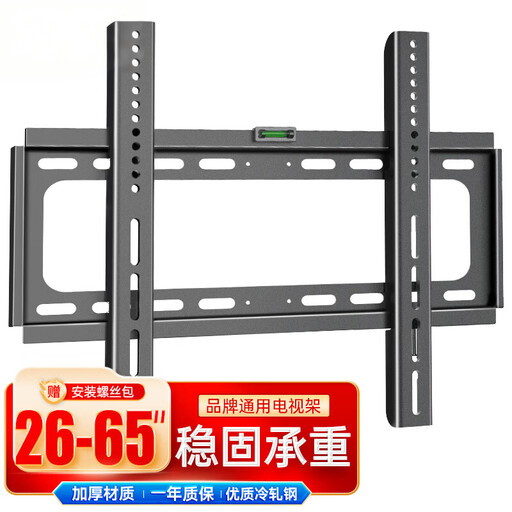
Why we chose it: For those who want a simple, sturdy, and discreet solution. Ideal for a living room where the sofa faces the TV, it frees up floor space without the clutter of unnecessary features.
This mount sticks to the essentials, avoiding feature overkill. Its fixed design minimises potential points of failure and greatly simplifies installation.
Ultra-slim profile for a seamless look against the wall. Broad compatibility with the most common screen sizes (up to 65 inches).
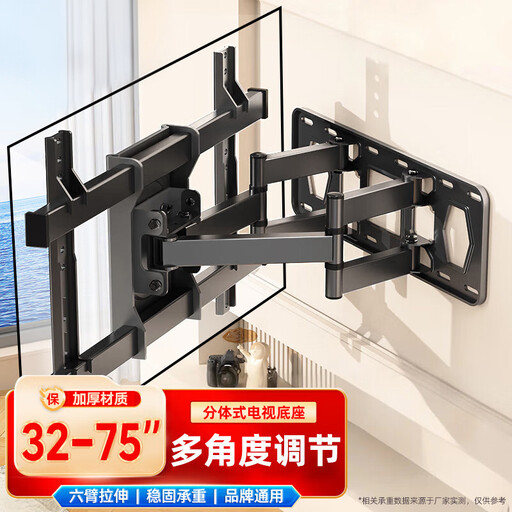
Why we chose it: For those who demand the perfect viewing angle. This articulating mount lets you position even the largest screens (up to 75 inches) to eliminate glare and adapt to different spots in the room.
It addresses a genuine need for flexibility. Its clear specifications on weight and VESA compatibility help avoid the pitfall of incompatibility with large TVs.
Smooth telescopic and swivel movement for precise positioning. Ideal for corner installations or for easy access to cables.
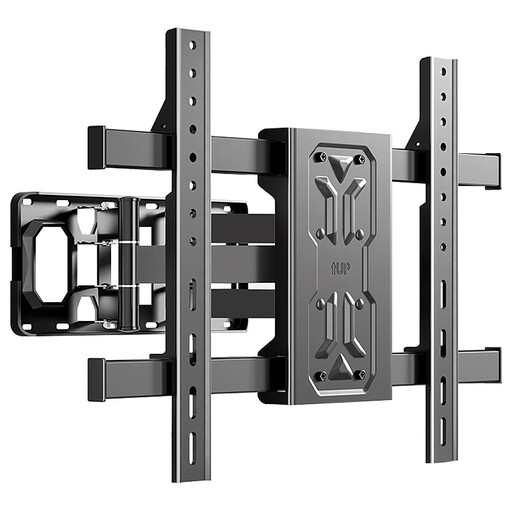
Why we chose it: Safety first. This mount is designed for a solid installation on load-bearing walls, preventing any risk of tipping. This is crucial in a home with young children and a perfect choice for securing a TV up to 55 inches.
It solves the "wrong wall" problem by being engineered for an ultra-sturdy installation on a load-bearing wall (concrete, brick)—the only way to guarantee foolproof security.
High load capacity (up to 45 kg) and security screws to lock the TV onto the mount, offering extra peace of mind.
Explore our full selection of expert-vetted products, all meeting our strict standards for quality and safety.
Yes, but on one non-negotiable condition: never attach the mount directly to the plasterboard itself. You must use a stud finder to locate the metal rails or wooden studs within the wall's structure. The mount must be secured into these load-bearing elements using appropriate screws (like toggle bolts or other heavy-duty drywall anchors). If in doubt, hiring a professional is always the safest option.
Don't just rely on the "for 65-inch TVs" label. Always check these three points on the spec sheets for both the mount and your television:
Not at all, as long as you choose a quality model and install it correctly. A well-designed articulating TV mount is made from heavy-duty steel and tested to support its maximum rated load, even at full extension. Its sturdiness depends on the quality of the materials, the strength of the joints, and, most importantly, how well it is anchored to the wall. A reputable brand's articulating mount, secured to a load-bearing wall with the proper anchors, is just as safe as a fixed model.