
Livraison le jour même ou le lendemain

Qualité garantie

Débloquez vos offres de bienvenue: Livraison GRATUITE | Jusqu'à -80 % | 30 jours d'essai gratuits à JoyPlus
Téléchargez l'application
Just splurged on a new TV? Mounting it on the wall is the perfect way to save space, keep it out of reach of children, and modernise your living room. But between fixed, tilting, or full-motion models, VESA standards, screen weight, and the type of wall you have, choosing the right mount can quickly become a headache.
Our mission at Joybuy? To help you make sense of it all. This guide is designed to demystify the technical aspects and introduce you to a selection of reliable products. The goal: to help you find the perfect TV wall mount for your setup, with complete peace of mind.
Before you start, there are three key points to check to ensure a safe and functional installation.
The VESA (Video Electronics Standards Association) standard defines the distance in millimetres between the four mounting holes on the back of your TV. It's THE number one compatibility factor. A VESA 400x400 mount is therefore compatible with a TV whose mounting holes form a 40?cm square. Be sure to check this information in your TV's manual or on the manufacturer's website. Finally, ensure the mount is rated for the weight and diagonal size of your screen—a crucial point for a large TV.
The safety of your installation depends primarily on the type of wall you have.
Your choice will depend on your room's layout and your viewing habits.
To help you out, we've selected three models that meet different needs, all designed for secure installation on load-bearing walls.
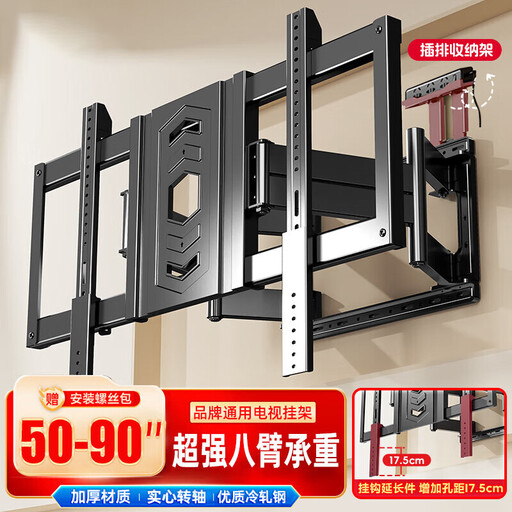
Key Feature: This full-motion TV mount stands out with its telescopic arm, offering a smooth extension of up to 46?cm. It allows for precise positioning of large TVs, even in complex room layouts.
Advantages:
Who is it for? Ideal for owners of a large TV in an open-plan living room or great room who want the flexibility to adjust the screen's orientation on demand.
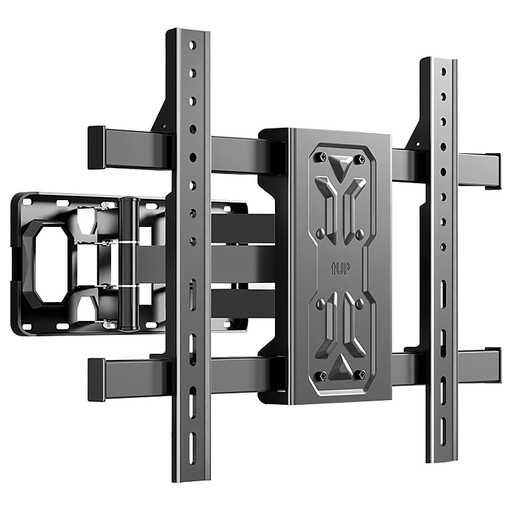
Key Feature: The keyword here is sturdiness. With its 75?kg load capacity and 5.5?mm steel construction, it's built to safely handle the largest and heaviest TVs on the market.
Advantages:
Who is it for? Intended for owners of very large screens (up to 100 inches) who demand flawless security and the versatility of an articulating arm, provided they have a load-bearing wall.
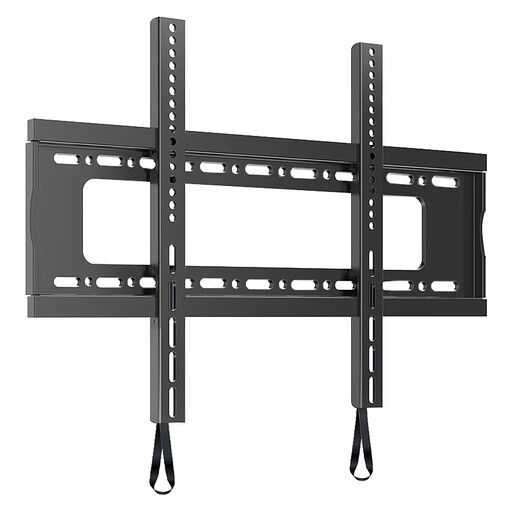
Key Feature: This fixed TV mount is all about discretion and strength. Once installed, the TV sits just 28?mm from the wall, creating a very sleek "picture frame" effect.
Advantages:
Who is it for? Perfect for home cinema purists who have a single viewing angle and want a seamless integration for their very large screen that is as discreet as it is elegant.
Didn't find what you need in our selection? The market is full of solutions for all screen sizes and wall types. Explore our full catalogue to find the right model for you.
? Discover more models in our Easy TV Wall Mount category
1. How do I know if my wall can support a TV wall mount? The golden rule: identify your wall type. For a TV wall mount and a heavy screen, a load-bearing wall (concrete, solid brick, cinder block) is non-negotiable. The simplest test? Knock on the wall. A solid, dull sound is a good sign; a hollow sound reveals a more fragile plaster partition. If in doubt, call a professional. Safety is priceless.
2. What is the VESA standard and how do I find it for my TV? The VESA standard is an international specification that indicates the spacing in millimetres (width x height) of the four screw holes on the back of your TV. You can find this information in the manual, on the manufacturer's website, or simply by measuring the distance yourself. This is a crucial step to ensure the mount is compatible.
3. Can I install a TV wall mount myself? If you are a seasoned and well-equipped DIY enthusiast (with a hammer drill, spirit level, etc.), the installation is within your reach. However, given the weight of modern TVs and the safety stakes, hiring a professional is a wise precaution. It is strongly recommended for a large TV or if you have any doubts about the strength of your wall.