
Livraison le jour même ou le lendemain

Qualité garantie

Débloquez vos offres de bienvenue: Livraison GRATUITE | Jusqu'à -80 % | 30 jours d'essai gratuits à JoyPlus
Téléchargez l'application
Want to mount your TV on the wall to save space and modernise your living room? Excellent idea. It improves viewing comfort and delivers a flawless aesthetic. However, the market is flooded with models, and it's easy to make a mistake. The wrong choice can compromise the safety of your setup or simply fail to meet your expectations.
As the Head of Product Recommendations at Joybuy, I'm here to separate fact from fiction for you. These are the most common pitfalls and the essential criteria for making the right choice with complete peace of mind.
For a safe and durable TV wall mount, three criteria are non-negotiable. Verifying them will save you from 99% of unpleasant surprises.
Before you even look at the design, check your television's VESA standard. This is the distance in millimetres between the four mounting holes on the back of the screen (e.g., 200x200 mm, 400x400 mm). You can find this information in your TV's manual or simply by measuring it yourself. The mount you choose must explicitly list your TV's VESA standard among its compatibilities.
Your choice depends on your room's layout and your viewing habits.
Check the weight of your television (without its stand!) and choose a mount with a maximum load capacity that is comfortably higher. Be especially vigilant with a large-screen TV mount.
But the most critical point remains your wall type. Load-bearing walls made of concrete or solid brick offer the best security. For drywall partitions, it is imperative to screw the mount into the structure's metal studs or use high-quality expansion anchors (like Molly bolts), while being very cautious about the total weight.
To guide you, here are models that meet specific needs, all selected based on strict safety and functionality criteria.
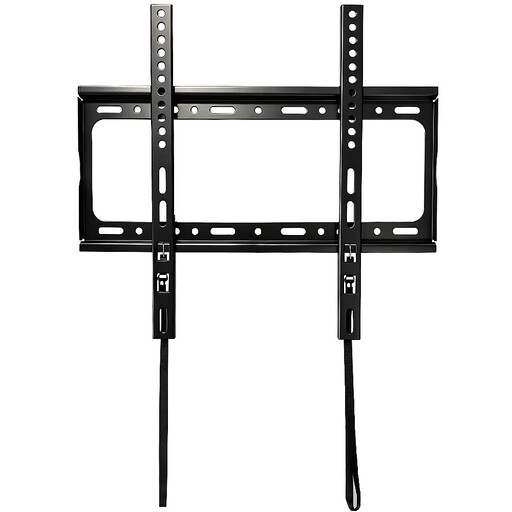
Who is it for? For those who want a discreet and reliable solution for a medium-sized television. Its ultra-slim profile mounts the TV flush against the wall, like a painting, for a clean look and maximum space saving.
Designed for load-bearing walls (concrete, brick), its load capacity (up to 45 kg) is perfectly calibrated for its VESA range (max 400x400 mm). No unpleasant surprises.
Its robust cold-rolled steel construction and ultra-slim profile (29 mm from the wall) create a very contemporary "picture frame" effect.
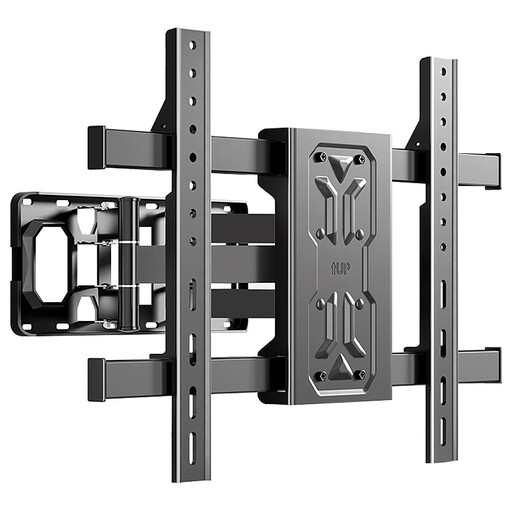
Who is it for? Perfect for living rooms where the viewing angle needs constant adjustment, whether to counter glare or to watch TV from the dining table.
Its thick (5.5 mm) steel articulating arm and wide mounting plate distribute the load and neutralise the leverage effect. This avoids the classic pitfall of low-end articulating mounts.
Its wide extension range and multiple adjustments (tilt from -15° to +5°, level ±3°) ensure precise positioning under any circumstances.
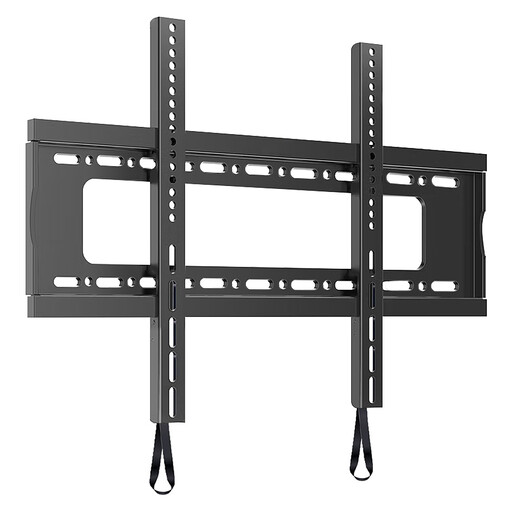
Who is it for? For owners of very large-format televisions (up to 110 inches) who want to make absolutely no compromises on safety. Peace of mind above all else.
Its single-piece structure and extreme load capacity (85 kg) are tested and approved. Designed specifically for load-bearing walls, it eliminates the risk of the mount pulling out due to the considerable weight of a large-screen TV mount.
An exceptional load capacity and an extra-wide (66 cm) mounting plate ensure perfect weight distribution and absolute security.
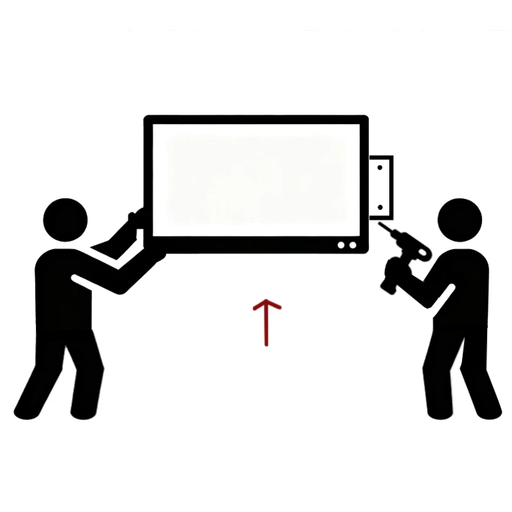
Who is it for? For anyone who isn't DIY-savvy, is short on time, or simply wants the guarantee of a perfect job. This service ensures a professional installation, done by the book.
No more second-guessing your wall type or which anchor to use. A professional assesses the situation and performs a professional TV mount installation, which eliminates the number one risk: improper mounting.
Absolute peace of mind. The service guarantees a correct and secure installation, without you having to touch a single tool or decipher a technical manual.
We have curated a complete selection of products that meet our selection criteria and the strictest safety standards.
The simplest method: knock on the wall. A full, dull sound? It's likely a load-bearing wall (concrete, brick). A hollow, resonant sound? It's a drywall partition. If in doubt, drill a small test hole: fine grey/white dust indicates concrete or plaster; red dust indicates brick. For drywall, using a stud finder is highly recommended to locate the structural supports.
The VESA (Video Electronics Standards Association) standard defines the standard spacing (horizontal x vertical, in millimetres) between the four mounting holes on the back of your television. For example: 400 x 400 mm. You can find this information in your TV's manual, on the manufacturer's website, or simply by measuring it yourself. A mount is only compatible if your TV's VESA standard is explicitly listed.
Absolutely, if you are reasonably DIY-savvy, have the right tools (drill, spirit level, wrenches, etc.), and follow the instructions to the letter. The most critical step is drilling and securing the mount to the wall: ensure you use the correct anchors and screws for your wall type. For heavy and large televisions, the operation must be done with two people. If you have any doubt, it is prudent to use a professional installation service.