For a TV dinner, choose plain, unsalted hazelnuts if you want a simple snack. If you want to know exactly how much protein is in your portion, compare the nutritional information for hazelnut bars, desserts and muesli instead. Check the sugars, allergens and storage instructions too: the presence of hazelnuts alone doesn’t tell you how much protein a product contains, and a sports-related claim doesn’t prove that it’s necessary after exercise.
Who are these options for?
Active people who want a clear protein figure
After exercise, you may want to know how much protein is in the portion you’re planning to eat. Check the nutritional information rather than assuming that a product contains a certain amount of protein just because it mentions hazelnuts.
Fans of simple snacks
If you’re eating in front of the TV, you might prefer a short ingredient list to a bar or a more elaborate dessert. Plain, unsalted hazelnuts fit the bill; Manger Bouger recommends a small handful of unsalted nuts.
Shoppers mindful of allergens
Your choice depends on the ingredients and any precautionary trace warnings on the specific product. The DGCCRF states that allergens used as ingredients must be highlighted on the labels of prepacked foods.
What should you check first?
Start with what really matters to you — a clear protein figure, simplicity, format or ingredient suitability — then compare products using the same nutritional measure.
| What matters to you |
What to check |
Who is it for? |
| Protein content |
Compare the protein per 100 g, then check the amount in the portion you’ll actually eat. |
After exercise, I want to know how much protein is in my snack without relying on its hazelnut flavour or the front of the pack. Around 36% of consumers prioritise a clear protein figure. |
| Ingredients and portion size |
Read the ingredients list and check how much you’ll serve. If you’re looking for plain hazelnuts, make sure they’re unsalted. |
When watching a film, I prefer a simple product where I can choose the amount, even if a bar contains more protein per unit. Around 29% of consumers put snack simplicity first. |
| Format and storage |
Choose a format that suits how you’ll use it: an individual bar, a dessert that needs to be kept chilled or muesli to serve in a bowl. |
If I’m taking my snack with me or preparing it just before dinner, its format matters as much as its ingredients. Convenience is the main priority for around 21% of consumers. |
| Allergens and ingredients to avoid |
Check the highlighted allergens, other ingredients and any trace warnings on the pack you’re considering. |
I need to be able to rule out a product that doesn’t suit my dietary requirements, even if the format works for me. Around 14% of consumers put this check first. |
Mistakes to avoid
-
Assuming “with hazelnuts” means “high in protein”
In a product made with several ingredients, the protein may come from more than one source. The product name alone won’t tell you how many grams of protein are in your portion.
Compare the “protein” figure per 100 g and, if the pack provides it, per portion too.
-
Checking only for hazelnuts as an allergen
A bar or dessert may contain other allergenic ingredients or carry trace warnings. Ingredients vary from one product to another.
Check the ingredients list, highlighted allergens and trace warnings on the product you’re buying.
-
Choosing a bar just because it’s convenient
A bar that’s easy to carry won’t necessarily have the ingredients you’re looking for. The Koro white chocolate and hazelnut bar listed by Monoprix contains maltitol and sucralose, among other ingredients.
Before choosing this format, compare its portion size and ingredients list with those of the other snacks you’re considering.
-
Assuming a “sports” product is essential
Anses warns against the belief that an everyday diet is automatically inadequate for meeting sporting goals. It also highlights risks associated with certain supplements and enriched foods intended for sportspeople.
Don’t take a sports-related claim as proof that a product is necessary after exercise. Consider the product and your actual dietary needs.
Retailers to check when comparing labels
Carrefour
Carrefour lists an Isostar hazelnut bar and a skyr served with hazelnut granola, among other products. These are two different categories, neither of which is the same as plain hazelnuts.
- Product pages let you check ingredients and allergens. The skyr listing also warns that it may contain traces of other nuts, soya and peanuts.
- Check the product page and availability at your local store before choosing.
E.Leclerc
The E.Leclerc DRIVE catalogue can help you search for a specific product at the store you use.
- Searching by product makes it easier to compare the labels of the formats you’re interested in.
- Don’t assume that a hazelnut snack has a particular recipe or is available locally based on a general catalogue.
Auchan
Auchan lists a hazelnut-flavoured high-protein dairy dessert and a crunchy muesli made with hazelnuts and other ingredients.
- The Arla dessert listing states that each 200 g pot contains 20 g of protein. This figure applies to this dessert, not hazelnut desserts in general.
- The dessert needs to be kept chilled. For the muesli, check the serving size and the nutritional information for the specific product you choose.
ALDI
ALDI lists high-protein muesli in its cereal range.
- This category may suit you if you’d rather make up a bowl than choose an individual bar.
- Check the exact recipe before expecting both hazelnuts and a stated protein content.
Monoprix
Monoprix lists an individually wrapped Koro white chocolate and hazelnut bar.
- The product listing states that this 55 g bar contains 12 g of protein, giving you a clear figure for the unit sold.
- Check the ingredients and allergens too: this product contains milk, hazelnuts, maltitol and sucralose, among other ingredients.
A hazelnut bar on Joybuy
This selection features an individual dark chocolate and hazelnut bar, which may suit you if that format works for your TV dinner. To choose based on protein, compare its nutritional information with the portion you’re planning to eat.
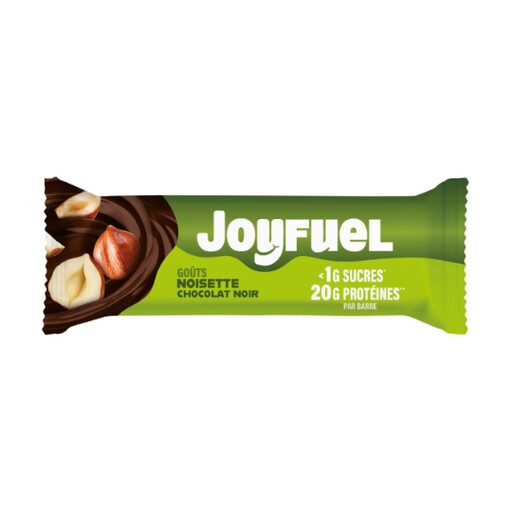 Image unavailable
Joyfuel Dark Chocolate with Hazelnut 55g
This 55 g bar is a handy individual option if you’re looking for dark chocolate and hazelnut. If you’re looking for a specific amount of protein or need to avoid certain ingredients, check the nutritional information and allergens on the packaging before buying.
View on Joybuy
Frequently asked questions
Are plain hazelnuts always high in protein?
No. The presence of hazelnuts alone doesn’t make a product “high in protein”. Anses classifies oilseeds as plant sources of protein. To compare specific snacks, check the protein content per 100 g and for the portion you’re considering.
Which format should I choose after exercise if I’m eating in front of the TV?
If you want a clear figure for protein, start with the portion size and its nutritional information, then choose a format that suits how you’ll use it. A chilled dessert needs to be stored appropriately. A bar is easier to carry, but you should still check its ingredients. Plain hazelnuts are a better fit if you’re looking for a simple snack.
Do I need a supplement or an enriched food to recover?
Not necessarily. Anses challenges the idea that an everyday diet is automatically inadequate for sporting goals, and advises caution with certain supplements and enriched foods intended for sportspeople. A “sports” claim alone doesn’t tell you whether you need that product.
What should I look for on the label of a prepacked snack?
Read the ingredients, highlighted allergens and nutritional information. The DGCCRF states that nutritional information is given per 100 g or 100 ml. This makes it easier to compare products, while the portion size tells you how much you’ll actually consume.


