People hosting several guests
If you simply want to put the chocolate on the table, consider the total weight and how it can be served: a bar can be broken up, while individually wrapped pieces can be handed round without any preparation.


For a TV night, choose a bar to break and share if one recipe will suit the group, individually wrapped portions if everyone needs to help themselves easily, or a gift box if presentation matters too. Before sharing, check the total weight and allergens for each recipe. To compare nutritional information, use the values per 100 g rather than relying on the pack size alone.
If you simply want to put the chocolate on the table, consider the total weight and how it can be served: a bar can be broken up, while individually wrapped pieces can be handed round without any preparation.
If someone needs to avoid an ingredient, the label on each recipe matters more than the brand name or the appearance of the chocolate. The DGCCRF reminds shoppers that allergenic ingredients must be clearly highlighted on the label.
A gift box can work both for sharing during the evening and for giving as a present. Check what it actually contains: the recipes, number of pieces and total weight.
First decide whether you want one recipe for everyone, individual portions or a presentation suitable for gifting. Then compare the labels of products that meet your needs.
Choose this if: you know what the group likes and everyone can help themselves to the same bar.
Bear in mind: a single recipe gives guests less choice.
Choose this if: you want to hand out individual pieces or offer a choice of flavours.
Bear in mind: you’ll need to check the ingredients of each variety separately.
Choose this if: you’d also like the presentation to be suitable for a gift.
Bear in mind: the box alone won’t tell you how much chocolate it contains or how varied the selection is.
| Criteria | What to check | Who is this for? |
|---|---|---|
| Format and quantity | Total net weight and number of pieces; the weight of each piece, if stated. | When several people are helping themselves in front of the TV, I want to plan a suitable amount without having to portion everything out in advance. Around 33% of consumers put this need for sharing first. |
| Ingredients and allergens | Ingredients list and highlighted allergens for every recipe, including those in an assortment. | If a guest needs to avoid an ingredient, I need to be able to identify exactly which chocolates are affected before serving. Checking the ingredients is the top priority for around 25% of consumers. |
| Variety and presentation | The recipes actually included, the number of pieces and the total weight of the gift box or assortment. | If I want to offer a choice of flavours or bring a box as a gift, I look at what’s inside rather than the presentation alone. Around 25% of consumers prioritise variety or gifting first. |
| Taste and nutritional information | Cocoa percentage, if stated, and nutritional values per 100 g, particularly sugars and fat. | If I’m comparing dark chocolates or different recipes, I want to know their stated intensity and see values based on the same quantity. This is the top priority for around 17% of consumers. |
For the relevant prepacked foods, the DGCCRF says that nutrition information is given per 100 g or 100 ml to make comparisons easier. Nutri-Score can provide additional information when it appears on the packaging, but Santé publique France explains that its use by producers is voluntary.
The contribution described by the Official Bulletin of Public Finances applies to non-alcoholic drinks containing added sugars, not chocolate bars or gift boxes.
When comparing chocolates, check their ingredients lists and nutritional values per 100 g instead.
According to Santé publique France, producers display Nutri-Score voluntarily. If it’s absent, that doesn’t replace checking the nutrition declaration required for the relevant prepacked foods.
If it is displayed, consider it alongside the ingredients and nutritional values, rather than making it your only criterion.
Recipes can differ from one piece to another. For a specific example, Carrefour’s product listing for Milka Lait Noisettes Entières mentions hazelnuts, milk and soya, as well as possible traces of other nuts and wheat; this does not apply to the whole brand.
Check the packaging for each variety before serving, and have an alternative ready if a recipe isn’t suitable for a guest.
A gift box, a multipack of chocolate bars and a box of mini bars can contain very different amounts, even if their packaging is a similar size.
Check the net weight, number of pieces and list of recipes. If you’re ordering, also check the delivery options available.
Carrefour’s Milka range includes milk chocolate, dark chocolate and praline bars, with different formats to consider for sharing.
Lindt’s Excellence range includes dark chocolate bars with different cocoa percentages, as well as boxes of chocolate squares.
Carrefour offers chocolate bars under its own brand, including a pack of two 100 g bars.
This selection includes bars to break up and individually portioned chocolate bars for a TV night. A single bar or multipack of bars shouldn’t be mistaken for a gift box of chocolates.
 Image unavailable
This multipack is a good choice if you’d like several bars of the same recipe to break up and share.
Three 100 g bars, making 300 g in total. Check the ingredients and allergens on the packaging before serving.
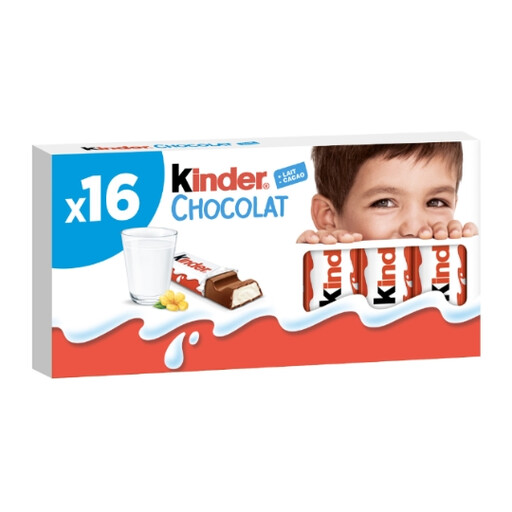 Image unavailable
This multipack of chocolate bars is ideal if you’d rather hand out individual portions than break up a bar.
The pack contains 16 pieces. Check the packaging for their weight and allergen information before offering them to guests.
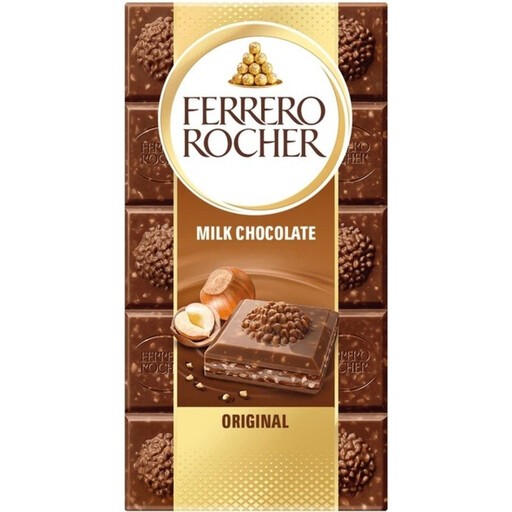 Image unavailable
This bar is a good choice if you’d prefer to serve one recipe for everyone to break up during the evening.
Stated weight: 90 g. If you’re sharing it, check the ingredients list and allergens for this product.
 Image unavailable
These individually wrapped pieces are a good choice if you’re looking to share a chocolate wafer treat rather than a traditional bar.
The pack contains nine pieces and weighs 104.4 g. To compare sugars or fat with another recipe, check the corresponding values on the packaging.
 Image unavailable
This bar is a good choice for a group that would like to share dark chocolate with 85% cocoa, as long as everyone enjoys that intensity.
Stated weight: 100 g. The cocoa percentage doesn’t replace checking the ingredients, allergens and nutritional values per 100 g.
No. The Official Bulletin of Public Finances describes a contribution on non-alcoholic drinks containing added sugars, not chocolate bars or boxes. You can compare the sugar content shown on labels without treating chocolate as a drink subject to this contribution.
No. Santé publique France explains that producers choose whether to display it. For the relevant prepacked foods, the nutrition declaration lets you compare energy, sugars and fat per 100 g, among other things.
Check the ingredients and allergens for every variety before serving the assortment. The DGCCRF reminds shoppers that allergenic ingredients must be clearly highlighted on the label. Don’t assume one piece has the same ingredients as another, or rely on the brand name alone.
Not necessarily: compare the specific recipes. In the Excellence range shown by Lindt, the 70% dark chocolate bar lists 30 g of sugars per 100 g, while the 85% bar lists 15 g per 100 g. These values don’t apply to every bar with the same cocoa percentages.