
Livraison le jour même ou le lendemain

Qualité garantie

Débloquez vos offres de bienvenue: Livraison GRATUITE | Jusqu'à -80 % | 30 jours d'essai gratuits à JoyPlus
Téléchargez l'application
By the Joybuy editorial experts | Published July 23, 2026
Saving space, modernising your living room, getting a better viewing angle… There are plenty of reasons to mount your television on the wall. However, with the vast array of models, standards, and technical constraints, choosing a TV mount can quickly become a headache. From the VESA standard and your screen's weight to the type of wall you have, no detail should be left to chance to ensure an installation that is both safe and durable.
This guide breaks down the key points to help you choose the wall mount that's perfectly suited to your needs, whether you're a weekend DIYer or a sim-racing enthusiast in search of the ultimate setup.
Before you even start looking at models, there are three criteria to scrutinise. Do not overlook them under any circumstances: the safety of your setup depends on it.
The VESA (Video Electronics Standards Association) standard defines the distance in millimetres between the four mounting holes on the back of your television. This is the number one compatibility criterion. The most common formats are 200x200, 300x300, or VESA 400x400 for the largest screens. You can find this information in your TV's manual or, more simply, by measuring the spacing yourself.
Scrupulously check that the mount is compatible with your screen's VESA pattern and that it can handle a weight well above that of your television. Allowing for a safety margin is essential.
Not all walls are created equal. The strength of your wall determines the type of mount you can install.
Your viewing habits and the layout of your room will determine which type of mount is best.
To put theory into practice, here are a few models that stand out for their design and meet very specific needs.
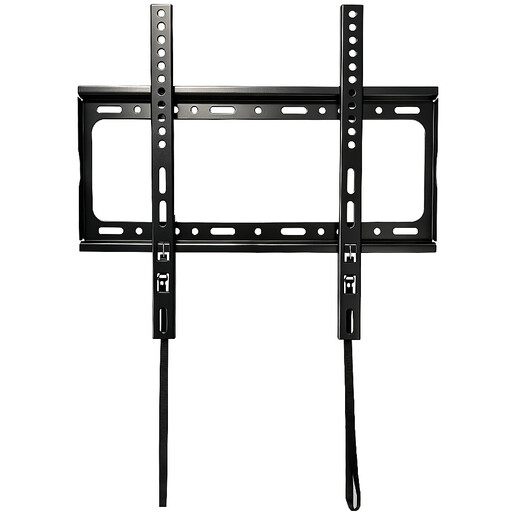
Why it stands out: This model focuses heavily on sturdiness and safety. Made from 2.9 mm thick cold-rolled steel, it is built for large screens. Its single-piece structure and wide wall plate (495 x 227 mm) ensure perfect load distribution. The anti-drop locking system is a real bonus for peace of mind.
Pros:
Who is it for?: For those looking for a permanent, ultra-secure, and minimalist installation for a large television, provided they have a load-bearing wall (concrete, brick).
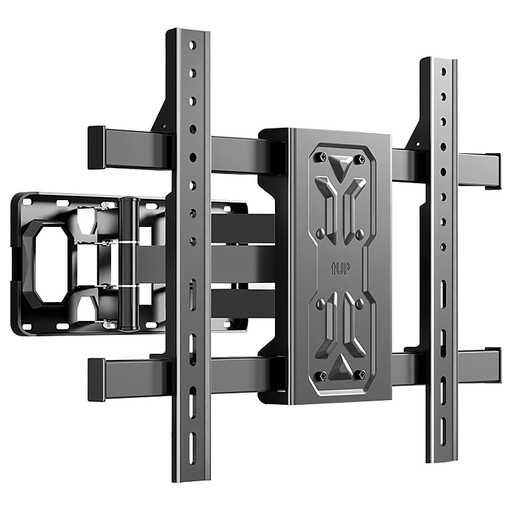
Why it stands out: This articulating TV mount is a heavyweight built for flexibility. Its dual steel arms, 5.5 mm thick, can extend up to 67 cm from the wall, offering an exceptional range of motion. It handles an impressive load of 75 kg, enough to accommodate the largest screens on the market. The icing on the cake is the tilt (+5°/-15°) and level (±3°) adjustments, which allow you to fine-tune the installation with pinpoint accuracy.
Pros:
Who is it for?: For those who want to be able to point their TV in any direction, whether to adapt to a large living room layout or to combat glare. Its sturdiness makes it a safe bet for XXL screens, provided it is mounted on a load-bearing wall.
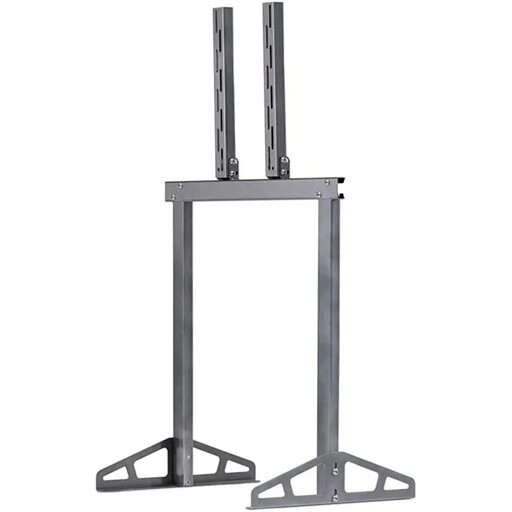
Why it stands out: Heads up, this one's an outlier! This isn't a wall mount, but a freestanding solution dedicated to a niche of enthusiasts: sim-racing. The Playseat TV Stand is designed to be positioned perfectly behind a simulation cockpit. Its metal frame guarantees rock-solid stability, even in the heat of the action. It's also expandable, with the option to add extensions for an immersive 3, 5, or even 7-screen setup.
Pros:
Who is it for?: For die-hard racing simulation fans who want an independent, stable, and adjustable screen stand to perfect their setup.
Wall mounting isn't always possible or desirable, especially if you're a renter or if your walls aren't suitable. In that case, a floor-standing alternative that combines design and storage remains a reliable choice: the TV stand.
Discover our selection of Corner TV Stands and Sideboards to find the option that will fit perfectly into your home.
For a plasterboard wall, knock on it: a hollow sound means there's nothing behind it. A solid, dull sound indicates the presence of a stud (metal rail or wooden beam). To be sure, use a stud finder. For a large-screen TV mount, take no risks: mounting on a load-bearing wall (concrete, brick) is mandatory. If in doubt, call a professional.
It's an international standard that ensures compatibility between the mounting holes on the back of your television and those on your mount. The VESA standard is expressed with two numbers (in mm): the horizontal distance × the vertical distance. For example, VESA 400x400 means there is a 400 mm (or 40 cm) gap between the holes both horizontally and vertically.
If you have a knack for DIY, own the right tools (drill, spirit level, stud finder, etc.), and follow the instructions to the letter, the job is entirely doable. However, for a very heavy television or if you have any doubt about the strength of your wall, caution is advised: entrust the installation to a professional. Safety is priceless.