In a small home without an external vent, rule out vented tumble dryers. A condenser tumble dryer, particularly a heat pump model, or a washer-dryer can meet your needs. If you have space for a second appliance and often dry full loads, consider a standalone tumble dryer. If you only have room for one appliance, compare washer-dryers based on their drying capacity, full-cycle duration and energy use. In either case, make sure your home remains well ventilated.
Which set-up is right for you?
A household with room for just one appliance
If your washing machine already takes up the only available space, a washer-dryer combines both functions in one appliance. You’ll need to plan your laundry around its drying capacity, which is usually lower than its washing capacity, and accept that the drum will be occupied for the full cycle. UFC-Que Choisir highlights these trade-offs with washer-dryers.
A household that often dries full loads
If you can fit a second appliance, a standalone tumble dryer lets you choose a dedicated drying capacity and run your washing and drying cycles separately. Check the available depth, door clearance, stated noise level and how the appliance collects condensed water.
A household keeping an eye on electricity use
If you dry clothes regularly and have room for a second appliance, compare heat pump tumble dryers with conventional condenser models. UFC-Que Choisir identifies heat pump technology as one way to reduce electricity use. Also compare the programme times that suit your laundry needs.
What are the key differences between the options?
First decide whether you can fit a second appliance, then compare the size of the loads you want to dry and the requirements of each cycle.
Conventional condenser
Consider this if: you have space for a second appliance but no vent to the outside.
Bear in mind: you’ll need to manage the condensed water, and compare electricity use with a heat pump model for the programmes you use.
Heat pump
Consider this if: a standalone tumble dryer will fit in the room and you expect to dry clothes regularly.
Bear in mind: cycles may take longer, depending on the model and programme. Also check the maintenance requirements in the instruction manual.
Washer-dryer
Consider this if: you only have room for one appliance to wash and dry your clothes.
Bear in mind: its drying capacity is lower than its washing capacity, and the drum will be in use for the full cycle, as UFC-Que Choisir points out.
| Factor |
What to check |
Who is it for? |
| No vent and condensed water |
Check the appliance type and how it handles condensed water. Don’t block your home’s air inlets or ventilation outlets. |
I want to stop relying on a permanent clothes airer but can’t install an external vent, while keeping my home ventilated; around 36% of consumers would put this compatibility first. |
| Space and drying capacity |
Measure the space, including room for the door to open and for connections. For a washer-dryer, compare its washing and drying capacities separately. |
With room for just one appliance, I prioritise a compact design and plan my laundry around the load it can actually dry; this would be the priority for around 36% of consumers. |
| Energy use, cycle time and maintenance |
Compare the energy use and duration of the programmes you’ll use, then check the instructions for filters and condensed water. |
If I dry clothes often, I want to keep electricity use and maintenance under control, even if some cycles take longer; around 28% of consumers would prioritise this combination of considerations. |
Mistakes to avoid
-
Choosing a vented tumble dryer without a vent
According to UFC-Que Choisir, this type of appliance needs an opening to the outside or a vent. It’s therefore not suitable for a home without one.
Check the drying type on the product specifications before comparing other features.
-
Looking only at washing capacity
A washer-dryer listed as 9/6 kg can wash up to 9 kg, but its drying limit is 6 kg. If you wash a full 9 kg load, you may need to remove some clothes before drying.
For a wash-and-dry cycle that runs without interruption, load the appliance according to its stated drying capacity.
-
Assuming a washer-dryer will free up the drum quickly
Saving space doesn’t mean you can get through several loads as quickly as you could with two separate appliances. UFC-Que Choisir notes that full programmes take longer and that most of the models it examined use water during drying.
If you need to wash several loads in a row, compare the duration and energy use of the wash-and-dry programme.
-
Measuring the appliance without thinking about how you’ll use it
Fitting the space doesn’t help if the door can’t open or the condensed-water tank is difficult to reach. Any drain hose must also be installed in line with the model’s instructions.
Measure the space needed for the door to open and for connections, then check whether you’ll use a tank that needs emptying or a compatible drain.
Brands to compare, model by model
Bosch
A useful benchmark for standalone heat pump tumble dryers if you have a separate space for one.
- Bosch lists the WQG2450SFR with a 9 kg capacity, dimensions of 842 × 598 × 613 mm and a stated noise level of 64 dB(A).
- According to Bosch, this model has a self-cleaning condenser and a water drain hose. Still, check the space it needs and any other maintenance tasks in the instruction manual.
Electrolux
A brand to consider if one appliance needs to handle both washing and drying.
- Electrolux lists the EW7W3924SV with a washing capacity of 9 kg and a drying capacity of 6 kg.
- The brand gives a time of 7 h 45 for a full-load Eco 40-60 wash-and-dry cycle. Bear this duration and the drying capacity in mind when planning your laundry.
Miele
A model to compare among standalone heat pump tumble dryers where condensed-water handling is an important part of installation.
- Miele describes the TEA525WP as an 8 kg model with a condensed-water container and an integrated drainage kit.
- Any connection must be suitable for your installation and match the exact model’s instructions. Empty the tank when it’s full, and make sure the drain hose isn’t kinked.
Samsung
A brand to compare for washer-dryers if drying capacity and dimensions are key to your decision.
- Samsung lists the WD90T754DBH with washing and drying capacities of 9 kg and 6 kg respectively, and dimensions of 600 × 850 × 650 mm.
- This model has a drying limit of 6 kg. Also compare the full-cycle duration and energy use with your needs.
Appliances for drying clothes without an external vent
This Joybuy selection includes a washer-dryer and standalone condenser and heat pump tumble dryers. Choose according to the space you have and the loads you need to dry, then check the installation requirements for the model you’re considering.
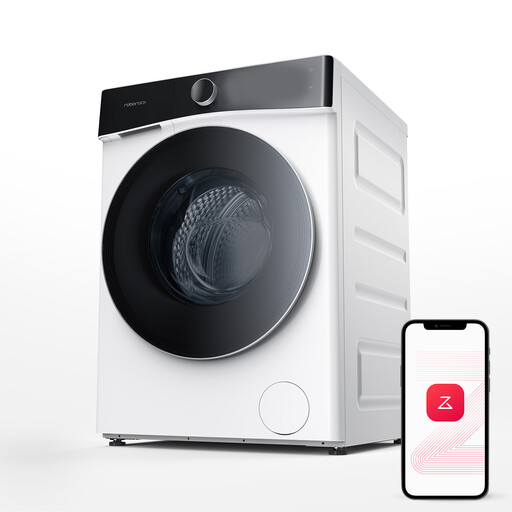 Image unavailable
Roborock Zeo Lite, 10/6 kg washer-dryer
Worth considering if you only have room for one appliance to wash and dry your clothes.
The product name lists a 10 kg washing capacity and a 6 kg drying capacity, as well as Zeo-Cycle and LintClear functions and app control. For a complete cycle, plan your load around the drying limit. Check the dimensions, cycle time and energy use of the programme you’re interested in.
View on Joybuy
 Image unavailable
Hotpoint CHD84MWBSEE, 8 kg heat pump tumble dryer
Worth considering if you have space for a standalone tumble dryer and want to dry loads up to its stated capacity.
The product name lists an 8 kg capacity and a C energy rating. Before deciding where to put it, check its dimensions and the instructions for collecting or draining condensed water.
View on Joybuy
 Image unavailable
Comfee CD08EHP05W-HR, 8 kg heat pump tumble dryer
Worth considering if you can fit a standalone tumble dryer and are looking for a stated capacity of 8 kg.
The product name lists a D energy rating. Compare the energy use of the programmes you’ll use, and check the dimensions and how it handles condensed water before installation.
View on Joybuy
 Image unavailable
Electrolux EDH1018CD GentleCare, 8 kg condenser tumble dryer
Worth considering if you have room for a standalone tumble dryer but no vent to the outside.
The product name lists an 8 kg capacity. Measure the space, allowing for the door to open and the clearances specified in the instruction manual. You’ll also need enough access to manage the condensed water.
View on Joybuy
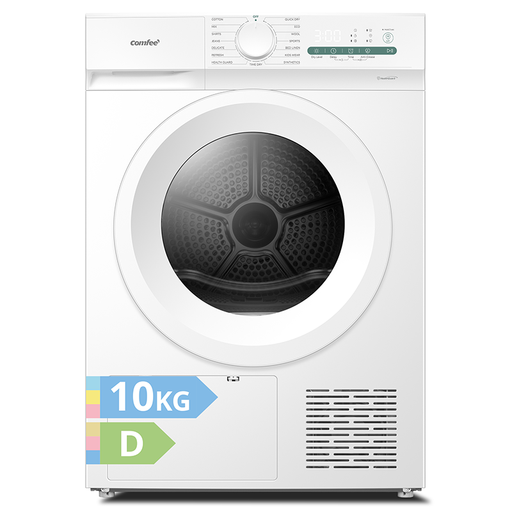 Image unavailable
Comfee CD10EHP05W-HR, heat pump tumble dryer
Worth considering if you have room for a standalone tumble dryer without an external vent.
The product name lists a D energy rating. Confirm the model’s exact capacity before planning your loads: the product information differs, giving either 8 kg or 10 kg. Also check its dimensions and how it handles condensed water.
View on Joybuy
Frequently asked questions
Can you install a tumble dryer without an external vent?
Yes. According to UFC-Que Choisir, a condenser tumble dryer, particularly a heat pump model, doesn’t need the external vent required by a vented model. Still, check how it handles condensed water and the installation requirements for your chosen model.
Can a 9/6 kg washer-dryer dry 9 kg of laundry?
No: 9 kg is its washing capacity and 6 kg is its drying capacity. To run a wash-and-dry cycle without removing any clothes, limit the load to the stated drying capacity.
Does your home still need ventilation if you have a condenser appliance?
Yes. In France, not needing an external vent for the appliance doesn’t mean your home no longer needs ventilation. The decree of 24 March 1982 provides for general, continuous ventilation at least during periods when the outside temperature means windows need to stay closed. Don’t block air inlets or ventilation outlets to make room for the appliance.
What maintenance does a condenser tumble dryer need?
Follow the model’s instructions for the filter, condenser and collected water. If the appliance has a tank, empty it when it’s full. If you install a drain hose, make sure it isn’t kinked. A self-cleaning condenser doesn’t replace the other maintenance tasks specified by the manufacturer.


