Households with room for just one appliance
You need to wash and dry your clothes without installing a second appliance. Compare the combined model’s actual dimensions and drying capacity, not just its washing capacity.


If you only have room for one appliance, a washer-dryer saves space, but its drying capacity may be lower than its washing capacity. Compare the full cycle and the amount of laundry you actually dry. If you can install a separate appliance, Que Choisir says heat-pump tumble dryers generally use less energy than conventional condenser models, while the latter generally dry clothes faster. In either case, not needing an external vent doesn’t mean you can skip checking the manual and making sure your home is properly ventilated.
You need to wash and dry your clothes without installing a second appliance. Compare the combined model’s actual dimensions and drying capacity, not just its washing capacity.
You can install a separate tumble dryer and want to keep an eye on electricity use across your cycles. Compare the energy labels and installation requirements of the models you’re considering.
You want to dry a large load without transferring laundry between appliances or running multiple cycles. Check the drying capacity, which may differ from the washing capacity on a combined appliance.
Consider this if: you genuinely only have space for one appliance to wash and dry your clothes.
Bear in mind: the drying load may be smaller than the washing load, so it’s worth comparing the full cycle.
Consider this if: you can install a separate appliance and dry laundry regularly.
Bear in mind: Que Choisir says these models generally use less electricity than conventional condenser dryers, but usually take longer to dry clothes.
Consider this if: you can install a separate appliance and drying time is an important factor in your choice.
Bear in mind: Que Choisir says these models generally dry clothes faster, but use more electricity than heat-pump models.
For the four criteria below, start with the main constraint in your home, then check the data for the exact cycle and model you’re considering.
| Criterion | What to check before buying | Who should pay particular attention? |
|---|---|---|
| Size | Measure the width, depth and door clearance, and check access to the installation space. If stacking the appliances, check that both models and the stacking kit are compatible. | If I only have room for one appliance to wash and dry my clothes, I’ll choose an option that fits that space. Around 33% of consumers put this constraint first. |
| Energy and water use | Compare figures for the same type of cycle and the same generation of energy label. For a washer-dryer, check the wash-and-dry cycle and its water use. | When I run drying cycles frequently, I check their electricity use and, for a washer-dryer, its water use too. Around 27% of consumers prioritise these running costs. |
| Load size and drying time | Compare your usual load with the drying capacity in kilograms, and check how long the appropriate programme takes. | To dry large loads, I check how much laundry can be dried at once, not just the washing capacity. Around 20% of consumers put load size and drying time first. |
| Installation and maintenance | Check the manual for the specific model’s placement, connections and maintenance requirements. Not needing an external vent doesn’t mean you can skip ventilating your home. | If my home has installation constraints, I also check the required connections and maintenance. Around 20% of consumers prioritise this. |
A washer-dryer may dry less laundry than it can wash. For example, LG lists a washing capacity of 9 kg and a drying capacity of 6 kg for the F964R33WR.
Choose based on the amount of laundry you usually dry and the capacity of the full cycle.
If your load is larger than the drying capacity, you may need to split it up or run extra cycles.
Heat-pump and conventional condenser tumble dryers generally use different amounts of energy. For a washer-dryer, the washing-only figure doesn’t reflect the full wash-and-dry cycle.
Compare the figures for the specific models on a like-for-like basis, and check which generation of energy label is used.
A condenser tumble dryer can work without venting air outside, but you still need to consider where it will go and how well your home is ventilated.
Check the model’s manual and keep your home’s intended air inlets and outlets clear.
You may need to adapt the space before installing the appliance.
Compatibility depends on the washer, tumble dryer and stacking kit models. For its 00576101 kit, Bosch specifies depth requirements and lists models that are not compatible.
Check the exact model numbers of both appliances and the kit before planning a stacked installation.
Stacking may require a compatible kit and a suitable installation.
Heat-pump tumble dryers and stacking accessories to consider, depending on the models you’re looking at.
Washer-dryers to consider when there isn’t room to install two separate appliances.
Heat-pump tumble dryers with published figures you can use to compare specific models.
Condenser tumble dryer models to include when comparing separate appliances.
Washer-dryers, including a built-in model to consider if the type of installation matters to you.
This selection includes washer-dryers for a single space and separate tumble dryers, including heat-pump and condenser models. Check the dimensions, connections and drying capacity of the model you choose.
 Image unavailable
A combined appliance to consider if you need to wash and dry your clothes in one space.
Listed capacity: 11 kg for washing and 6 kg for drying; D rating.
 Image unavailable
A combined appliance to consider if you want to wash and dry your clothes in the same space.
Listed capacity: 10 kg for washing and 6 kg for drying; D rating.
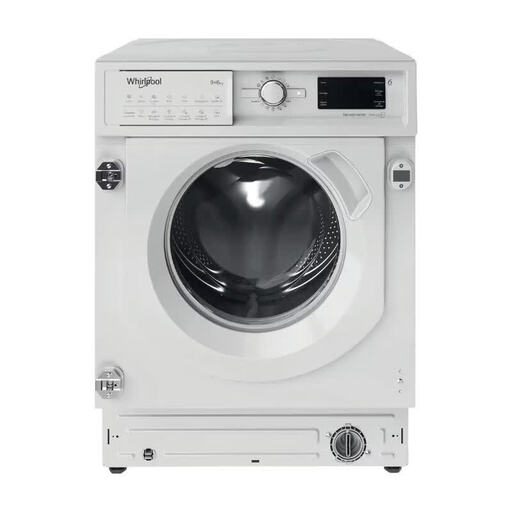 Image unavailable
Built-in installation is worth considering if the type of fitting matters when choosing a combined appliance.
Listed capacity: 9 kg for washing and 6 kg for drying; stated spin speed: 1 400 tr/min.
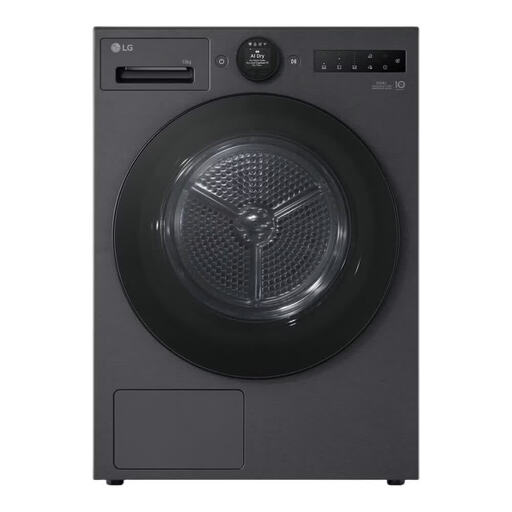 Image unavailable
A separate appliance to consider if you can set aside a dedicated space for it.
Listed capacity: 10 kg; black; C rating.
 Image unavailable
A separate tumble dryer to consider if you have a suitable space and want to compare its capacity with your usual loads.
Listed capacity: 8 kg; E rating.
A condenser tumble dryer, with or without a heat pump, doesn’t need a vent to carry air outside. Check the manual for the specific model and make sure your home is properly ventilated. The French decree of 24 March 1982 covers general, permanent ventilation in homes. A washer-dryer also needs to be installed using the connections specified for washing.
No. Compatibility depends on both appliances and the stacking kit. For the 00576101 kit, Bosch specifies that the washing machine must be more than 55 cm deep and states that it isn’t compatible with Series 2 washing machines. Check the exact model numbers before planning a stacked installation.
Compare the figures for the wash-and-dry cycle that matches how you use the appliance, not just those for washing. Que Choisir’s testing protocol assesses drying separately and records water use during drying for most of the models it tests.
Check the listed washing and drying capacities separately in kilograms: the drying load may be smaller. If you want to run both functions one after the other without removing any laundry, size your load according to the drying capacity.
The manual for the specific model explains how condensed water is collected or drained, and which filters need cleaning. These requirements vary by model; the words “condenser tumble dryer” alone don’t tell you where the water tank is or how often maintenance is needed.