Who is each option best for?

Households that often dry full loads

If you do several loads of washing in a row or regularly dry towels and bedding, compare the actual drying capacity and cycle times. With a separate appliance, you can start another wash while the tumble dryer is running, but you’ll need to allow for the extra space.

Small homes with space for just one appliance

A washer-dryer combines both functions in a single appliance. However, UFC-Que Choisir notes that drying capacity is lower than washing capacity on some models, so you may need to split a washed load before drying it. Measure the space too, allowing for connections and the door opening.

People keeping an eye on energy use

If you dry laundry often, compare heat-pump tumble dryers in particular. UFC-Que Choisir highlights their low electricity consumption, but the length of the programme that suits your laundry and the maintenance involved should also factor into your decision.

What sets the appliances apart?

Heat-pump tumble dryer

Worth considering: if you have space for a second appliance and regularly dry laundry, while keeping electricity use in mind.

Bear in mind: drying may take longer than with a conventional condenser tumble dryer, depending on the programmes compared.

Condenser tumble dryer

Worth considering: if you can install a separate appliance but can’t fit a vent to carry air outside.

Bear in mind: a conventional condenser model may use more electricity than a heat-pump model, and you’ll also need to manage the collected water.

Washer-dryer

Worth considering: if you only have space for one appliance and your usual loads fit within the model’s drying capacity.

Bear in mind: a full wash load may need more than one drying cycle, leaving the appliance in use for longer.

Criterion What to check Who it matters to
Space and installation Measure the space, allowing for hoses and the door opening. For a condenser tumble dryer, check how the water is collected or drained. When there’s only room for one appliance, my first priority is knowing whether it will fit without getting in the way of using it; around 42% of consumers put this space constraint first.
Load size and cycle times Compare your usual laundry load with the drying capacity, which differs from the washing capacity on a washer-dryer, then check the duration of the programme you want to use. If I do several loads in a row or often dry household laundry, splitting a load delays the next one. For around 33% of consumers, drying capacity and fitting cycles in come ahead of other criteria.
Energy use and maintenance Compare energy figures and, for a washer-dryer, water use for the relevant programme. Check the manual too for filter cleaning and condensate management. For regular use, I’d rather check electricity, water and maintenance requirements before prioritising speed; these practical considerations come first for around 25% of consumers.

Mistakes to avoid before you buy

  • Relying only on a washer-dryer’s washing capacity

    A load that fits in the drum for washing may exceed the drying limit and need to be split. Bosch, Whirlpool and Haier list separate capacities for washing and drying on the relevant models.

    Start with the weight of laundry you want to dry in one go and check the drying capacity for the programme you’ve chosen, not just the washing capacity shown.

  • Assuming you can connect a drain without checking the model

    A condenser tumble dryer may collect water in a tank. Direct drainage depends on the appliance and whether you have a compatible connection.

    Check the manual to see whether direct drainage is possible, which accessories you’ll need and where the hose can be connected.

    If you need a compatible kit, you’ll also need to allow for installing it.

  • Assuming an existing vent will do the job

    An air-vented tumble dryer needs a suitable outlet to carry air outside. Having a vent in your home doesn’t necessarily mean it can be used for the appliance.

    Check the manual and the installation options in your home before choosing this type of tumble dryer. Don’t connect the appliance to an existing vent just because one is there.

  • Choosing based on the advertised speed alone

    UFC-Que Choisir highlights the low electricity use of heat-pump tumble dryers, while conventional condenser models generally dry faster. These features don’t replace comparing the specific programmes.

    Look at both the duration and energy use of the programme you’ll actually use, taking into account how often you dry laundry.

Brands to consider

Bosch

For comparing washer-dryers when the amount you can wash differs from the amount you can dry.

  • Bosch lists a 9 kg washing capacity and a 6 kg drying capacity for the WNG24402FR, compared with 10 kg and 6 kg for the WDU8H500FF.
  • The features and programmes advertised by the brand don’t change the maximum load permitted for the programme you choose.

Whirlpool

For comparing washer-dryer depths and capacities to suit the space you have available.

  • Whirlpool lists the FFWDB864369BVFR as 59,5 cm wide, 54 cm deep and 85 cm high.
  • These dimensions apply to this model only. Check the clearance it needs, as well as its washing and drying capacities.

Haier

For comparing washer-dryers in different sizes and capacities.

  • Haier lists dimensions of 595 × 530 × 850 mm and a washing capacity of 8 kg, compared with a drying capacity of 5 kg, for the HWD80-BP14357NTU1.
  • The X5 HWD120-BP14357U1 has a listed washing capacity of 12 kg and drying capacity of 8 kg, but its stated depth is 666 mm. Check which model will fit your space.

Beko

For comparing heat-pump tumble dryers if electricity use is a factor in your decision.

  • Beko describes how its heat-pump technology reuses warm air; compare the energy figures for the models you’re considering.
  • Check the capacity, dimensions and programme times for each model rather than assuming them from the technology alone.

Appliances available on Joybuy

These appliances suit different drying needs: separate heat-pump tumble dryers, a condenser tumble dryer and a washer-dryer for very small loads. First check which type you can install at home, then find a capacity and programme to suit your laundry.

Hotpoint CHD84MWBSEE heat-pump tumble dryer

Hotpoint CHD84MWBSEE, 8 kg heat-pump tumble dryer

This separate tumble dryer is worth comparing if you have space for one and are looking for a stated capacity of 8 kg.

Its name includes heat-pump technology and energy class C. Before choosing it, check the dimensions, the duration and energy use of the programme you’re considering, and how condensate is drained.

View on Joybuy

Electrolux EDH1018CD GentleCare condenser tumble dryer

Electrolux EDH1018CD GentleCare, 8 kg condenser tumble dryer

This separate 8 kg tumble dryer is worth considering if you’re looking for a condenser model that collects water in a tank.

Its description gives dimensions of 60 × 65 × 85 cm. Allow for the necessary clearance too, and check the manual to see whether direct drainage of condensate is possible.

View on Joybuy

Comfee CD08EHP05W-HR heat-pump tumble dryer

Comfee CD08EHP05W-HR, 8 kg heat-pump tumble dryer

This separate model is worth comparing if your loads fit within its stated capacity of 8 kg.

Its name indicates heat-pump technology and energy class D. To plan the installation and compare running costs, check its dimensions, how condensate is managed and the figures for the programme you’ll use.

View on Joybuy
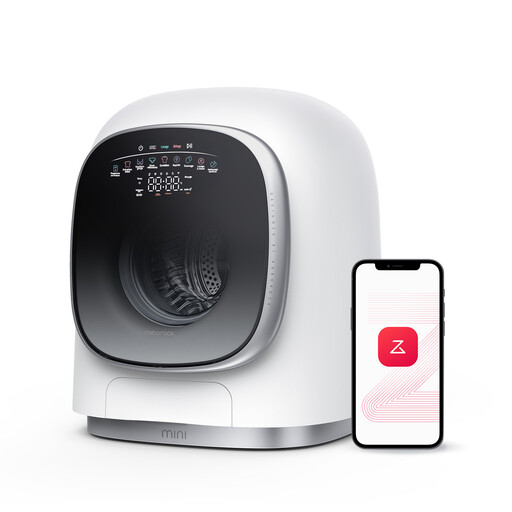
Roborock Marshmallow Zeo Mini washer-dryer

Roborock Marshmallow Zeo Mini, 1 kg / 0,5 kg washer-dryer

This washer-dryer is designed for very small loads, not for drying a full family wash.

Its stated capacities are 1 kg for washing and 0,5 kg for drying. Even with a ‘Mini’ appliance, measure the space and check the connections required before you buy.

View on Joybuy
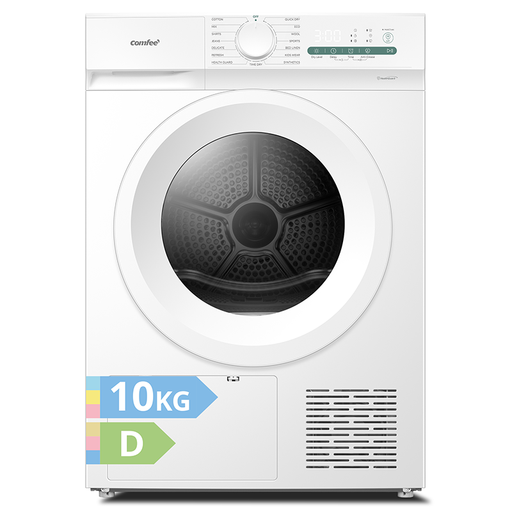
Comfee CD10EHP05W-HR heat-pump tumble dryer

Comfee CD10EHP05W-HR, heat-pump tumble dryer listed as 10 kg

This separate tumble dryer may be worth adding to your comparison if you’re looking for a heat-pump model, but don’t choose it based on the name alone.

The title lists 10 kg, while the detailed description gives a capacity of 8 kg. Ask for confirmation of the drying capacity for this variant. Also check its dimensions, condensate management and the figures for the programme you want to use.

View on Joybuy

Frequently asked questions

Can a washer-dryer dry the whole load it has just washed?

Yes, but only if the load doesn’t exceed the drying capacity allowed for the programme you choose. For example, the specifications for some Haier, Whirlpool and Bosch models list capacities of 8/5 kg, 8/6 kg and 9/6 kg for washing/drying respectively. A full wash load may therefore need to be split.

Do you need to empty the tank on a condenser tumble dryer?

Yes, if the water collects in a tank and there’s no compatible direct-drain connection installed. Some models can be connected with a suitable accessory; check the manual, that the kit is compatible and where you can drain the water.

What should you compare on a washer-dryer’s energy label?

Compare the figures for the cycle you’ll use, particularly energy, water and duration, rather than looking at the class alone. The European Commission provides this information for washing machines and washer-dryers; compare appliances on the same usage basis.

What maintenance does a tumble dryer need?

Follow the cleaning instructions for your model, especially for the fluff filter and any accessible parts. For the relevant appliances, Electrolux recommends cleaning the filter at the end of every cycle. If you don’t use direct drainage, also check how often you need to empty the tank.