If you want to dry your laundry regularly without an airer and have enough space, consider a heat pump tumble dryer. If you plan to keep using an airer, a dehumidifier can help with drying, but it won’t replace a well-ventilated room. If you only have space for one appliance, compare a washer-dryer with air-drying: its drying capacity is lower than its washing capacity, according to UFC-Que Choisir.
Who are these options for ?
Renter with limited space
If there’s no room in your flat for a second appliance, compare a washer-dryer with an airer before considering a dedicated tumble dryer. UFC-Que Choisir points out that a washer-dryer can handle a smaller load when drying than when washing.
Household that often dries laundry without an airer
A dedicated tumble dryer is a good option if you regularly need to dry loads within its capacity. When choosing a heat pump model, compare programme times, energy use, noise and maintenance rather than relying on the technology alone, as recommended in UFC-Que Choisir’s buying guide.
Airer user concerned about damp
You can keep air-drying your laundry and consider whether a dehumidifier would be useful in the room. However, ADEME highlights the moisture released by laundry dried indoors and recommends choosing a well-ventilated room.
Which factors should you prioritise ?
Start by deciding whether you want to do away with the airer, keep air-drying your laundry or combine washing and drying in one appliance.
Heat pump tumble dryer
Consider this : for regular loads if you have space for a dedicated appliance.
Bear in mind : programmes can take longer than those on some older condenser models. Compare the times for the specific models you’re considering, as advised by UFC-Que Choisir.
Washer-dryer
Consider this : if you only have room for one appliance for mechanical washing and drying.
Bear in mind : you may need to remove some of a full wash load before drying, as drying capacity is lower, according to UFC-Que Choisir.
Dehumidifier and airer
Consider this : if you want to keep using an airer while collecting some of the moisture removed from the air.
Bear in mind : your laundry will still need to be hung up, and the appliance won’t replace the room ventilation recommended by ADEME.
Air-drying without a new appliance
Consider this : if you don’t do laundry often and have a well-ventilated room where you can put an airer.
Bear in mind : drying times depend on the conditions in your home, and laundry will continue to add moisture to the indoor air, as ADEME points out.
| Concern |
What to check |
Best for |
| Humidity while air-drying |
Room ventilation; for a dehumidifier, operating temperature and how to empty the tank. |
When I keep using my airer, I want to manage the moisture from my laundry better without relying on an appliance to ventilate the room. Around 36 % of consumers put this need first. |
| Space available |
Dimensions and clearance needed; drying capacity as distinct from washing capacity for a two-in-one appliance. |
If I only have space for one appliance, I need to be able to wash and dry without adding a separate machine. Saving space is the priority for around 29 % of consumers. |
| Energy use in everyday use |
Energy use per cycle and programme duration on comparable labels; maintenance requirements. |
For frequent mechanical drying, I’d rather check energy use per cycle than focus on the advertised speed. Around 21 % of consumers prioritise energy use. |
| Time and load to be dried |
Drying capacity and programme duration for your usual load. |
When I regularly need to dry several loads of laundry, I want to know what size load the appliance can handle and how long its programme takes. Capacity and time come first for around 14 % of consumers. |
Which mistakes should you avoid ?
-
Relying on a dehumidifier to solve all ongoing damp problems
Air-dried laundry adds moisture to indoor air, but damp that persists outside drying periods shouldn’t automatically be blamed on laundry. ADEME recommends using a well-ventilated room for air-drying.
Use a dehumidifier alongside your airer, rather than treating it as a replacement for ventilation. If the damp persists, find out what’s causing it instead of assuming that a more powerful appliance will be enough.
-
Comparing old and new energy ratings as if they were the same
The European Commission introduced an A to G label for household tumble dryers from 1 July 2025. An old A+++ rating doesn’t translate directly to this scale.
Compare models using the same version of the label, then check energy use per cycle, programme duration, capacity and noise.
-
Assuming a full wash load can also be dried all at once
On a washer-dryer, drying capacity is lower than washing capacity, as UFC-Que Choisir points out.
If you want to run a wash and dry cycle consecutively, size your loads according to the amount of laundry the appliance can actually dry.
Removing and hanging up some of the laundry, or running another cycle, takes extra time.
-
Choosing solely based on the shortest programme time
A programme’s duration alone doesn’t tell you how much laundry it can handle or how much energy it uses. UFC-Que Choisir highlights, in particular, the difference in energy use between heat pump tumble dryers and older condenser models.
Compare the time for a suitable load with the model’s energy use, capacity, size and maintenance requirements.
Brands to consider
Bosch
Bosch’s French range includes heat pump tumble dryers in different capacities, including 8 and 9 kg models.
- Bosch lists a self-cleaning condenser and a half-load option for the WQG2451SFR; check these features on the exact model you’re interested in.
- Also compare the dimensions, programme duration and energy use listed for each model. The WQG2451SFR’s features aren’t representative of the entire range.
Miele
Miele offers 8 and 9 kg heat pump tumble dryers for households with a suitable space.
- According to Miele France, its relevant range can be installed under a worktop or stacked, using a stacking kit where required.
- Check which configurations are compatible and read the model specifications. Features and installation requirements can’t be inferred from the brand name alone.
De’Longhi
The DD230P is a dehumidifier to consider if you plan to keep air-drying your laundry.
- De’Longhi states that the DD230P can be used from 2 °C and offers continuous drainage options; these features apply to this model.
- They don’t tell you how long a load of laundry will take to dry in your room. Also check where you’ll place it and how you’ll drain it.
Appliances for these needs on Joybuy
These models suit three ways of drying laundry in a flat: a heat pump tumble dryer, a washer-dryer or a dehumidifier used with an airer. Compare their installation requirements and capacity with your usual laundry loads.
 Image unavailable
Hotpoint CHD84MWBSEE, 8 kg heat pump
Worth considering if you want to dry regular loads mechanically without keeping an airer in the room. The listed capacity is 8 kg, and the specifications mention an Easy Cleaning 2-in-1 filter and the option of direct drainage. Check the dimensions before choosing where to put it; also compare programme duration and energy use per cycle.
View on Joybuy
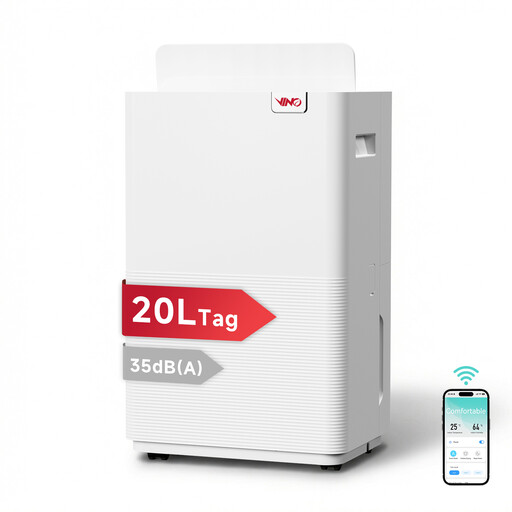 Image unavailable
VINO Smart 20 L, 2.5 L tank
Worth considering if you’re keeping your airer and want to collect the moisture removed from the air. The specifications list a Dry mode, a 2.5 L tank and a continuous drainage option. The stated capacity of 20 L per day depends on the conditions specified for the appliance; it doesn’t predict how long your laundry will take to dry. Check the room temperature and make sure there’s adequate ventilation.
View on Joybuy
 Image unavailable
Samsung WD11DG6B85BEU3, 11 kg washing / 6 kg drying
Worth considering if you only have space for one appliance for washing and drying. This model has an 11 kg washing capacity but a 6 kg drying capacity, so it can’t dry a full wash load all at once. The stated duration for the wash-and-dry programme is 7 h 32. Check the dimensions, connections and clearance needed for installation.
View on Joybuy
 Image unavailable
Comfee CD08EHP05W-HR, 8 kg heat pump
Compare it with other dedicated tumble dryers if you have room to dry loads of up to its stated capacity of 8 kg. The specifications list three drying levels and a double-layer filter. Check the dimensions before installation, then compare the eco programme duration and energy use per cycle with other models you’re considering.
View on Joybuy
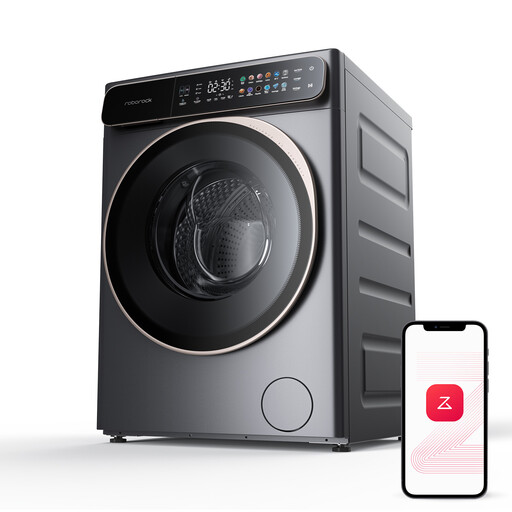 Image unavailable
Grey Roborock Zeo One, 10 kg washing / 6 kg drying
Worth considering if combining washing and drying in one appliance matters more to you than drying a full wash load in one go. The listed capacities are 10 kg for washing and 6 kg for drying. The specifications include a self-cleaning LintClear system; check the dimensions, wash-and-dry cycle duration and energy use for your needs.
View on Joybuy
Frequently asked questions
Can a dehumidifier replace ventilation while laundry is drying ?
No. A dehumidifier can help when you’re using an airer, but ADEME recommends drying laundry outside as often as possible or in a well-ventilated room. If damp persists between washes, find out what’s causing it rather than relying on the appliance alone.
Does a condenser tumble dryer need an external vent ?
No : according to the European Commission, a condenser tumble dryer doesn’t need an external exhaust vent. You will, however, need to deal with the condensed water, either in a tank or through a drainage connection compatible with the model. A vented tumble dryer works differently and expels moist air outside.
Can you dry a whole wash load in a washer-dryer ?
Not if the wash load is larger than the model’s drying capacity. UFC-Que Choisir points out that drying capacity is lower than washing capacity : check both figures separately and remove some of the laundry before drying if necessary.
How should you compare the energy labels on two tumble dryers ?
First, compare labels that use the same scale. The European Commission states that the new A to G scale has applied to household tumble dryers since 1 July 2025 : an old A+++ rating doesn’t correspond directly to it. Also check energy use per cycle, programme duration, capacity and noise for the models you’re comparing.


