Households without space for a second appliance
If you need to wash and dry in a single space, first consider how much laundry you want to dry: a washer-dryer may have a lower drying capacity than washing capacity.


If you have space for a second appliance, a tumble dryer can reduce your reliance on an airer. If you only have room for one appliance, compare washer-dryers by their drying capacity and full-cycle data. If you use an indoor airer, ADEME recommends a spin-drying efficiency class of A to help speed up drying, but you’ll still need a suitable, well-ventilated room.
If you need to wash and dry in a single space, first consider how much laundry you want to dry: a washer-dryer may have a lower drying capacity than washing capacity.
If an airer is still your main way of drying clothes, the washing machine’s spin-drying efficiency class and the room’s ventilation both matter. ADEME recommends class A to help clothes dry faster indoors.
If you regularly dry laundry and have floor space or can safely stack compatible appliances, a separate machine means you’ll rely less on an airer. Check the space available and appliance compatibility before choosing this setup.
Worth considering: if you have space for a second appliance and want to use an airer less for your regular loads.
The trade-off: you’ll need to allow space for the appliance and maintain it. Stacking requires confirmed compatibility.
Worth considering: if washing and drying need to fit into a single space.
The trade-off: you may need to split a washed load before drying. Full-cycle figures matter more than washing figures alone.
Worth considering: if you plan to keep air-drying your clothes and have a suitable room for it.
The trade-off: spinning doesn’t remove the need for an airer or for ventilation while clothes dry.
| What matters to you | What to check | Who it’s for |
|---|---|---|
| Available space | Measure the space and compare washing and drying capacities, which are listed separately in kg for a combination appliance. | I only have room for both functions in one appliance and want to know whether my usual load can also be dried. Around 33% of consumers would prioritise this space constraint above all else. |
| Indoor drying | If you’re keeping an airer, check the spin-drying efficiency class and ventilation. For a tumble dryer, check the space available and how water is drained. | Most of my laundry dries in a room where it’s difficult to set up an airer or ventilate the space properly. Nearly 27% of consumers would make reducing the amount of laundry hung out to dry their priority. |
| Energy use and laundry routine | Compare energy, water and cycle duration for the programme you’ll use. For a washer-dryer, check the wash-and-dry figures, which differ from those for washing alone. | I expect to dry clothes regularly and need to plan my laundry around cycle times and resource use. This would be the priority for around 27% of consumers. |
| Maintenance and durability | Check the instructions for access to filters and water management. For a washing machine where relevant, also look at the durability index displayed in France. | I want to be able to carry out routine maintenance and compare durability information before choosing. Around 13% of consumers would put this need first. |
For air-drying, ADEME recommends a large, well-ventilated room or one with suitable mechanical extraction. UFC-Que Choisir also highlights that most washer-dryers tested by the organisation use water during drying. So, if you plan to use this function often, check the figures for the full cycle.
A washer-dryer may take more laundry for washing than for drying. Electrolux and Miele list the capacities of the EW8W3816BI and WTW870WPM as 8/4 kg and 9/6 kg respectively.
Choose based on the second figure, which is the drying capacity, and the size of your usual loads.
For a washer-dryer, the figures for washing alone and for the wash-and-dry cycle are different. For example, Electrolux gives the EW8W3816BI an A rating for washing and a D rating for wash-and-dry.
If you’ll regularly use both functions one after the other, compare the rating, energy use, water use and duration of the full cycle.
A stacking kit may have specific requirements. Electrolux, for instance, states that its E1WYHSK2 is for certain front-loading appliances from the brand that are 52 to 67 cm deep.
Check the model numbers of both appliances, the compatible kit and the installation instructions before planning to stack them.
This setup may require a suitable stacking kit.
According to ADEME’s study on drying laundry, this activity releases a lot of moisture into the air indoors. A large, well-ventilated room or one with suitable mechanical extraction is one of the conditions to consider.
If it’s difficult to provide these conditions, factor that into your choice between keeping an airer and installing a drying appliance.
Worth considering for a washer-dryer or for stacking compatible appliances from the brand.
Worth considering if washing and drying need to share a single space.
Worth considering if you want to know what maintenance a tumble dryer requires.
These appliances offer three ways to organise laundry drying in a small home: combine washing and drying, install a separate tumble dryer, or keep using an airer with a washing machine whose spin-drying performance is worth checking. Compare each model in the category that suits your space.
 Image unavailable
A freestanding appliance that combines washing and drying. The stated capacities are 11 kg for washing and 6 kg for drying, so you may need to split a full washed load before drying. Confirm the WD11DG6B85BEU3 model number and its corresponding label, as the description also refers to WD11DG6B85BE.
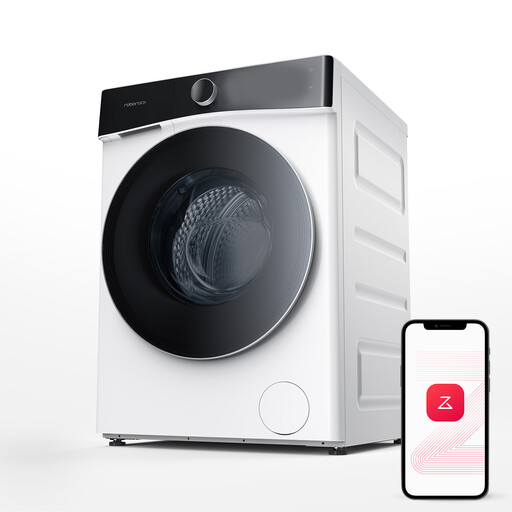 Image unavailable
A combined appliance for washing and drying. The stated capacities are 10 kg for washing and 6 kg for drying; the product description mentions the LintClear automatic filter-cleaning system. Check the dimensions, as well as the energy use, water use and full-cycle duration for this model, before choosing.
 Image unavailable
A way to rely less on an airer if you have space for a second appliance. This freestanding model has a stated capacity of 8 kg, a 2-in-1 filter and the option to connect a drain hose directly. Check its dimensions, energy label and cycle times to make sure it suits your space and laundry routine.
 Image unavailable
Combines washing and drying in a single appliance. The stated capacities are 10 kg for washing and 6 kg for drying, and the dimensions are listed as 600 × 850 × 590 mm. If you expect to use combined cycles regularly, check the model’s label for the relevant energy use, water use and cycle duration.
 Image unavailable
A washing machine listed as 47 cm deep, for use with an airer. It has an 8 kg capacity, a stated maximum spin speed of 1,400 rpm and a spin-drying efficiency class of B, rather than the class A recommended by ADEME to help speed up indoor drying. This model doesn’t dry clothes, so you’ll still need an airer and a suitable room.
Not if it’s a condenser tumble dryer. According to the European Commission, this type of appliance doesn’t need an air duct leading outside. Depending on the model, water may collect in a tank or be drained away. Check the instructions to find out which setup is required.
If you’ll use the full wash-and-dry cycle, compare its figures without confusing them with those for washing alone. Look in particular at the capacity, energy rating, energy use, water use and cycle duration listed for the programme in question.
No. A washer-dryer’s drying capacity may be lower than its washing capacity. For example, Electrolux lists the EW8W3816BI as 8/4 kg and Miele lists the WTW870WPM as 9/6 kg. Compare the second figure with the size of your usual load.
Follow the instructions for the model you choose. Bosch recommends cleaning the fluff filter after every use and removing dust from the back of its tumble dryers. For a condenser model, also check how water is collected or drained away.