Homes without an external vent
A heat pump tumble dryer doesn’t need a duct leading outside. However, where you can put it depends on the space available and how the condensed water will be collected or drained away.


If you do laundry frequently and have space for another appliance, a separate heat pump tumble dryer lets you use your washing machine again while the previous load dries. If you can only install one appliance, a washer-dryer saves space, but its drying capacity is lower than its washing capacity. The European Commission states that, since 1 July 2025, domestic tumble dryers newly placed on the EU market must use heat pump technology.
A heat pump tumble dryer doesn’t need a duct leading outside. However, where you can put it depends on the space available and how the condensed water will be collected or drained away.
With a separate tumble dryer, you can start the next wash while the previous load is drying. You’ll need enough room for both appliances, and a drying capacity that suits your usual loads.
A washer-dryer combines both functions in one appliance. You could also stack two appliances if the models, dimensions and stacking kit are compatible.
Consider this if: you want to start another wash while the previous load is drying, and have space for a second appliance, either on its own or in a compatible stacked setup.
Bear in mind: you’ll need to set aside space for it and decide how to manage the condensed water: in a tank or through a drain, if the model allows it.
Consider this if: you can only install one appliance and are able to adjust your loads to suit the drying capacity.
Bear in mind: according to UFC-Que Choisir, drying capacity is lower than washing capacity, and the drum remains in use during both operations.
| Priority | What to check | Consumers concerned |
|---|---|---|
| Space and condensed water | Check the space available, the condensate tank and whether the model you’re considering can be connected directly to a drain. | Without an external vent, I want to dry my laundry without adding a duct, and manage the collected water easily day to day. Around 37% of consumers prioritise this installation requirement. |
| Capacity and stated energy consumption | Match the capacity in kg to the loads you need to dry, then compare the energy label and the duration of a comparable programme. | For my usual loads, I want a suitably sized drum and the chance to check the stated energy consumption before choosing. This is the top priority for around 27% of consumers. |
| Laundry turnaround | Compare drying programme times and decide whether you need to keep the washing machine free while the load dries. | When I have several loads waiting, I want to start another wash without waiting for the drying cycle to finish. Around 18% of consumers prioritise this ability to keep the laundry moving. |
| One appliance or a stacked pair | Measure the space and door clearance. Check either the washer-dryer’s separate capacities or the compatibility of the appliances and stacking kit. | If I only have space for one appliance on the floor, I need to choose between a washer-dryer and a genuinely compatible stacked pair. For around 18% of consumers, this space constraint comes first. |
According to the European Commission, only domestic heat pump tumble dryers may be placed on the EU market from 1 July 2025. You may still come across existing vented or conventional condenser models.
If you’re choosing a new domestic tumble dryer, start with heat pump models. Assess the features of an older or second-hand appliance separately.
An old A+++ rating and a rating on the A to G scale aren’t consecutive levels on the same scale.
Compare the labels that apply to the models you’re considering, as well as the stated energy consumption and programme duration for comparable cycles.
UFC-Que Choisir points out that a washer-dryer can dry less laundry than it can wash. You may therefore need to split a full wash load before drying it.
Check both capacities in kg, and base the load you dry on the stated drying capacity.
Width alone doesn’t tell you whether two appliances can be stacked. For example, Bosch specifies that its 00576101 kit is for certain washing machines with a depth greater than 55 cm.
Check both appliance model numbers, their dimensions and the kit approved in the manufacturer’s documentation.
You may need a compatible stacking kit.
Bosch offers condensate drainage accessories and stacking kits, as well as washer-dryers.
Beko offers heat pump tumble dryers, including a selection that can be connected directly to a drain hose.
Miele lists load capacities of 7, 8 or 9 kg for the tumble dryers in its range.
These appliances offer two ways to cut down on air-drying: a washer-dryer if one appliance is a better fit for your space, or a separate heat pump tumble dryer if you can install two appliances. Compare the capacity and installation requirements of each model before choosing.
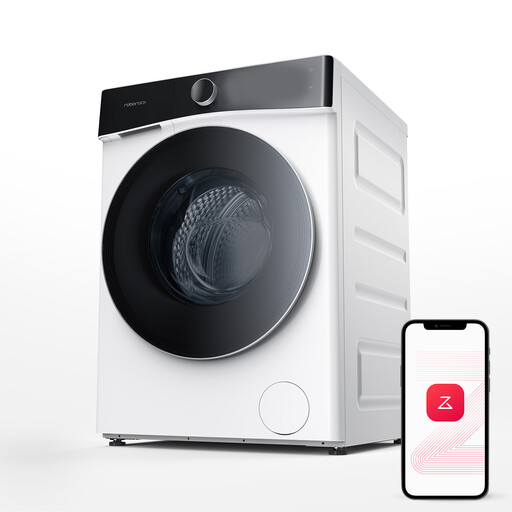 Image unavailable
Worth considering if you’re looking for one appliance to wash and dry. The stated capacity is 10 kg for washing and 6 kg for drying, so you may need to reduce a full wash load before drying it.
The product name mentions Zeo-Cycle and LintClear. Check the dimensions, connections and drying programme duration to make sure they suit your needs.
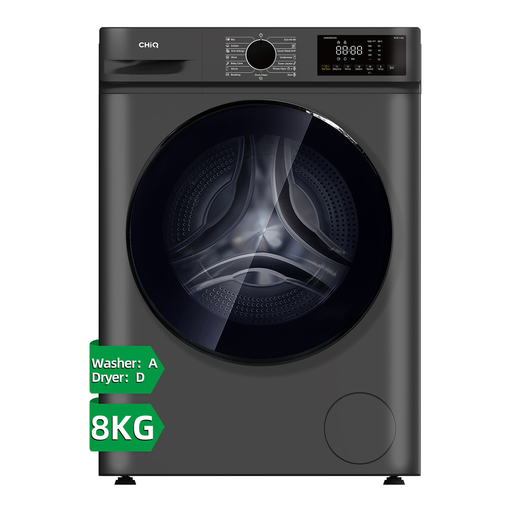 Image unavailable
This washer-dryer is designed for households that need a single appliance. Its stated capacity is 8 kg for washing and 5 kg for drying, so adjust the load if you want to dry it after a full wash.
The product title mentions a 1,400 rpm spin speed and a 15-minute quick wash programme; this duration doesn’t refer to drying. Check the dimensions and required clearances before installation.
 Image unavailable
Worth a look if you want to wash and dry with a single appliance. The stated capacities are 10 kg for washing and 6 kg for drying, so plan to reduce a full wash load before drying it.
Check the dimensions and required clearances, then look at the duration and energy consumption of the drying cycle you’re interested in.
 Image unavailable
This separate tumble dryer lets you use the washing machine for the next load while your laundry dries. Its stated capacity is 8 kg.
Before choosing this model, check that you have enough space, how the condensate is managed and whether it can be connected to a drain.
 Image unavailable
Worth considering if you have room for a separate tumble dryer. Its stated capacity is 8 kg, so compare it with the loads you usually dry.
Check the dimensions, how the condensed water is managed and the programme durations to make sure they suit your space and laundry routine.
Not for a new domestic tumble dryer placed on the EU market since 1 July 2025: the European Commission states that only heat pump models may be placed on the market. This doesn’t mean that existing vented appliances have disappeared, or that the same rule applies to washer-dryers.
No. It doesn’t expel moist air through a duct to the outside. Condensed water is collected in a tank or directed to a drain if the model and installation allow it. Check the manual before planning this connection.
No: the two models and the stacking kit must be compatible. Bosch, for example, specifies depth requirements for some kits. Check the model numbers and manufacturer’s instructions rather than relying on the appliances’ width alone.
Not if the load exceeds its drying capacity. UFC-Que Choisir points out that drying capacity is lower than washing capacity. Compare the two figures in kg and remove some laundry before starting the drying cycle if necessary.
Compare the information on the labels that apply to the models you’re considering, using a comparable programme and load where possible. Don’t transfer an old A+++ rating directly to the A to G scale; also check the stated programme duration and energy consumption.