What should you check before choosing?
Start with the space you have and how much laundry you need to dry. Then compare cycle times and energy consumption using the indicators for each type of appliance.
| Factor |
What to check |
Think about your needs |
| Laundry load |
Check the capacity in kg for the tumble dryer’s eco programme. With a washer-dryer, look at the washing and drying capacities separately: you may need to split a wash load before drying it. |
If I do several loads in a row, how much laundry do I actually need to dry each time? A small, urgent load and a full wash load may call for different appliances. |
| Space and installation |
Measure the height, width and depth, and allow for the clearances specified in the instructions. With a condenser tumble dryer, check whether the water collects in a tank or can be drained away. A vented model needs a suitable outlet to the outside, according to UFC-Que Choisir. |
I only have room for one machine: a washer-dryer could save me having to install two appliances. If I’m also using an airer, I’ll need space to put it up and hang out the laundry. |
| Energy consumption and duration |
When comparing two tumble dryers, check the kWh per 100 eco cycles, eco programme duration and corresponding capacity on the new energy label, as described by Gifam. The label for a washer-dryer gives separate figures for the full wash-and-dry cycle and washing alone, according to the European Commission. Don’t compare these figures directly with those for a separate tumble dryer. |
Will a longer cycle fit into my laundry routine? When choosing between appliances, I’d rather compare figures for the cycles I’ll actually use than rely on claims about a quick programme. |
| Air-drying and other technologies |
For indoor air-drying, ADEME recommends a large, well-ventilated room or one with suitable mechanical extraction. If you’re considering an older, conventional condenser tumble dryer, don’t compare its old energy rating directly with today’s A to G scale. |
I have the time and a suitable space to air-dry some loads, so an airer could complement an appliance. If I’m looking at an older conventional model, I need to understand its energy label in context. |
| Maintenance |
Check the instructions for the exact model to find out how to access the filter, maintain the condenser, empty the tank and make any necessary connections. A stated self-cleaning feature doesn’t replace the maintenance tasks specified by the manufacturer. |
I want to know what maintenance will be needed and whether I’ll be able to access the parts that need looking after once the appliance is installed. |
Which ranges should you look at?
These examples from well-known brands can help you spot differences between models; they don’t necessarily reflect the appliances featured below.
Bosch
Bosch offers heat pump tumble dryers in France with different capacities and features, depending on the model.
- Bosch’s product information for the WQG133DTFR lists an 8 kg capacity, 63 dB(A) noise level and dimensions of 842 × 598 × 613 mm.
- Bosch states that the WQG133DTFR doesn’t come with a drain hose. The product information for the separate 9 kg WRB247C0FR model says that it does.
Miele
Miele offers, among other things, heat pump tumble dryers with capacities that vary by model.
- Miele’s product information for the TEA525WP Active lists an 8 kg capacity and an integrated kit for draining away condensation water.
- To compare its energy consumption and cycle time with another appliance, check the label and product information for the specific model rather than relying on general descriptions of the range.
Samsung
Samsung’s French range includes heat pump tumble dryers with programmes that vary by model.
- Samsung lists an 8 kg capacity and dimensions of 600 × 850 × 600 mm for the DV80TA020DH/EF.
- Samsung’s stated 35-minute quick programme for this model is for 1 kg of laundry. Check the eco programme duration on the energy label separately.
Appliances for drying laundry at home
This selection of Joybuy products includes washer-dryers for homes with room for one appliance, and a separate heat pump tumble dryer for drying laundry after washing. Before choosing, compare their capacities with the size of your usual loads.
 Image unavailable
Samsung WD11DG6B85BEU3, 11 kg washing / 6 kg drying
This washer-dryer combines both functions in one appliance. Its stated capacity is 11 kg for washing and 6 kg for drying, so an 11 kg wash load can’t be dried all at once. Check the dimensions and connections required for your installation.
View on Joybuy
 Image unavailable
Samsung WD10HG6U34BEU3, 10 kg washing / 6 kg drying
This washer-dryer is designed for washing and drying with a single appliance. Its stated capacities are 10 kg for washing and 6 kg for drying, so compare the latter with your usual load sizes. Also check the energy label for the consumption and duration of the full wash-and-dry cycle.
View on Joybuy
 Image unavailable
Hotpoint CHD84MWBSEE, 8 kg heat pump tumble dryer
This separate appliance is for drying laundry after washing, with a stated capacity of 8 kg. Its description mentions an easy-access filter and the option to drain water directly into a drain. Before planning this connection, check the dimensions, eco programme figures and whether a hose is included.
View on Joybuy
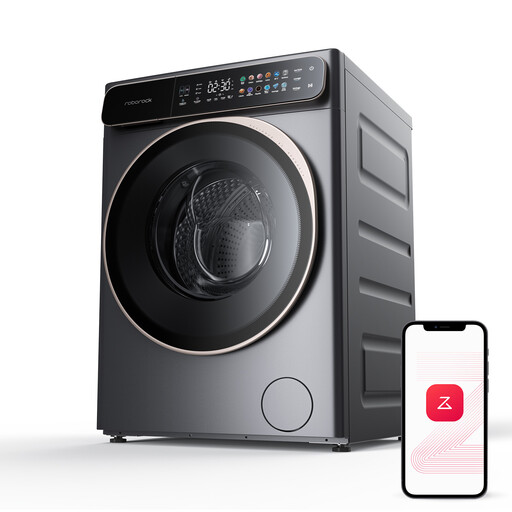 Image unavailable
Grey Roborock Zeo One, 10 kg washing / 6 kg drying
This washer-dryer is worth considering if you only have room for one appliance to wash and dry your laundry. Its stated capacities are 10 kg for washing and 6 kg for drying, so check whether you’ll need to split your loads. The description mentions the LintClear fluff-cleaning system and automatic dosing; check the instructions to see what maintenance is required.
View on Joybuy
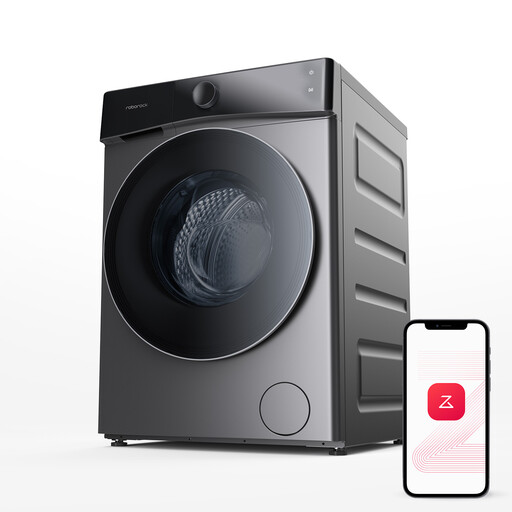 Image unavailable
Grey Roborock Zeo Lite, 10 kg washing / 6 kg drying
This washer-dryer combines both functions in one appliance, with a stated capacity of 10 kg for washing and 6 kg for drying. The description mentions Zeo-Cycle, LintClear and automatic dosing. To find out whether a full wash load can be dried without removing any laundry, start with the 6 kg limit and check the figures for the full cycle on the energy label.
View on Joybuy
Frequently asked questions
Can a conventional condenser tumble dryer still be a useful reference when buying a new appliance?
The European Commission states that, since 1 July 2025, only heat pump tumble dryers can be placed on the EU market as new domestic appliances. If you’re looking at an older conventional model, check when it was placed on the market and read its energy label rather than assuming it meets the same requirements as a newly marketed model.
Which figures should you compare on a tumble dryer’s energy label?
For tumble dryers with the new label, compare the A to G rating, kWh per 100 eco cycles, capacity and eco programme duration, as well as the noise level. For a condenser model, also check its condensation efficiency. Gifam explains that the energy consumption, capacity and duration figures refer to the eco programme. An old A+++ rating isn’t directly comparable with the new scale.
Can a washer-dryer dry its entire wash load?
Not if the wash load exceeds the model’s stated drying capacity. Washer-dryers have separate washing and drying capacities, so check both and be prepared to remove some laundry if your wash load is larger than the drying limit.
Does a heat pump tumble dryer need an outlet to the outside?
A heat pump condenser tumble dryer collects water in a tank or, depending on the model, can drain it away. It doesn’t need the external outlet required by a vented appliance, as UFC-Que Choisir explains. Still, check the instructions for clearance, the electrical supply and any requirements for a drain connection.
How do you compare the energy consumption of a washer-dryer and a separate tumble dryer?
Compare like with like: the European Commission gives separate figures for the full wash-and-dry cycle and washing alone for a washer-dryer, while a tumble dryer’s label covers its drying eco programme. For a washer-dryer, look at the energy and water consumption, capacity and duration for the full cycle. Don’t treat the washing-only figures as equivalent to drying performance.


