What to check
First, work out whether you can install a separate appliance or whether washing and drying need to share the same space. Then compare the drying capacity with the size of your usual loads.
| Criteria |
What to check before buying |
Who is it most relevant to? |
| Space for one appliance |
Appliance dimensions; wash-and-dry cycle capacity. |
If I only have space for one appliance, I want to combine washing and drying without overlooking how much laundry can actually be dried. Around 31% of consumers prioritise having just one appliance. |
| Drying capacity |
Weight of a typical load; stated drying or combined-cycle capacity. |
When I have large laundry loads, I want to avoid taking some of the washing out before drying. Around 31% of consumers prioritise being able to dry a typical load without splitting it. |
| Frequent use |
Energy use and programme duration for the model, compared on a like-for-like basis. |
If I dry laundry often, I compare electricity use and cycle times before choosing a technology. Around 23% of consumers put energy use first. |
| Room ventilation |
Instructions in the manual; airflow and space around the appliance. |
If the room has no external vent, I want to check that the planned location is suitable for the model. Around 15% of consumers make ventilation their top priority. |
Joybuy products related to this topic
This selection brings together washer-dryers and dedicated tumble dryers, so you can compare their formats, stated capacities and installation requirements against the space you have available.
 Image unavailable
Samsung WD11DG6B85BEU3 washer-dryer, 11 kg / 6 kg
Combines washing and drying in one appliance when space is limited.
Stated capacity: 11 kg for washing and 6 kg for drying. Stay within the drying cycle limit.
View on Joybuy
 Image unavailable
Samsung WD10HG6U34BEU3 washer-dryer, 10 kg / 6 kg
Worth considering if you’re looking for one appliance to wash and then dry your laundry.
Stated capacity: 10 kg for washing and 6 kg for drying. Stated dimensions: 600 × 850 × 590 mm. Check the connections and available space.
View on Joybuy
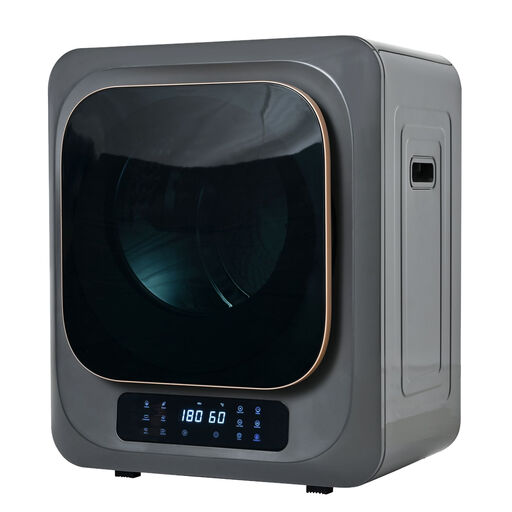 Image unavailable
Compact 3 kg tumble dryer
Worth considering for drying small loads at home.
Stated capacity: 3 kg per cycle. Check that this suits your usual needs and that the planned installation location is suitable for the appliance.
View on Joybuy
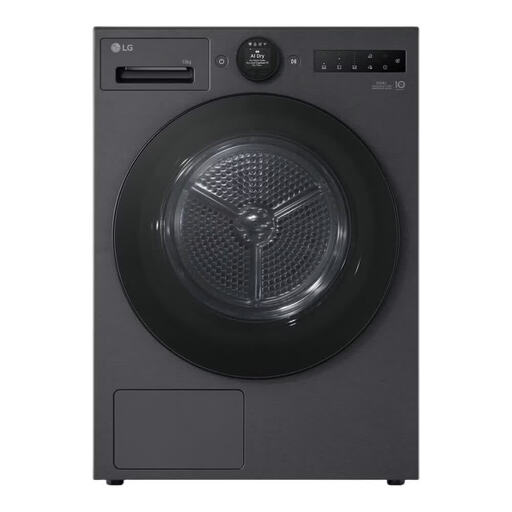 Image unavailable
LG RT10X8B heat pump tumble dryer, 10 kg
Compare this dedicated heat pump appliance if you have a separate space for it.
Stated capacity: 10 kg. Stated dimensions: 600 × 850 × 660 mm. Allow enough clearance around the appliance and for the door to open.
View on Joybuy
 Image unavailable
Electrolux EDH1018CD GentleCare condenser tumble dryer, 8 kg
Compare this dedicated condenser tumble dryer if you don’t have an external vent.
Stated capacity: 8 kg. Check the room’s ventilation and the installation instructions in the manual for this model.
View on Joybuy
Frequently asked questions
Does a condenser tumble dryer need an external vent?
No. According to the European Commission, a condenser tumble dryer doesn’t need an external exhaust duct. You still need to follow the model’s instructions and its installation and ventilation requirements.
Can you dry a whole load in a washer-dryer without taking any laundry out?
Only if the load is within the drying programme’s capacity. For example, Bosch Électroménager France lists a 9 kg washing capacity and a 6 kg wash-and-dry capacity for the WNG24402FR. Compare both capacities with the size of your usual loads.
What should you check if condensation appears in the room?
Check the ventilation and installation requirements in the model’s manual. Electrolux Assistance France recommends, for the appliances covered by its advice, avoiding a closed cupboard without ventilation.
How do you choose between a heat pump and a conventional condenser dryer?
If you dry laundry often and can install a separate appliance, compare energy use and programme times. UFC-Que Choisir describes heat pump models as generally using less energy and taking longer than conventional condenser models.
Can you compare an old A++ energy rating directly with a rating on the new label?
No. Since 1 July 2025, tumble dryer labels have used a scale from A to G, according to the European Commission. Compare labels and energy-use figures based on the system that applies to each model.


