If you dry laundry frequently and have room for a second appliance, a condenser tumble dryer—particularly a heat pump model—means you won’t need an external vent. If you only have space for one machine, a washer-dryer combines both functions, but its drying capacity is lower than its washing capacity, as UFC-Que Choisir points out. Keeping a washing machine and relying on the spin cycle is another option, if you’re happy to let your laundry finish drying indoors.
Which option is right for you?
Households without an external vent that dry laundry frequently
If you do laundry often and can install a separate appliance, start by comparing its drying capacity, dimensions and energy consumption. UFC-Que Choisir says that a condenser tumble dryer does not need to be vented outdoors.
Small homes with space for just one machine
A washer-dryer combines washing and drying in one place. However, check the maximum load for each function separately: UFC-Que Choisir points out that drying capacity is lower than washing capacity.
People who dry their laundry indoors
If you don’t want to add a tumble dryer, look at the washing machine’s spin performance, as well as its cycle times, noise levels and energy consumption. Spinning doesn’t replace mechanical drying, so you’ll still need to give your laundry time to dry indoors.
Which criteria should you compare?
The space you have available is the first thing to consider when choosing between a separate appliance and a washer-dryer. Next, compare the amount of laundry each model can actually dry and the details of the cycle you’ll use.
Standard condenser tumble dryer
Worth considering if: you have space for a separate appliance but no external vent.
The trade-off: UFC-Que Choisir notes that it generally uses more electricity than a heat pump model.
Heat pump tumble dryer
Worth considering if: you regularly dry loads of laundry and can install a separate appliance without an external vent.
The trade-off: drying can take longer than with a standard model, so compare cycle times and energy consumption across the models you’re considering.
Washer-dryer
Worth considering if: washing and drying have to fit in one space.
The trade-off: according to UFC-Que Choisir, drying capacity is lower than washing capacity, so you may need to split a full wash load before drying it.
Washing machine and indoor drying
Worth considering if: you don’t want to add a tumble dryer and can wait for your laundry to dry indoors.
The trade-off: spinning won’t eliminate drying time, and you’ll need to consider any existing damp in your home.
| What matters to you |
What to check before buying |
Who this matters to |
| Drying regular loads |
Type of tumble dryer that doesn’t need an external vent, and drying capacity in kg to suit your usual loads. |
If I do several loads in a row, I want to dry the amount of laundry I need without running lots of cycles. Around 33% of consumers would make drying capacity their priority. |
| Making the most of one space |
Separate washing and drying capacities, appliance depth and the space needed to open the door. |
With only one space available, I’d rather have both functions in one machine, even if I need to reduce the load before drying. Saving space would be the priority for around 27% of consumers. |
| Keeping energy and water use in check |
Energy, water and cycle time for the programme you’ll actually use; for a washer-dryer, compare wash-only and wash-and-dry figures separately. |
If I run cycles often, I want to compare their consumption without confusing the machine’s different functions. This would come first for around 20% of consumers. |
| Continuing to dry laundry indoors |
The washing machine’s spin performance and the dampness of the room where your laundry will finish drying. |
If I keep drying laundry indoors, I mainly want to remove more water during the wash without adding another appliance. Around 20% of consumers would prioritise spin performance. |
Mistakes to avoid
-
Choosing a vented tumble dryer without an external outlet
This type of appliance needs an opening or vent to the outside, according to UFC-Que Choisir, so it isn’t suitable for a home without one.
Make sure your chosen model uses condenser technology, with or without a heat pump, then check its installation requirements.
-
Looking only at washing capacity
On a washer-dryer, the maximum drying load is lower than the washing load. Choosing a machine based only on its washing capacity may mean you have to take some laundry out before drying.
Compare both capacities in kg, and plan consecutive cycles around the permitted drying load.
Splitting a load may mean running an extra cycle or having to intervene between washing and drying.
-
Comparing only the washing label
The European Commission provides separate figures for washer-dryer use. A figure for washing alone won’t necessarily tell you about the complete cycle.
For the models you’re interested in, compare energy, water and cycle time for the programme you plan to use.
-
Overlooking existing damp
If your home already shows signs of damp or mould, choosing a washing machine with a spin cycle won’t solve the problem on its own.
Check the condition of the room before choosing an option that leaves your laundry to finish drying indoors.
Brands to know for these types of appliances
Bosch
Bosch offers heat pump tumble dryers in France, including models with 8 and 9 kg capacities.
- Model specifications let you compare capacity, dimensions and noise levels; some models include a water drainage hose.
- Maintenance features and connection options vary by model, so check the product specifications and manual for the one you’re considering.
Electrolux
Electrolux offers washer-dryers, including heat pump models in its PerfectCare 900 range.
- Electrolux states that the EW9W1165RC model can wash up to 10 kg and dry up to 6 kg, so make sure you consider the two capacities separately.
- Electrolux gives a full-load Eco 40-60 cycle time of 9 h 40 for this model. Check the cycle time and dimensions of the specific model before choosing this set-up.
Haier
Haier offers washer-dryers in France, combining both functions in one appliance.
- For its range with a stated washing capacity of 9 kg, Haier gives a drying capacity of up to 6 kg, clearly showing the difference between the two loads.
- For the model you choose, check its depth, combined cycle details and installation requirements rather than assuming the specifications are the same across the range.
Joybuy products for different spaces
These washer-dryers are suited to homes where both functions need to fit in one space. These separate tumble dryers are for homes that can accommodate a second appliance without an external vent. Prioritise drying capacity and the space needed for each appliance.
 Image unavailable
Samsung WD10HG6U34BEU3, washer-dryer, 10 kg / 6 kg
For washing and drying with one machine. The stated capacity is 10 kg for washing and 6 kg for drying, so a full wash load may not be able to dry in one go.
Class D appears in the product name; check the wash-and-dry cycle label and the dimensions before comparing this model.
View on Joybuy
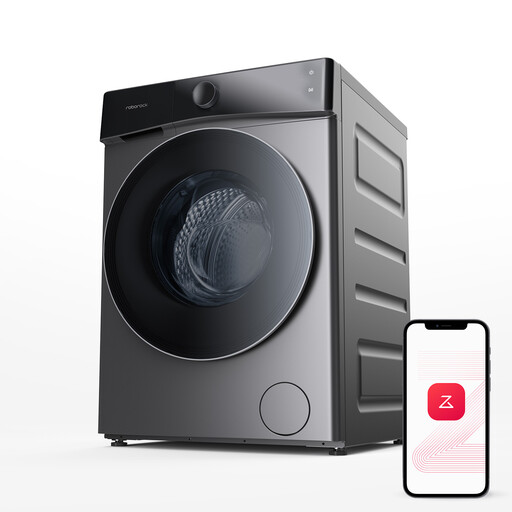 Image unavailable
Roborock Zeo Lite Gray, washer-dryer, 10 kg / 6 kg
A two-in-one option for a single space. The product has a stated capacity of 10 kg for washing and 6 kg for drying, as well as 27 wash programmes. Choose your load size based on the drying limit.
Check the dimensions and consumption figures for the cycle you’ll use before making your choice.
View on Joybuy
 Image unavailable
Hotpoint CHD84MWBSEE, 8 kg heat pump tumble dryer
Dry your laundry in a separate appliance without needing an external vent. It has a stated capacity of 8 kg, and class C appears in its name.
Check its dimensions, energy consumption figures and condensate management to make sure it will suit your installation.
View on Joybuy
 Image unavailable
Electrolux EDH1018CD GentleCare, 8 kg condenser tumble dryer
A separate condenser tumble dryer for a home without an external vent, with a stated capacity of 8 kg.
Check its dimensions and how the condensed water is collected or drained before deciding where to put it.
View on Joybuy
 Image unavailable
Comfee CD08EHP05W-HR, 8 kg heat pump tumble dryer
A separate tumble dryer that doesn’t need an external vent. The product has a stated capacity of 8 kg and energy class D.
Before buying, check the dimensions, the energy consumption for the relevant cycle and how the condensate is collected.
View on Joybuy
Frequently asked questions
Can you use a vented tumble dryer without an external vent?
No, not in a home without a suitable opening or vent to the outside: UFC-Que Choisir says this connection is necessary. A standard condenser or heat pump model avoids the need for one, but check the installation instructions.
Do you need to empty the tank on a condenser tumble dryer?
It depends on how the model drains the water removed from your laundry. UFC-Que Choisir describes either collection in a tank or drainage into a waste pipe. Check the manual to see whether the necessary hose and connection are supplied for your appliance.
Can a washer-dryer dry a full wash load?
Not if the wash load exceeds its maximum drying capacity. UFC-Que Choisir highlights the difference between the two capacities: check both figures in kg and remove some laundry before drying if the load is too large.
What should you compare on a washer-dryer’s label?
Compare the figures for the way you plan to use the appliance, particularly if you’ll run a wash-and-dry cycle. The European Commission gives details including the efficiency class, energy use per 100 cycles, water per cycle, cycle time and noise level. Don’t use the washing-only figures as a guide to the full cycle.
Is a better spin cycle enough if your home is already damp?
No. Spin performance can be one factor when choosing a washing machine, but it won’t solve existing damp or mould in your home. Check the condition of the room before relying on indoor drying for your regular laundry.


