Households doing load after load
If you often dry clothes indoors and have room for two appliances, compare drying capacity, cycle times and how condensate is managed before choosing a separate tumble dryer.


If you regularly dry full loads of washing without outdoor space and have room for a second appliance, a heat pump condenser tumble dryer can finish the job without needing a vent to the outside. A washer-dryer is a better fit if you only have space for one appliance, as long as you adjust the load to its drying capacity. An effective spin cycle helps clothes dry on an indoor airer, but it doesn’t remove the need for a drying stage.
If you often dry clothes indoors and have room for two appliances, compare drying capacity, cycle times and how condensate is managed before choosing a separate tumble dryer.
A washer-dryer combines both functions. However, check its drying capacity: according to UFC-Que Choisir, this is lower than its washing capacity.
If you still hang your washing out to dry, your washing machine’s spin-drying efficiency matters. ADEME recommends choosing class A to help clothes dry more quickly indoors.
Worth considering if: you regularly dry loads of washing and can fit a second appliance.
Bear in mind: you’ll need dedicated space and a way to manage the condensate, either in a tank or through a drain connection if the model allows.
Worth considering if: you need one appliance to handle both washing and drying.
Bear in mind: you may need to remove some of the washing before drying, as UFC-Que Choisir points out.
Worth considering if: you want to keep using an airer without adding another appliance.
Bear in mind: you’ll need room to hang your washing and time for it to dry completely.
| Feature | What to check | What I need |
|---|---|---|
| Installation | For a condenser tumble dryer, measure the space and check the manual for installation requirements. Separately, check whether the water can be drained away: Whirlpool says this depends on the model. | I don’t have a vent to the outside, and I want to know where the water collected during drying will go. |
| Capacity | Compare the washing and drying capacities, in kg, of a washer-dryer. UFC-Que Choisir notes that the latter is lower than the former. | Do I need to be able to dry a full wash load without removing any clothes? |
| Cycles and consumption | Compare like-for-like cycles. For washer-dryers, the European Commission says the energy label includes information such as energy use per 100 cycles, water per cycle and cycle duration. Check the figures for washing and for the wash-and-dry cycle separately. | I want to know how long the programme I’ll actually use takes and what resources it needs. |
| Spin cycle | Check the washing machine’s spin-drying efficiency class. ADEME recommends choosing class A if you’ll then dry clothes indoors or in a tumble dryer. | If I keep using my airer, I want my washing to come out of the machine less wet. |
| Maintenance | Check the manual for instructions on cleaning the filters and condenser. Whirlpool recommends removing dust from the filters after every drying cycle and notes that some models have a self-cleaning condenser. | I want to be able to access the parts that need maintenance and follow a routine that suits my appliance. |
A washer-dryer may be able to wash more clothes than it can dry, as UFC-Que Choisir points out. So a full wash load may not be able to go straight into a drying cycle.
Compare both capacities in kg and, if you want to run a continuous programme, limit the initial load to the drying capacity.
According to Whirlpool, whether you can connect the appliance to a drain depends on the model. If this isn’t an option, the condensate must be collected in the tank.
Check the manual for your chosen model to see whether it can be connected to a drain and whether a hose is included.
The filters and condenser need care in line with the appliance’s instructions. Whirlpool recommends removing dust from the filters after every drying cycle; some models have a self-cleaning condenser.
Before buying, check the manual to see which parts you can access and what maintenance is required.
These models illustrate features you can compare; they don’t represent each brand’s full range.
The WRB247C0FR heat pump tumble dryer is a useful example for comparing capacity and condenser management.
The EW9W1166RB heat pump washer-dryer shows why it’s important to check washing and drying capacities separately.
Whirlpool’s guidance on condenser tumble dryers can help you plan for installation and maintenance.
These four washer-dryers combine washing and drying in one appliance, making them worth considering if you only have space for one. Compare their maximum drying capacity with the size of your usual loads.
 Image unavailable
Combining washing and drying in one appliance, this model has a listed capacity of 11 kg for washing and 6 kg for drying. If you want to run both stages without removing any clothes, stick to the 6 kg drying limit.
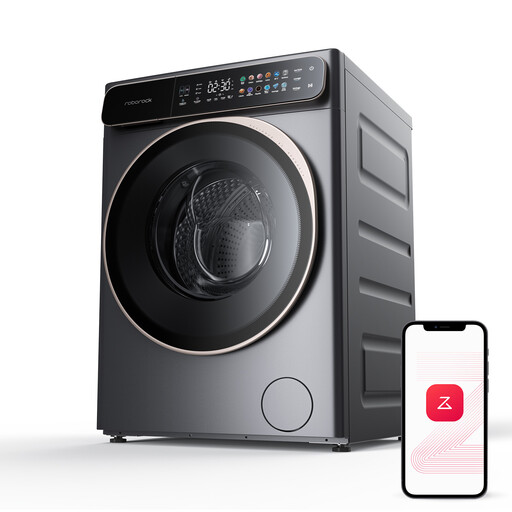 Image unavailable
This model combines both functions in one appliance, with a listed capacity of 10 kg for washing and 6 kg for drying. Its name features Zeo-Cycle drying, the LintClear system and automatic dosing; check the manual for the connections required in your space.
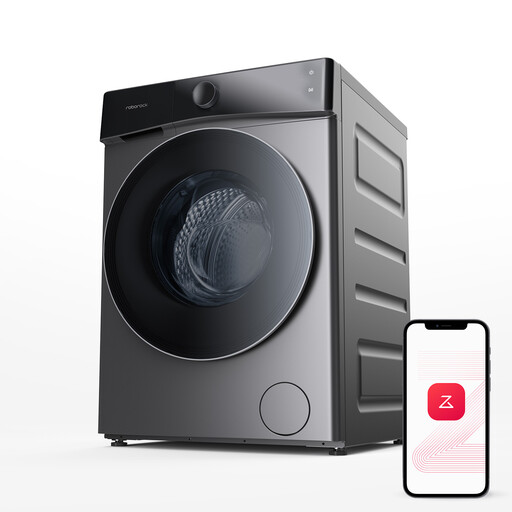 Image unavailable
For washing and drying with one appliance, this variant has a listed capacity of 10 kg for washing and 6 kg for drying. Any wash load over 6 kg will need to be reduced before drying. The model name lists 27 wash programmes, app control, LintClear and automatic dosing.
 Image unavailable
This washer-dryer has a listed capacity of 10 kg for washing and 6 kg for drying. To run both stages one after the other, adjust the load to the drying capacity. Check the manual for connection requirements and the energy label for information about the combined cycle.
No. Whirlpool explains that a condenser tumble dryer turns the moisture it extracts into water, without needing a vent to the outside. Next, check how your chosen model collects or drains the water.
Yes, if the model allows it. Whirlpool says this depends on the appliance, so check the manual for the permitted connection and any accessories you’ll need.
Its drying capacity may be lower than its washing capacity, as UFC-Que Choisir points out. For example, Electrolux lists a washing capacity of 10 kg and a drying capacity of 6 kg for the EW9W1166RB. If your washed load weighs more than 6 kg, you’ll need to reduce it before drying.
Check the figures for the combined cycle rather than looking only at the washing efficiency class. The European Commission says the energy label for washer-dryers includes information such as energy use per 100 cycles, water per cycle and cycle duration.
It helps clothes dry more quickly, but they won’t be completely dry when they come out of the washing machine. ADEME recommends choosing spin-drying efficiency class A for clothes that will dry indoors or in a tumble dryer. If you’re using an airer, you’ll still need to allow time for them to dry.