Households without an external vent
If you’re short of space to dry clothes and can’t install a vent to the outside, check the dimensions, ventilation instructions and how the model collects or drains condensed water.


If you don’t have an external vent, compare condenser tumble dryers, especially heat pump models if you use your dryer frequently. They generally use less energy, but their cycles often take longer. If speed or upfront cost matters most, check the programme times, maintenance requirements and the terms that apply to the specific unit, rather than relying on an old product listing.
If you’re short of space to dry clothes and can’t install a vent to the outside, check the dimensions, ventilation instructions and how the model collects or drains condensed water.
If you regularly dry several loads, compare heat pump models’ energy consumption on a like-for-like basis, and take capacity and programme duration into account.
If you need your laundry ready quickly, check how long the programme you want takes and weigh this against the appliance’s energy consumption and installation requirements.
UFC-Que Choisir considers factors such as energy consumption and drying time. Start by checking your installation options, then compare appliances based on your load sizes and how often you’ll use them.
| What matters | What to check | Who is it most important to? |
|---|---|---|
| Installation and water management | Measure the space and clearances specified in the manual. Check whether water collects in a tank or can be drained away. | If I don’t have an external vent, I’m looking for an appliance that can be installed in my home and a practical way to handle the condensed water. Around 33% of consumers prioritise installation without an external vent. |
| Energy use over repeated cycles | Compare labels based on the same criteria, including kWh per 100 cycles, as well as capacity and programme duration. | When I regularly dry several loads, I check the energy use that reflects how I’ll use the appliance, rather than comparing models using different figures. Around 27% of consumers prioritise energy use over frequent cycles. |
| Speed and upfront cost | Compare the duration and energy use of a suitable programme. For an older conventional model, check the sales terms for the specific unit on offer. | If I need my laundry ready quickly, I look at how long the programme I actually need takes, and accept that I may have to weigh this against energy consumption. Around 20% of consumers prioritise speed. |
| Capacity and maintenance | Check that the stated capacity suits your loads, and consult the manual for instructions on cleaning the filters, condenser and water tank. | For repeated loads of laundry, I want a capacity that suits my needs and maintenance tasks that fit into my everyday routine. Around 20% of consumers prioritise a good fit for their loads and easy maintenance. |
A vented tumble dryer expels moist air outside, so your home must allow for the installation specified in the manual.
Check your home’s layout and the model’s instructions before you buy.
Installing a suitable vent may require alterations to your home.
An older annual energy figure and a more recent kWh per 100 cycles figure don’t necessarily describe the same usage or use the same calculation method.
Compare figures based on consistent criteria, then take your number of cycles and electricity price into account to estimate running costs.
Since 1 July 2025, EU rules have governed the placing on the market of domestic tumble dryers over 3 kg, including according to their technology. A manufacturer’s product listing alone doesn’t establish the status of the specific unit on offer.
Check the technology, label and terms that apply to the specific unit, particularly for a conventional model documented before this change.
The examples listed include a 9 kg heat pump model and an older vented model.
The French product listings cited feature a heat pump model and a conventional condenser model.
The EW8H4823RO is an example of an 8 kg heat pump tumble dryer.
The C HD 84M WBS EE is an example of an 8 kg heat pump tumble dryer.
This selection includes condenser tumble dryers, several of them heat pump models, for households looking to dry their laundry without an external vent.
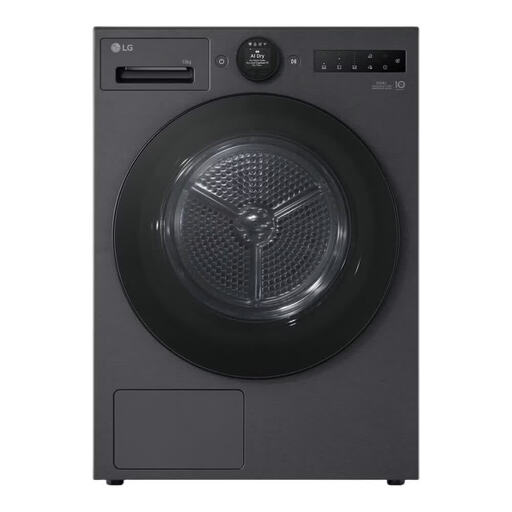 Image unavailable
Heat pump technology and condenser drying are suitable for households without an external vent. The description mentions TurboDry, a self-cleaning condenser and double lint filters.
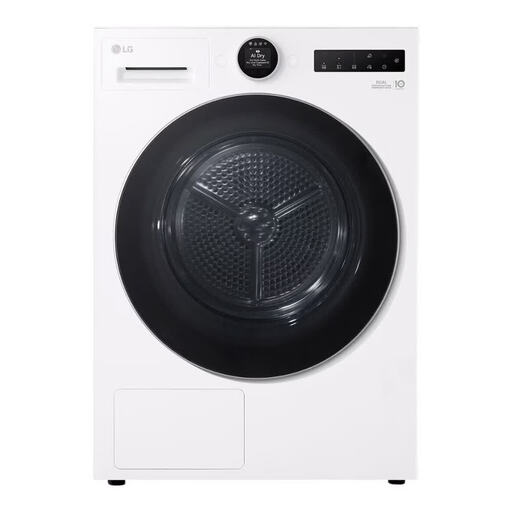 Image unavailable
The description lists heat pump technology and condenser drying, with no external ventilation required. It also says the filter should be cleaned after each cycle and that the condenser is self-cleaning.
 Image unavailable
The title describes an 8 kg condenser tumble dryer. The description mentions OptiSense sensors and a reversible door; check the exact technology and the label for the specific unit on offer before comparing it with other models.
 Image unavailable
Heat pump technology is worth considering for households looking to compare models for regular drying. The description mentions an Easy Cleaning filter accessible from the door and a direct drainage option.
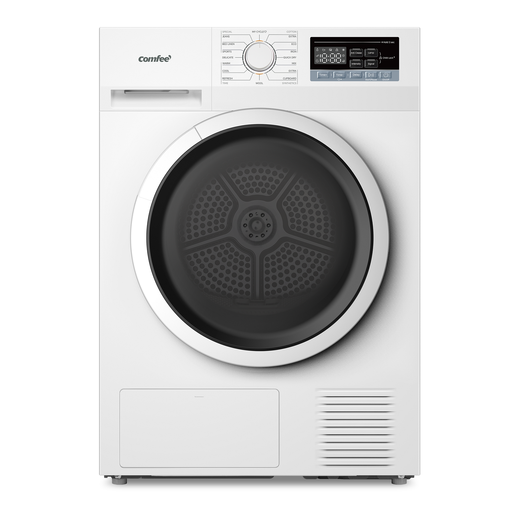 Image unavailable
The title lists heat pump technology and an 8 kg capacity. The description mentions 16 programmes, three drying levels and automatic shut-off based on humidity. Installation requires a room of at least 4 m², a direct 220–240 V earthed socket and no extension lead. The appliance contains flammable R290: don’t work on the refrigerant circuit, and have it serviced by a technician qualified to handle this refrigerant.
Yes. Condenser tumble dryers, with or without a heat pump, don’t need to vent moist air outside. Depending on the model, water collects in a tank or drains away. Also check the dimensions and ventilation instructions in the manual, as recommended by the European Commission.
Follow your model’s manual for instructions on the filters, water tank and, if fitted, the condenser. A condenser described as self-cleaning on one model doesn’t mean you can skip any other maintenance tasks specified by its manufacturer.
The legal guarantee of conformity applies to new, used or refurbished goods sold by a business to a private individual. The French Ministry of the Economy states that you have two years from delivery to exercise this right. It is separate from any commercial warranty.
Not necessarily: the rules distinguish between placing a new unit on the market and selling a unit that has already been placed on the market. Since 1 July 2025, EU requirements have limited the placing on the market of domestic tumble dryers over 3 kg to heat pump models. Transitional rules cover the sale and labelling of earlier units. Check the terms that apply to the specific unit on offer with the European Commission.
Don’t treat them as one and the same scale: according to the European Commission, the A to G label has applied to tumble dryers since 1 July 2025. When comparing products, check labels and energy figures based on consistent criteria, taking capacity and programme into account.