For frequent laundry loads, a condenser tumble dryer collects the moisture extracted from your clothes inside the appliance, provided you have enough space and a suitable way to manage the water for that model. If you need to keep using a clothes airer, a dehumidifier can help manage moisture in the room without drying clothes in a drum. Neither appliance replaces ventilation: Anses recommends drying clothes outside where possible, or in a well-ventilated room.
Who are these solutions for?
People who regularly dry their laundry in a poorly ventilated room
To limit the moisture released when drying clothes indoors, start by looking at your ventilation options. ADEME points out that air-drying laundry releases a lot of moisture indoors; Anses recommends using a well-ventilated room when drying clothes outside isn’t possible.
Households that often dry full loads
A condenser tumble dryer dries clothes in a drum and collects the moisture extracted, either in a tank or through a drain, depending on the model. Check that its capacity and installation suit your laundry needs.
People who need to keep using a clothes airer
If you don’t have room for a tumble dryer, or some fabrics need to be line-dried, you could consider a dehumidifier with a laundry mode for the room. Remember to plan for the water tank, drainage and ventilation.
What should you consider before choosing?
Condenser tumble dryer
Worth considering: for regular loads, if you can install the appliance and empty its tank or connect it to a suitable drain.
The trade-off: the appliance needs a dedicated space, and you’ll need to compare cycles, energy consumption and maintenance. A heat pump model doesn’t remove the need to ventilate your home.
Dehumidifier and clothes airer
Worth considering: when your laundry needs to stay on an airer in a room that can be kept ventilated.
The trade-off: the appliance tackles moisture in the air, rather than drying clothes directly in a drum. Results depend on the conditions in the room.
Air-drying without an appliance
Best kept to: outdoors or a room that’s properly ventilated.
The limitation: ADEME identifies air-drying as a major source of indoor moisture. Moving the airer to a closed room doesn’t solve the ventilation problem.
Once you’ve chosen a drying method, check the constraints of your room and the specific model, rather than relying on the appliance type alone.
| Criteria | What to check | What I need |
|---|
| Ventilation and moisture |
Work out where you can put the airer and how the room is ventilated. Bear in mind the difference between water collected by a tumble dryer and moisture extracted from the air by a dehumidifier. |
I need to dry laundry indoors without treating an appliance as a substitute for ventilation. |
| Loads and fabrics |
Match the tumble dryer’s capacity to the loads you actually dry, and check that its programmes suit your fabrics. With an airer, make sure there’s enough room around the laundry and the appliance. |
For regular laundry, a drum-drying cycle could be useful. For fabrics I need to line-dry, I’ll need to arrange the airer in a suitable room. |
| Energy consumption and drying time |
Compare the energy labels of similar tumble dryers and check the length of the programmes you’re likely to use. For a dehumidifier, read the conditions associated with its stated extraction rate. |
I want to compare energy consumption without overlooking how long the appliance needs to run for my use. |
| Water and maintenance |
Check whether there’s a tank or a drain connection, which accessories are required and where the appliance needs to be positioned. Also check the manual for instructions on cleaning the filters and condenser, if fitted. |
If I can’t connect a drain, emptying the tank and maintaining the appliance will become part of my routine. |
What mistakes should you avoid?
-
Assuming an appliance replaces ventilation
ADEME describes air-drying laundry indoors as releasing a lot of moisture, while Anses recommends drying clothes in a well-ventilated room if drying them outside isn’t possible.
Make ventilation part of your laundry-drying routine. If moisture persists or you notice signs of damage to your home, get the situation checked rather than relying on the appliance alone.
-
Choosing a dehumidifier based only on its litres-per-day rating
De’Longhi states that the DEXD214RF extracts 14 l/24 h at 30 °C and 80% relative humidity. This figure alone doesn’t tell you how much moisture it will extract or how long drying will take in your room.
Compare the testing conditions, then check the noise level, power, tank and drainage options for the room where you plan to use it.
Without a practical drainage option, emptying the tank can become a regular task.
-
Planning for a vented tumble dryer without a suitable outlet
A vented model needs to be connected to an outlet leading outside, unlike a condenser tumble dryer, as UFC-Que Choisir explains. The installation you have in mind may therefore not suit the room.
Check that you can provide a suitable vent before choosing a dryer, then find out how a condenser model collects its water.
-
Forgetting about drainage and cleaning
Depending on the model, water is collected in a tank or sent to a drain; filters and the condenser may also need maintenance. A feature listed for one appliance won’t necessarily be available across the whole range.
Read the manual for the exact model to check the hose, drainage point, required clearances and cleaning instructions.
Emptying a tank and cleaning filters add extra tasks each time you use the appliance.
Which brands can you use as a guide?
These ranges show some of the features you can compare. A brand appearing here doesn’t mean its models are included in the Joybuy selection below.
Bosch
The heat pump tumble dryer range offers different ways to manage water and maintenance.
- Bosch states that the WRB247C0FR has a water drain hose and a self-cleaning condenser.
- Check these features on each model; they don’t apply to every Bosch tumble dryer.
Miele
Miele France’s range includes 7, 8 and 9 kg tumble dryers.
- The range of capacities makes it easier to look for an appliance that suits the amount of laundry you usually dry.
- Check the capacity, energy label and how water is collected or drained on the product page for your chosen model.
Beko
Beko tumble dryer product pages can help you compare capacity, programme duration, noise level and filtration model by model.
- For the D34H28393A, Beko lists a double lint filter, 64 dB(A) and a 197-minute cycle for the standard full-load cotton programme.
- These figures apply to the D34H28393A and not to the whole range.
De’Longhi
Its dehumidifiers are useful points of comparison when you need to keep using a clothes airer.
- De’Longhi states that the DEXD214RF has a laundry-drying function and continuous drainage via the included hose.
- The stated extraction rate of 14 l/24 h is measured at 30 °C and 80% relative humidity; it doesn’t tell you how long drying will take at home.
Meaco
The DD8L Pro is an example of a desiccant dehumidifier to consider for an airer in a cold room.
- Meaco describes the DD8L Pro as having a laundry mode and states that it can extract moisture even below 10 °C.
- The manufacturer’s claims don’t predict how long drying will take in a particular room. Also check ventilation and how you’ll manage the water.
Which appliances should you consider on Joybuy?
This selection includes two heat pump tumble dryers for loads dried in a drum, and three dehumidifiers to consider if you’re keeping a clothes airer. For each one, check that it can be installed in your room and make sure there’s suitable ventilation.
 Image unavailable
Hotpoint CHD84MWBSEE, 8 kg heat pump tumble dryer
For loads you regularly dry in a drum, this model has a stated capacity of 8 kg and an energy rating of C. Check the manual for installation requirements and water management options, then consult the energy label before choosing.
View on Joybuy
 Image unavailable
Comfee CD08EHP05W-HR, 8 kg heat pump tumble dryer
This 8 kg tumble dryer has a stated energy rating of D and is designed for loads you want to dry in a drum. Check the manual for water management and installation requirements, and consult the energy label to compare it with similar appliances.
View on Joybuy
 Image unavailable
TRULIVA 25 L/day dehumidifier with laundry mode
Worth considering if you’re keeping a clothes airer: the product title lists a 2.8 L tank and a hose for continuous drainage. The stated extraction rate of 25 L/day is based on 95 °F and 90% relative humidity, and doesn’t tell you how long drying will take in your room. Check where you can position the appliance and its hose.
View on Joybuy
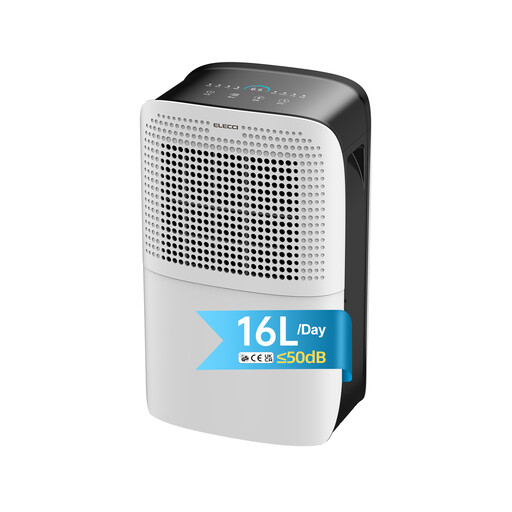 Image unavailable
ELECCI 16 L/day dehumidifier with a 3.1 L tank
This model is designed to work alongside a clothes airer and has a stated drying mode, a 3.1 L tank and a hose for continuous drainage. The 16 L/day rating can’t predict how quickly your laundry will dry at home. Check ventilation, available space and whether you can connect the hose.
View on Joybuy
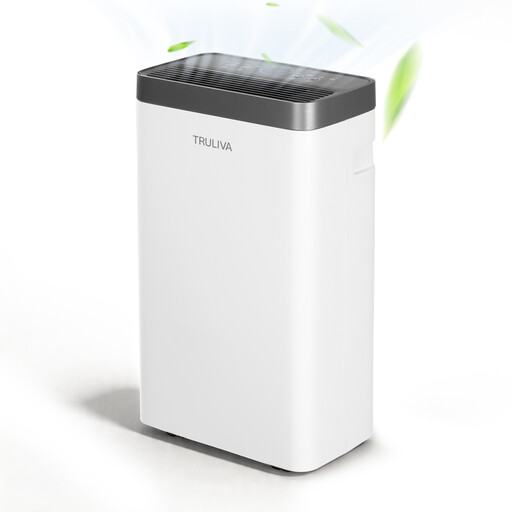 Image unavailable
TRULIVA AP10-2012EE dehumidifier with laundry mode
This model combines a stated laundry mode, a 24-hour timer and continuous drainage for use alongside a clothes airer. The timer doesn’t guarantee your laundry will be dry when the set time is up. Check ventilation and the drainage point, and remember you’ll need to empty the tank if you use it.
View on Joybuy
Frequently asked questions
Can a dehumidifier replace ventilation while laundry is drying?
No. Think of it as a way to help manage moisture around a clothes airer, not as a replacement for ventilation. Anses recommends drying clothes outside where possible, or in a well-ventilated room.
Which tumble dryer should you consider if you don’t have a vent to the outside?
Consider a condenser tumble dryer. UFC-Que Choisir distinguishes these appliances from vented models, which need an opening or duct to the outside. Then check the space available and how the model you choose manages water.
Do you need a drain for a tumble dryer or dehumidifier?
Not necessarily a connected drain, but you’ll always need a way to manage the collected water. Depending on the model, you may need to empty a tank or be able to use a hose. Check the manual for the required accessories and whether the drainage point is compatible.
How can you compare tumble dryer energy consumption?
Check the energy labels and programme information for comparable appliances, then consider how long the cycles suited to your fabrics take. EU regulations require tumble dryers sold in the European Union to carry an energy label.


