People who often dry laundry in a flat
Without dedicated outdoor space, you need to balance the room taken up by a clothes airer with the moisture it releases into your home. ADEME identifies air-drying laundry as a major source of indoor moisture.


For regular laundry, a condenser tumble dryer, particularly a heat pump model, lets you do away with a clothes airer without needing an external vent, provided you have a permanent spot for it and a suitable installation. If you need to dry clothes on an airer, choose a well-ventilated room and check how effectively your washing machine spins. A dehumidifier can help manage moisture in the room, but it is no substitute for ventilation.
Without dedicated outdoor space, you need to balance the room taken up by a clothes airer with the moisture it releases into your home. ADEME identifies air-drying laundry as a major source of indoor moisture.
If you do laundry regularly, compare a tumble dryer’s capacity with the size of your usual loads, then check its dimensions, power supply and how it handles condensed water.
A dehumidifier with a laundry mode can help when drying clothes on an airer, as long as the room is suitable for the appliance. However, the airer should still be kept in a well-ventilated space, as recommended by ANSES.
Worth considering: if you regularly dry full loads and can set aside space for the appliance. UFC-Que Choisir says condenser models, including heat pump dryers, do not need to be vented to the outside.
The trade-off: you’ll need to consider the power supply, how the water is collected or drained, and the maintenance specified in the instruction manual.
Worth considering: if you have space to dry clothes in a well-ventilated room and don’t want to dedicate space to a tumble dryer.
The trade-off: your laundry will take up space while it dries and release moisture into the air indoors, as ADEME points out.
Worth considering: if you still need a clothes airer and would also like to remove moisture from the room while it’s in use.
The trade-off: the appliance needs electricity and you’ll need to manage the water it collects. Its stated extraction rate depends on the test conditions, and it is no substitute for ventilation.
Once you’ve chosen an option that suits your home, compare the appliance’s features with your laundry loads and the space where you plan to put it.
| Priority | What to check | Your needs |
|---|---|---|
| Moisture | For a clothes airer, check the ventilation or existing extractor. For an appliance, look at how it collects water and the conditions it needs to operate. | I want to avoid leaving damp laundry in a living space for a long time. ANSES recommends drying it in a well-ventilated room if it cannot be dried outdoors. |
| Load size and spin cycle | Compare the tumble dryer’s capacity with the loads you actually wash, and check the limits for its individual programmes. ADEME highlights the value of an effective spin cycle when drying laundry indoors or in a tumble dryer. | I sometimes do full loads, so I want to know whether I can dry them without splitting them into smaller loads. |
| Installation | Measure the space, access routes and clearances required by the instruction manual. Check the tumble dryer’s socket and circuit, as well as access to the water tank or a drain. | Space is limited in my home, so the appliance needs to fit, be installable and remain accessible for maintenance. |
| Everyday use | Check the noise level, programmes and cleaning requirements. For a dehumidifier, compare extraction rates only when the temperature and humidity conditions are the same; for a tumble dryer, check the energy label for the exact model. | If the appliance is used near an occupied room, noise and regular emptying or cleaning will factor into my choice. |
According to UFC-Que Choisir, these appliances need to be vented to the outside, so they cannot be installed in the same way as a condenser model.
If there’s no outlet, consider a condenser tumble dryer and check the installation instructions for the model you choose.
De’Longhi states that the Tasciugo AriaDry Multi DEXD214RF removes 14 L/24 h at 30 °C and 80 % relative humidity. This figure does not directly predict how much moisture it will extract in your room.
Compare the temperatures and humidity levels used for the measurements, then check the noise level, tank and drainage options.
The Bosch WQG2450SFR measures 842 × 598 × 613 mm, according to Bosch Électroménager France. You’ll also need to check the clearances required for installation. Promotelec notes that dedicated circuits are used for appliances such as tumble dryers.
Measure the space and the doorway, then check the instruction manual, electrical circuit and access to the drain before choosing.
An unsuitable space or circuit could mean choosing a different appliance or adapting your installation.
A dehumidifier can collect water while laundry dries on an airer, but it is no substitute for the ventilation recommended by ANSES.
Make sure the room is suitably ventilated. If damp persists or mould appears, have the cause investigated in your home rather than relying on the appliance alone.
These features apply to the models mentioned, not to every product made by each brand.
The WQG2450SFR is an example of a 9 kg heat pump tumble dryer featured by Bosch Électroménager France.
Miele’s range includes the TEA525WP 8kg Active heat pump tumble dryer, whose product details mention the option of stacking it with a washing machine.
The Extrême Dry Compact+ is a dehumidifier that Rowenta France presents for managing moisture.
The Tasciugo AriaDry Multi DEXD214RF is an example of De’Longhi’s domestic dehumidifiers.
This selection includes heat pump tumble dryers for a permanent space and dehumidifiers to use alongside a clothes airer. Check the requirements of your room and the model before choosing.
 Image unavailable
Designed to help when using a clothes airer, this model has a laundry mode, a 2,8 L tank and a hose for continuous drainage. Its stated rate of 25 L/day is based on 95 °F and 90 % relative humidity, and does not guarantee the same extraction rate in your room. Allow for the 10-inch clearance specified in the product description, and check the noise level for your intended location.
 Image unavailable
Compare the stated 8 kg capacity with the size of your usual laundry loads. The product description lists energy class C, a noise level of 64 dB and direct connection of the drain hose. Check its dimensions, installation clearances and whether the drainage setup will work in your chosen location.
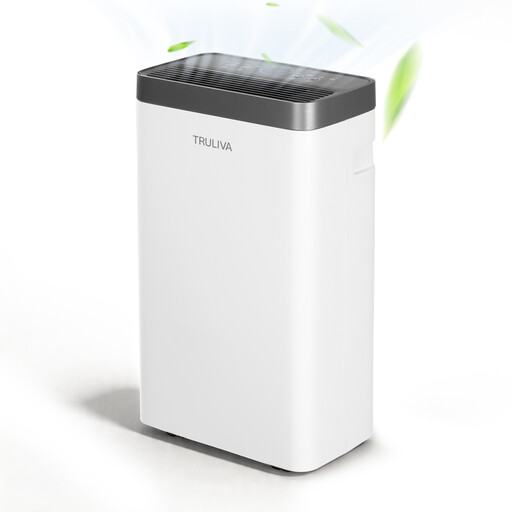 Image unavailable
The DRYING mode and continuous drainage hose make this model suitable for use alongside a clothes airer. The product details state a rate of 16 L/day at 95 °F and 90 % relative humidity, as well as a 1,35 L tank. If you don’t use continuous drainage, remember to empty the tank. Check the noise level if it will be near occupied rooms, and allow for the stated 10-inch clearance.
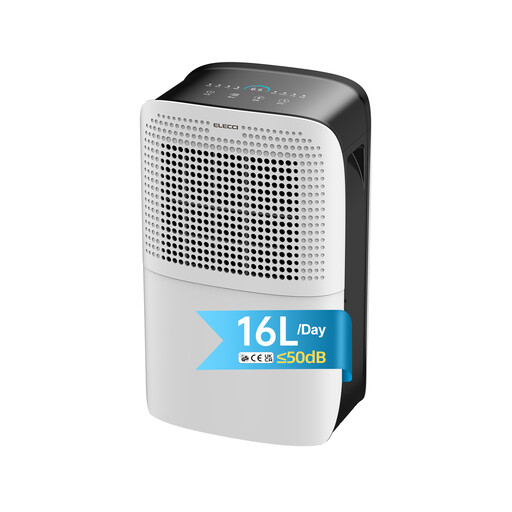 Image unavailable
The DRYING mode, 3,1 L tank and continuous drainage hose make this model worth considering for use near a clothes airer. Its stated extraction rate of 16 L/day is based on 86 °F and 90 % relative humidity, so it cannot be directly compared with a figure measured under different conditions. Check the product details for the model’s dimensions, noise level and suitable room size.
 Image unavailable
Compare this 8 kg tumble dryer with your washing machine’s capacity and the loads you dry. Its product description lists energy class D. Before planning its installation, check the instruction manual for dimensions, power supply and how it handles condensed water. Also check the programme times for the exact model.
If possible, choose a well-ventilated room instead. ADEME identifies air-drying laundry as a major source of indoor moisture, and ANSES recommends drying clothes in a well-ventilated room if they cannot be dried outdoors.
It depends on the type. According to UFC-Que Choisir, a vented tumble dryer needs a suitable outlet, whereas a condenser model, including a heat pump dryer, does not need an external vent. You should still check the space, power supply and water-handling requirements in the instruction manual.
Start with the size of the loads you actually wash. Miele generally recommends choosing a tumble dryer with a maximum load close to that of your washing machine, so you can dry a full load in one go. Also check the load limits for each programme on the model you’re considering.
No. It can collect moisture while clothes dry on an airer, but it does not replace the ventilation recommended by ANSES. Check the model’s operating conditions and tank capacity, and whether continuous drainage is suitable for your room.
Before choosing where to put it, check the socket, circuit and electrical requirements in the instruction manual. Promotelec says that dedicated circuits with 16 A sockets are provided for appliances such as tumble dryers. If you’re unsure about your installation, ask a qualified professional for advice.