Hosts who prioritise fat content
You’re getting together with friends for coffee and want to compare the fat content of frozen desserts, without assuming that a fruity flavour automatically meets your criteria.


If you’re looking for a low-fat frozen dessert in a tub to serve with coffee and friends, compare the products’ nutritional information rather than relying on the flavour or the word ‘sorbet’ alone. Some sorbets have a low fat content, while ice cream may be a better choice if you’re after a creamier texture. Also check the sugars, sharing size, allergens and storage instructions for the product you choose.
You’re getting together with friends for coffee and want to compare the fat content of frozen desserts, without assuming that a fruity flavour automatically meets your criteria.
You want to serve several people and need to choose between the container size, flavour and texture of a sorbet or ice cream.
You need to take account of ingredients and ‘may contain’ warnings for your guests, then get the dessert into the freezer promptly after purchase or delivery.
For coffee with friends, start with what matters most to you, then check that the size, recipe and storage requirements will also suit your guests.
| Criterion | What to check | Who it matters to |
|---|---|---|
| Fat content | Compare the ‘fat’ figure and its unit, whether it’s per 100 g or per 100 mL. If you’re looking for a specific claim, check that it appears on the product. | I want to choose based on a fat content I can read and compare, rather than the dessert’s name. Around 42% of consumers prioritise this criterion. |
| Size and texture | Check the container’s volume or weight, and distinguish between sorbet and ice cream before planning how to serve it. | For a dessert to share after coffee, I prioritise a container that’s suitable for the group and a texture everyone will enjoy. This is the main consideration for around 33% of consumers. |
| Allergens and storage | Read the ingredients and ‘may contain’ warnings, then follow the storage instructions on the packaging. | If my guests have allergen-related requirements, I need to choose a suitable product and store it properly until it’s time to serve. This comes first for around 25% of consumers. |
A dessert name or fruity flavour is no substitute for the values shown in the nutritional information. In the European Union, the ‘low fat’ claim is subject to the conditions set out in Regulation (EC) No 1924/2006.
Compare fat content using the same unit, and check the product you buy for any claim that matters to your choice.
On its Carrefour Extra Lemon Sorbet product page, Carrefour France displays a ‘0% fat’ claim as well as 30 g of carbohydrates per 100 g. These figures relate to different characteristics of the product.
Check the ‘fat’ and ‘sugars’ figures separately, taking into account the unit and the portion you plan to serve.
‘May contain’ warnings vary from product to product. Carrefour France, for example, warns that its Carrefour Extra Lemon Sorbet may contain traces of milk and other allergens.
Ask your guests whether they need to avoid any allergens, then check the ingredients and ‘may contain’ warnings on the packaging of the product you actually buy.
The Carrefour France product pages we checked state that the desserts should be stored at −18 °C and warn against refreezing a defrosted product.
Plan to put the dessert in the freezer promptly after collection or delivery, and follow the instructions on its packaging.
The retailer offers sorbets and ice creams in tubs, with product pages that let you compare individual products.
The brand offers sorbets and ice creams, which should be assessed individually based on the recipe and size.
The Vanilla product we looked at is an ice cream in a tub, so it’s different from a sorbet in a tub chosen for its fat content.
The Cookie Dough tub we looked at has a recipe with mix-ins, rather than being a sorbet in a tub.
The retailer offers tubs of sorbet and ice cream, which should be compared product by product.
These fruit-flavoured products are worth considering if fat content matters to you. If you’re serving several guests, compare their sizes too: the Carte D'Or product is listed in millilitres, while the ERHARD products are listed in grams.
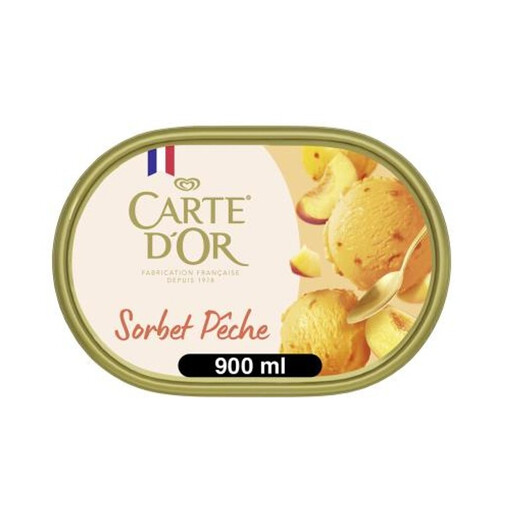 Image unavailable
Worth considering if you’d like to serve a fruity dessert in a tub for everyone to share. Joybuy lists 0.5 g of fat per 100 g for this product. The product title and description use different names for the dessert, so check the packaging, along with the sugars and allergen warnings, before serving.
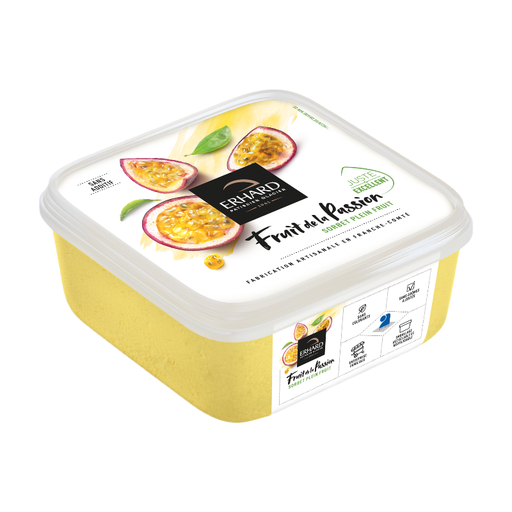 Image unavailable
Consider this if you’d like to serve passion fruit sorbet. The listed weight is 488 g; check the type of packaging and whether the quantity will suit your group. Compare the fat and sugar figures on the packaging, then check the allergen warnings.
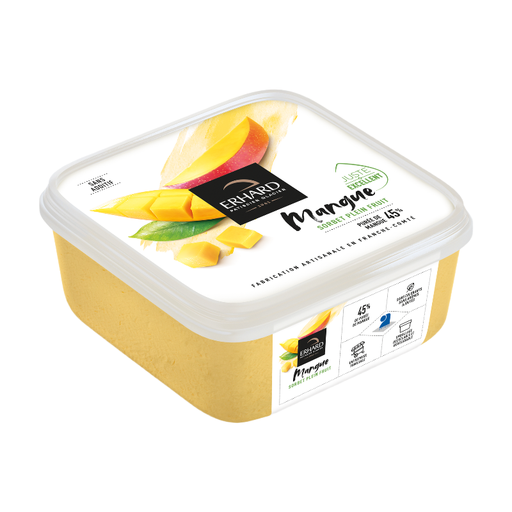 Image unavailable
Worth comparing if you’re looking for a fruity sorbet to serve with coffee. The product is listed at 488 g; check its packaging before counting on it as a tub to share. Also check the recipe, nutritional information and allergen warnings for the product you buy.
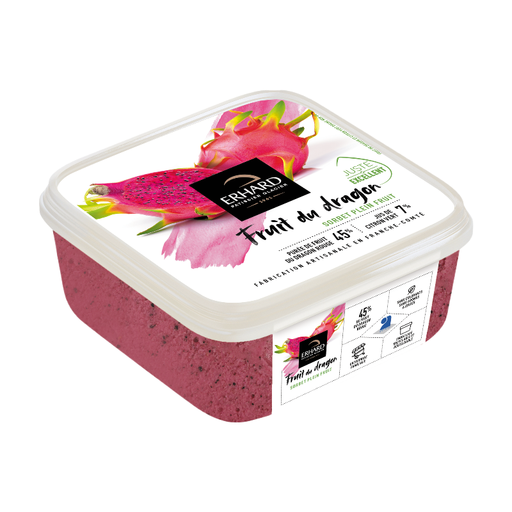 Image unavailable
Worth considering if you’d like to offer a different fruity flavour with coffee. The listed weight is 488 g; check the container to help you plan how to share it. Confirm the flavour and recipe on the packaging, then check the nutritional values and allergen warnings before choosing.
In the European Union, Regulation (EC) No 1924/2006 governs the use of this claim. The limit is 3 g of fat per 100 g for solid foods, or 1.5 g per 100 mL for liquids. When choosing a frozen dessert, check whether the product actually carries the claim and note the unit used in its nutritional information; don’t infer it from the name alone.
No. The name ‘sorbet’ alone doesn’t tell you the fat content of a product. Carrefour France lists 0.5 g per 100 mL for Carte D'Or Sicilian Lemon Sorbet, while Joybuy lists 0.5 g per 100 g for Carte D'Or Peach. Check the figure and its unit for each product, as well as the ‘sugars’ figure.
Check the specific product before serving it: ‘sorbet’ doesn’t guarantee that it contains no milk or traces of milk. Carrefour France, for example, warns that its Carrefour Extra Lemon Sorbet may contain traces of milk. Always check the ingredients and allergen warnings on the packaging of the product you actually buy.
Follow the storage instructions for the product you buy and put it in the freezer promptly. The Carrefour France product pages we checked state −18 °C and warn against refreezing a defrosted product; check the condition of the container when it arrives before putting it away.