
Livraison le jour même ou le lendemain

Qualité garantie

Débloquez vos offres de bienvenue: Livraison GRATUITE | Jusqu'à -80 % | 30 jours d'essai gratuits à JoyPlus
Téléchargez l'application
Choosing a set of triangular coloured pencils may seem straightforward. Yet between formats marketed as “ergonomic”, break-resistant leads and sets ranging from 12 to 72 colours, the differences quickly become clear in everyday use. A pencil that is too slim can slip in a child’s hand, a fragile lead may snap at the first impact, and a limited palette can leave young artists feeling frustrated.
This guide from the Joybuy Product Recommendation Officer helps you identify the features that really matter for nursery school, primary school, home use and group workshops.
A triangular barrel prevents the pencil from rolling across the table and can help children position their thumb, index finger and middle finger correctly. However, not all triangular pencils offer the same width. A standard model may be better suited to an older child, while a jumbo coloured pencil or shorter format will be easier for a small hand to hold.
Grip grooves can also make a difference. They guide the fingers, but check that they match the child’s dominant hand when the manufacturer offers separate right- and left-handed versions.
No coloured pencil is genuinely unbreakable. A thick lead marketed as break-resistant will generally withstand everyday pressure and drops more effectively, but it can still crack after hitting a hard floor.
For regular use, check the lead diameter. The STABILO Trio and STABILO EASYcolors pencils featured here have a 4.2 mm lead, while some Maped pencils designed for younger children use a 5 mm lead. These figures are more meaningful than simply describing a pencil as “strong”.
A 24-colour set does not necessarily meet the same needs as a 12-colour palette. In nursery school, a smaller, easy-to-identify selection may be more than sufficient. For classrooms, nurseries or after-school workshops, a 24-colour pack helps prevent shortages when a particular shade goes missing.
Larger palettes, such as 24-colour sets with neon, metallic or additional shades, are better suited to a wider range of creative activities. So do not compare sets by colour count alone: consider whether those shades will actually be used.
For children’s coloured pencils, a wide triangular shape provides a more stable grip than a very slim barrel. Short models can be particularly useful during a child’s first colouring sessions, as they are easier for toddlers to control.
At primary school age, a standard-length triangular barrel is better suited to detailed drawing. For adults looking for ergonomic colouring pencils, a wider barrel remains comfortable during longer sessions. The grooves should nevertheless be subtle enough not to restrict movement.
Pencils made with certified wood from sustainably managed forests can be a good choice if this matters to you. According to the supplied product information, STABILO Trio pencils have a barrel made from 100% certified wood and are manufactured in Europe.
Wood-free coloured pencils, made from resin or a composite material, eliminate splinters and may be suitable for younger children. They do not remove the need for basic precautions, however: a sharpened tip remains pointed, and pencils should never be put in the mouth.
Traditional pencils require a sharpener suited to the diameter of both the barrel and the lead. A standard sharpener may not fit a jumbo pencil. Conversely, Maped Color’Peps Infinity pencils have no wooden barrel and do not require a sharpener: using them gradually sharpens their tips.
This solution helps minimise shavings at home and in the classroom. Nevertheless, keep the pencils in their case and protect them from excessive heat and humidity.
The recommendations below are based on the features stated in the product listings: format, lead diameter, composition, colour count and included accessories.
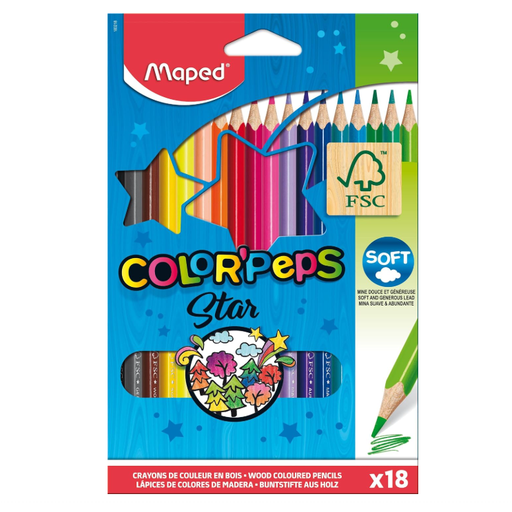
Why choose it: A versatile assortment for home, creative homework and early school activities.
The triangular shape and 2.9 mm lead offer a good balance of comfort, precision and ease of sharpening.
18 colours, a triangular barrel, FSC-certified wood according to the product listing and a lead advertised as break-resistant.
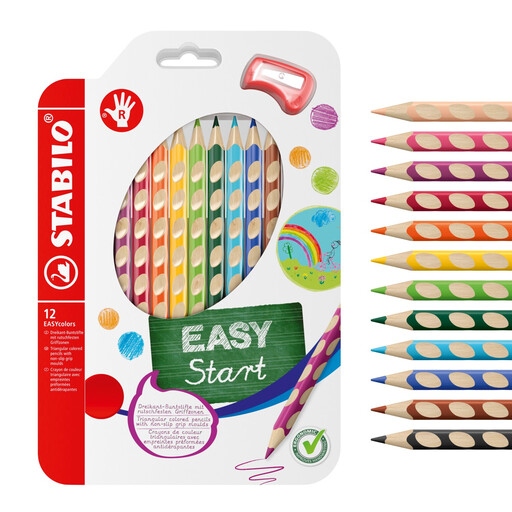
Why choose it: The right-handed version features guiding grooves, a space for writing the child’s name and an included sharpener.
Here, “ergonomic” means designed for a specific hand: check which hand is used before buying.
4.2 mm lead, 12 colours, finger grooves and an included sharpener.
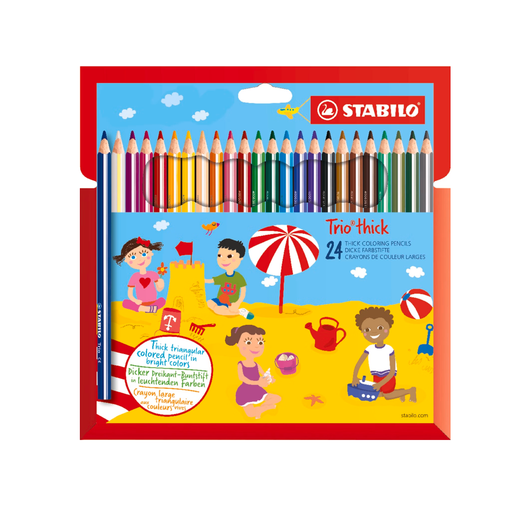
Why choose it: A generous set for repeated activities at school, nursery, home or during group workshops.
The thick 4.2 mm lead reduces the risk of breakage under heavy pressure, but does not guarantee absolute durability.
24 pencils, including 18 standard colours, a thick triangular barrel and certified wood from sustainably managed forests according to the product listing.
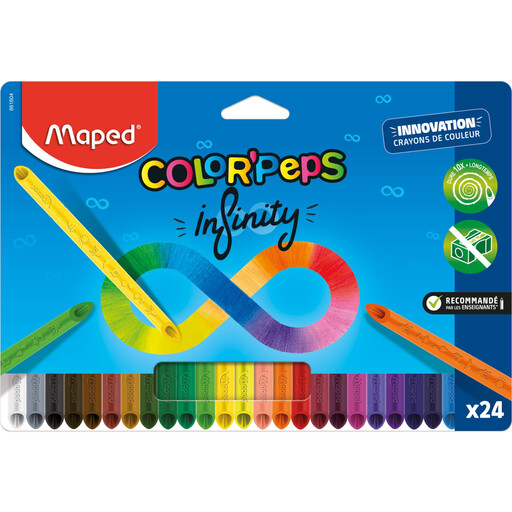
Why choose it: A practical option for travel, classrooms and families who want to do without a sharpener.
The wood-free barrel eliminates shavings and requires no sharpener, but the tip should still be protected from significant impacts.
Two ends, a lead made from resin and advertised as durable, plus a triangular shape that prevents the pencil from rolling across the table.
We have brought together an updated selection of triangular coloured pencils that meet these purchasing criteria and the safety precautions applicable in the European Union.
Yes, some models are designed for small hands, particularly short or jumbo formats and pencils with guiding grooves. However, always check the recommended age, barrel diameter and whether a right- or left-handed version is available.
A 4.2 or 5 mm lead contains more material than a fine lead and will generally withstand greater pressure. Its lifespan nevertheless depends on colouring frequency, the pressure applied and how often it is sharpened.
Wood-free coloured pencils are practical for reducing shavings and limiting the risk of splinters. Certified wooden models remain easy to sharpen and offer a more traditional feel. The best choice mainly depends on the child’s age, where the pencils will be used and whether a suitable sharpener is available.