
Livraison le jour même ou le lendemain

Qualité garantie

Débloquez vos offres de bienvenue: Livraison GRATUITE | Jusqu'à -80 % | 30 jours d'essai gratuits à JoyPlus
Téléchargez l'application
Choosing a child's first set of colored pencils? You'd think it would be child's play. Yet, faced with shelves saturated with marketing promises, the pitfalls are numerous. A poor choice not only risks dampening your budding artist's enthusiasm but can also hinder the development of their fine motor skills. As a product expert for Joybuy, my mission is to help you see clearly.
Before presenting our top picks, let's break down the 3 most common pitfalls when buying pencils for children:
To avoid being misled, focus on a few objective technical features. They are the true hallmark of quality, safety, and durability.
For young children, shape is paramount. Triangular colored pencils are highly recommended by early childhood professionals. Their shape naturally guides fingers into the correct position, effortlessly.
Combine this shape with an appropriate diameter. Chunky colored pencils for toddlers (often called "Jumbo") offer a stable and comfortable grip, ideal for children aged 1 to 4. This combination facilitates their first marks and prepares the hand for writing.
A pencil's durability doesn't depend on a promise, but on its construction.
Always check for the CE mark and the reference to the EN 71 standard on the packaging. This European standard guarantees that the product has been tested and does not contain harmful chemicals at dangerous levels. It is the only true indicator of safety for supplies intended for children.
Rather than an endless list, we've selected the best product for each age group, based on the objective criteria defined above.
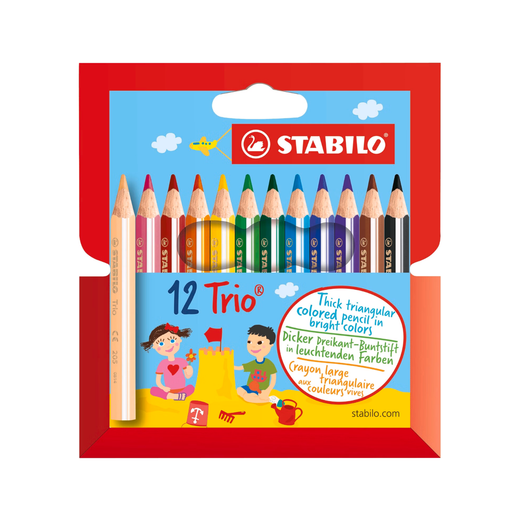
The verdict: Its short, chunky design is specifically engineered for the smallest hands. It offers an intuitive and secure grip for toddlers just discovering coloring. The benchmark for starting out with excellent first colored pencils.
Its extra-wide 4.2 mm lead effortlessly withstands the sometimes... energetic pressure from toddlers, where a standard pencil would snap instantly.
Perfect ergonomics for toddlers thanks to its triangular shape and short format. Wooden barrel sourced from sustainably managed forests.
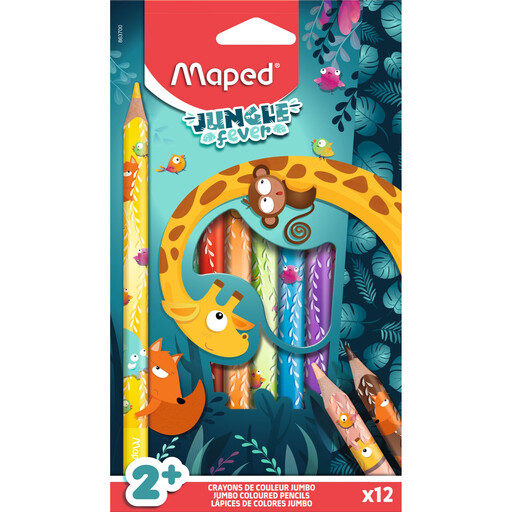
The verdict: Perfect for starting preschool, this model combines a jumbo triangular shape for an excellent grip with a very wide lead to cover large areas effortlessly. The fun patterns are an added bonus to motivate your child.
Its synthetic resin barrel eliminates any risk of splinters if it breaks, a real safety advantage over traditional wood.
Giant 5 mm lead, ultra-resistant and with great coverage. Wood-free design for enhanced safety. Complies with toy regulations.
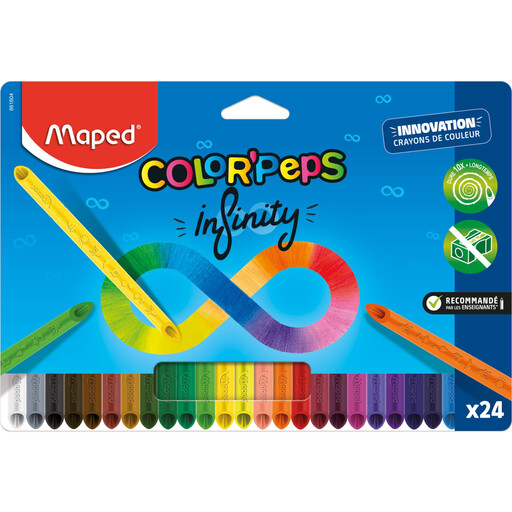
The verdict: For artists who fly through coloring books, this innovative pencil is the ultimate solution. Made of 100% lead, it lasts an incredibly long time and never needs to be sharpened.
No more lead breaking in the sharpener! This pencil self-sharpens as you color. The result: zero shavings, zero frustration, and zero waste.
100% lead design for a lifespan up to 10 times longer than a classic pencil. Patented ergonomic triangular shape for optimal comfort.
Discover our full selection of products that meet our quality criteria and the strictest UK safety standards.
From 12 to 18 months, a toddler can begin to handle chunky colored pencils for toddlers with a triangular shape. The short "Jumbo" format is particularly suitable for this age to facilitate grip and ensure safety, always under adult supervision.
Don't just rely on the "non-toxic" claim. The most reliable indicator is the presence of the CE mark and compliance with the EN 71 Toy Safety Standard on the packaging. This certifies that the product has undergone rigorous testing and is safe for use by children.
For the youngest children, resin offers an undeniable safety advantage: it doesn't produce splinters if it breaks and often holds up better to chewing. For older children, the choice between wood (often from sustainably managed forests) and resin is more a matter of personal preference.