
Livraison le jour même ou le lendemain

Qualité garantie

Débloquez vos offres de bienvenue: Livraison GRATUITE | Jusqu'à -80 % | 30 jours d'essai gratuits à JoyPlus
Téléchargez l'application
For any gardener, nothing beats the satisfaction of optimising a vegetable patch and watching climbing plants thrive. Trellis netting is a simple yet incredibly effective tool for achieving this. The problem? The market is flooded with options, and they are far from equal. The wrong choice can lead to a compromised harvest and hours of wasted work.
Before you buy, it's essential to know how to avoid the common pitfalls. Some nets, while seemingly sturdy, disintegrate after just one summer in the sun. Others have a mesh that strangles young shoots or, conversely, offers no real support. And what a disappointment to see your netting sag or tear under the weight of your finest tomatoes! This guide is here to help you see clearly and make the right choice.
To avoid unpleasant surprises, focus on three technical points that make all the difference in terms of effectiveness and longevity.
The choice of material is absolutely crucial for the lifespan of your climbing plant netting.
Mesh size is far from a minor detail. If it's too small, it can constrict stems or hinder the growth of fruits (like cucumbers). If it's too large, it won't provide dense enough support for tomatoes and cucumbers, allowing branches to bend, or even break, under their own weight.
Generally, a square mesh of 15x15 cm to 20x20 cm is the ideal all-rounder for most vegetable garden plants: tomatoes, cucumbers, peas, pole beans... It gives plants a good grip while leaving enough space to get your hand through during harvest.
Pea and bean netting must be able to handle significant weight at the end of the season when the fruit is mature. Its tensile strength is therefore a critical factor, even if manufacturers rarely provide specific figures. It depends on both the material and the manufacturing method.
For example, netting made through an extrusion and bi-stretching process will be much stronger than simple woven netting. It won't deform or break under the weight of the harvest, guaranteeing flawless support all season long. This is a decisive point if you plan to use your trellis for climbing plants for heavy vegetables.
Here are a few products that meet our criteria for quality and durability, adapted for different uses.
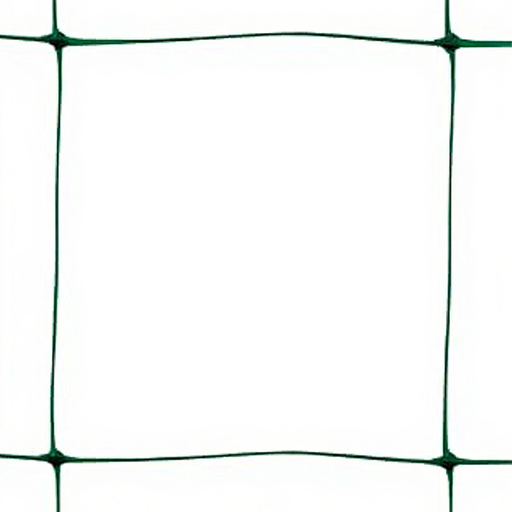
Why we recommend it: With its 40 m², this netting is designed for gardeners who think big: long rows of beans, peas, or multiple tomato and cucumber plants. It allows you to structure a large vegetable garden in a simple and uniform way.
Its UV-treated, tear-resistant polypropylene design ensures it won't sag under the weight of a bountiful harvest. Unlike entry-level nets, it's made to be reused for several seasons.
An excellent surface area-to-price ratio. Its robustness guarantees reliable support even for the heaviest crops, like tomatoes or squash.
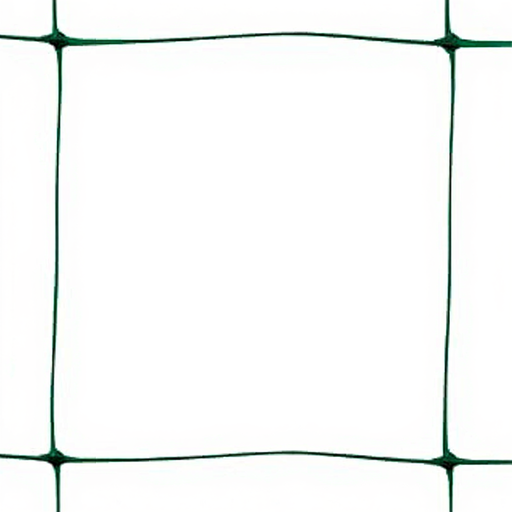
Why we recommend it: Its compact size is perfect for raised garden beds, balcony planters, or for creating a small green wall. It's the ideal solution for vertical gardening and saving ground space.
Its smaller size doesn't sacrifice quality. It features the same durable polypropylene construction as the larger models. It won't degrade in the sun and can be reused, a real plus for budget-conscious gardeners.
Lightweight, easy to cut and install on stakes or a frame. Perfect for custom vertical gardening projects in tight spaces.
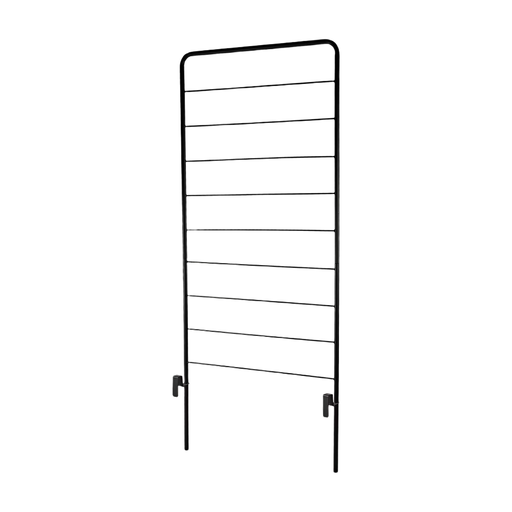
Why we recommend it: For those who want to combine function with style. This metal trellis is more than just a support: it's a true decorative element that enhances climbing plants (roses, clematis, jasmine) and adds structure to your space.
Its powder-coated steel structure is designed to withstand the elements and UV rays without flinching. It's a long-lasting investment that won't warp or rust after the first winter, unlike many low-end metal trellises.
Its dual purpose: an ultra-sturdy growth support and a decorative object with a contemporary design. It can be installed permanently, either staked in the ground or fixed to a wall.
Explore our full selection of products, all chosen for meeting our criteria for quality and durability.
It's very simple. Stretch the netting vertically between two sturdy posts or stakes. Make sure it's taut to prevent it from sagging under the weight of the vegetables. Secure it at the top and bottom with wire, zip ties, or dedicated clips like the Tenax fixing clips. For horizontal growing (the famous "SCROG" technique), stretch the netting over a wooden or PVC frame above your plants.
Absolutely, provided you choose a quality model. A UV-treated polypropylene or polyethylene net can easily be used for several seasons. At the end of autumn, simply remove any plant debris, clean it if necessary, and then store it in a dry place away from light until spring.
Plastic netting is the most flexible solution: lightweight, affordable, and easy to install or remove. It's perfect for annual vegetable crops. A metal trellis, on the other hand, is more rigid, more durable, and often more aesthetically pleasing. It's a long-term investment, ideal for perennial climbing plants (roses, wisteria) or for use as a permanent decorative feature.