
当日/次日达

品质保障

开启新人专享福利: 全场免邮 | 低至 2 折 | 免费试用 30 天 JoyPlus 会员
下载 Joybuy
A trellis net for climbing plants helps you free up ground space, guide stems and make harvesting much easier. But not every model is suitable for a greenhouse, balcony or row of beans. A poorly chosen size, inadequate fixings or a material that can't stand up to sunlight can turn a small saving into a recurring expense.
Before comparing the options, here are the most common pitfalls and the criteria to check when choosing a support that's right for your crops.
A 10-metre net doesn't necessarily cover a great height. A 1.5 × 10 m model works well for a low structure or a single row of plants, while a 1.7 × 10 m net offers more height for beans, cucumbers or certain climbing flowers.
Always check the unfolded or stretched dimensions, as well as the usable width of your growing bed. Also allow some extra margin for fixing the net to the posts.
The term "strong" isn't enough to compare two nets. Look for concrete information about the material, UV treatment and manufacturing method. A UV-resistant polypropylene net is designed for outdoor use, but it's still best to store it away over winter to slow down ageing.
Polypropylene won't rust like metal. However, you should regularly check the mesh and attachment points, especially once the fruit starts to get heavy.
Even a sturdy net can come loose if the posts are too far apart, the tension is too high or the screws aren't suitable for the surface. The net must be installed on a stable structure: it should never be used as a ladder or to support a person.
On a wall, fence or grid, trellis fixing clips can complete the installation. In the vegetable patch, make sure you have rigid enough stakes and ties that are compatible with their diameter.
The Tenax Flora nets shown here are made from plastic, specifically polypropylene depending on the model. The product sheets mention weather and UV resistance, as well as being corrosion-free. These features make them suitable for a vertical growing net installed in the vegetable patch or greenhouse.
The mesh needs to be open enough to allow air circulation and let light through. A 150 × 170 mm mesh lets stems gradually weave through, but a finer grid may be better for peas or plants with delicate tendrils. Check the technical details before ordering if the mesh size isn't stated.
A tomato support net can be installed vertically between posts. For beans, the runner bean net needs to be taut enough so it doesn't sag under the weight of the pods. Cucumbers and peas also benefit from vertical guidance, provided you have a stable fixing.
Position the net slightly above the ground, then fix it to posts, a greenhouse frame, a fence or a frame. Avoid over-stretching it: too much tension can distort the mesh and weaken the attachment points.
At the end of the season:
For wall fixing, the Tenax Green Wall Clips kit includes 6 clips, 6 stainless steel screws and 6 wall plugs. The product sheet specifies the clip dimensions: 2.8 × 2.8 × 3.5 cm. Check the compatibility of the wall plugs with your wall type before fitting.
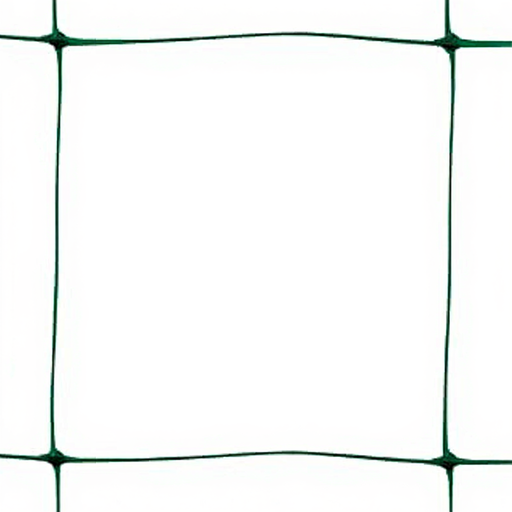
Why this choice suits this profile: Its 1.5 × 10 m size is ideal for a small vegetable patch, a well-arranged planter or a first-time frame installation.
The size is clearly stated, so you won't pay for excessive length when the area to cover is limited.
A lightweight, flexible net designed to be fixed to posts, frames or fences.
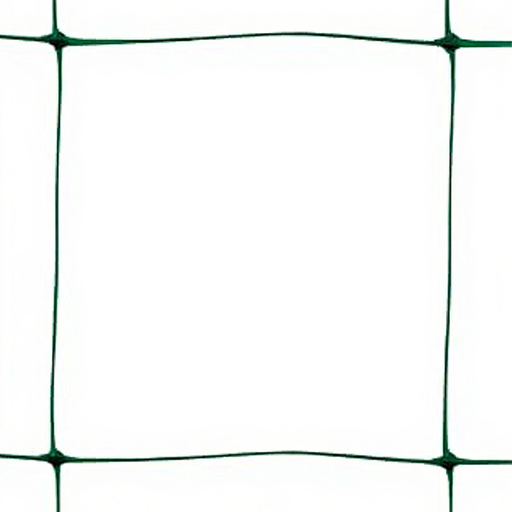
Why this choice suits this profile: The 2 × 20 m roll provides generous coverage for several growing areas or a large greenhouse.
The long length reduces the need for makeshift joins, which often cause sagging in the middle of the row.
Polypropylene, open mesh and the option to install vertically or horizontally depending on the crop.
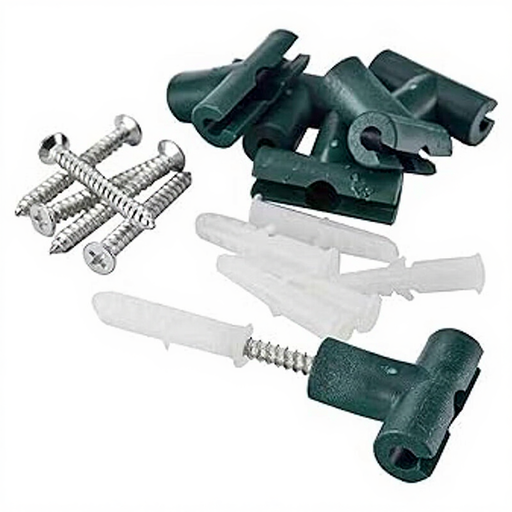
Why this choice suits this profile: This kit is ideal for installations on a wall, gate, fence or balcony where traditional posts aren't an option.
The included screws and wall plugs mean you don't have to source a separate fixing system, provided they are compatible with your wall surface.
Six plastic clips and six stainless steel screws to distribute the fixing across a vertical surface.
We've put together a comprehensive, real-time updated list of products that meet these demanding selection criteria and European safety regulations.
Fix it vertically between posts or on a rigid frame. Spread the attachment points along the sides and at the top, then leave a little slack in the net. The beans and peas will then be able to cling to it as they grow.
It depends on exposure, the weight of the crops, the tension applied and off-season storage. A UV-treated net can be reused as long as it remains in good condition. Inspect the mesh before each planting and replace it if significant tears appear.
The 1.5 × 10 m climbing net is suitable for small structures and crops that stay relatively low. The 1.7 × 10 m climbing net gives you more room for tomatoes, beans and cucumbers that grow tall. Measure your support before buying to avoid unnecessary cutting.