
Livraison le jour même ou le lendemain

Qualité garantie

Débloquez vos offres de bienvenue: Livraison GRATUITE | Jusqu'à -80 % | 30 jours d'essai gratuits à JoyPlus
Téléchargez l'application
While it may seem like a simple accessory, trellis netting is a crucial ally for any gardener looking to optimise their vegetable patch. Good netting can transform a harvest, whereas a poor choice can quickly become a headache. To help you avoid disappointment, we've analysed the common pitfalls and essential criteria for finding the model that will support your crops, season after season.
The market is flooded with trellis netting, but not all are created equal. Some flaws, invisible at first glance, can ruin your gardening efforts. Here are the three most common mistakes.
The most common trap? Low-grade materials. Many budget-friendly nets are made from plastic that hasn't been treated to resist ultraviolet (UV) rays. The result: after just one season in the sun and rain, the plastic becomes brittle, tears at the slightest touch, and ends up in shreds throughout your garden. The initial savings turn into an annual repurchase and microplastic pollution in your soil.
Mesh size is anything but a minor detail. A mesh that's too small (less than 10x10 cm) might seem sturdier, but it risks constricting large fruits like cucumbers or certain tomatoes and makes harvesting difficult without damaging the plant. Conversely, a mesh that's too large won't provide enough support for young shoots or plants with fine tendrils, like peas.
Some nets, especially those with very fine threads, turn into an inextricable knot right out of the package. What should have been a quick setup for your support for tomatoes and cucumbers becomes a true test of patience. Good netting should unfold and stretch easily between its stakes, without costing you an hour (and your sanity).
To avoid these setbacks, here are the technical specifications that make all the difference.
Polypropylene (PP) is an excellent choice for netting for climbing plants: it is naturally rot-proof, lightweight, and strong. But the one non-negotiable feature is UV treatment. This stabilisation ensures the netting will retain its flexibility and strength for several years. A quality PP net is a reusable investment that is far more economical and ecological in the long run.
A versatile mesh size is around 15x17 cm or 15x15 cm. This is the ideal compromise for most garden vegetables:
The structure of the netting itself is crucial. Models described as "bi-stretched" or "bi-oriented" undergo a process that stretches the plastic in two directions. This gives them very high tensile strength despite their low weight and prevents them from sagging under the weight of the harvest.
A good flexible garden trellis must be easy to stretch taut. Its design should allow it to be securely fastened to stakes, posts, or any other structure serving as a climbing plant support. At the end of the season, it should be easy to clean of plant debris, dry, and then fold or roll up without becoming a puzzle for the following spring.
Rather than a long list, we've chosen to highlight one product that checks all the boxes: durability, versatility, and ease of use.
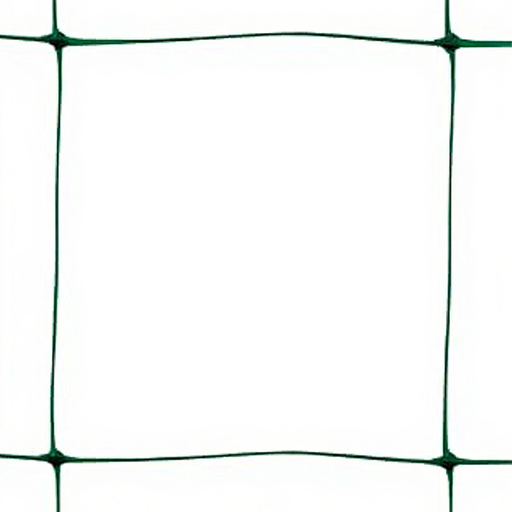
Why it's a great choice: This netting is designed for gardeners who see gardening as a cycle, not just a seasonal activity. It's made to be reused, offering a reliable solution for supporting a wide variety of crops, from the lightest to the heaviest, whether in open ground, a raised bed, or on a balcony.
Made from high-quality polypropylene, it is treated to resist UV rays, chemicals, and mould, ensuring excellent longevity. Its tear resistance ensures it won't fail under the weight of your vegetables: say goodbye to the disposable netting trap.
Rot-proof and reusable: Unlike metal or wood, it won't rust or rot. It can be stored and reused for many years. Lightweight yet strong: Easy to handle and install, it provides reliable support without being heavy or bulky.
For a robust and durable installation of your netting, especially against a wall or a fixed structure, using suitable supports is essential.
To build a durable structure or securely fix your posts, discover our selection of components that meet the same high-quality standards.
Vertical installation is the most common method for tomatoes, cucumbers, and beans.
Yes, and that's the main advantage of a quality model. A vegetable support netting made of UV-treated polypropylene can last 3 to 5 seasons, or even longer with proper care. At the end of the season, remove all plant debris, clean it if necessary, let it dry completely, and then store it away from moisture and direct sunlight.
Trellis netting is flexible, lightweight, affordable, and easy to store in the off-season. It's perfect for annual crops in the vegetable garden. A rigid garden trellis (wood, metal, hard plastic) is a permanent structure. Often more aesthetically pleasing, it is ideal for perennial climbing plants (roses, clematis) or for permanently covering a wall. The choice therefore depends on the longevity of your plants and the flexibility you need.