
Livraison le jour même ou le lendemain

Qualité garantie

Débloquez vos offres de bienvenue: Livraison GRATUITE | Jusqu'à -80 % | 30 jours d'essai gratuits à JoyPlus
Téléchargez l'application
Dry, brittle hair, split ends, a lack of shine... Restoring your hair's health can sometimes feel like an uphill battle. Faced with shelves overflowing with promises, it's easy to feel lost and fall for the wrong product. As a product expert at Joybuy, my mission is to help you decode labels and find treatments that truly meet your needs, far from the siren call of marketing.
Before we introduce our top picks, let's break down the most common traps that cause you to waste time and money.
To make an informed choice, you need to know how to decode what truly makes a good treatment for damaged hair. Here are two key points to check on the label before you head to the checkout.
A good repairing shampoo must, above all, cleanse without aggravating an already compromised fibre.
Repairing damaged hair literally means "filling in" the gaps in its structure. This is where proteins and other fortifying actives come into play.
Rather than an endless list, here are treatments tailored to specific profiles and problems, all selected according to the criteria we've just defined.
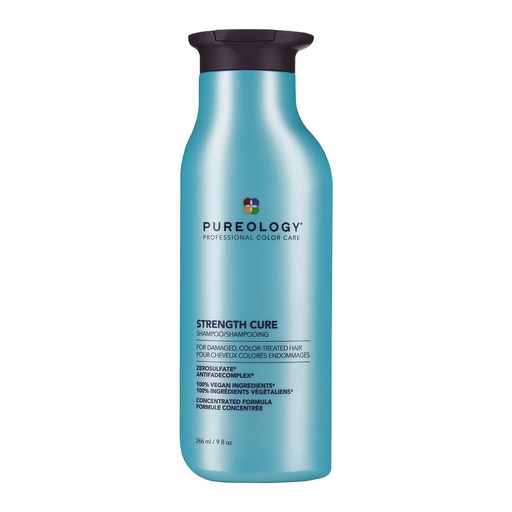
Why it's a great match: This shampoo is designed for those facing a dual challenge: hair damaged by chemical treatments (colouring, bleaching) and the need to preserve colour vibrancy.
It's more than just a sulfate-free shampoo for colour-treated hair. Its formula combines gentle cleansing agents (Sodium Cocoyl Isethionate) with repairing actives (Keravis) for dual action, avoiding the single-ingredient trap.
Dual action: It strengthens the damaged hair fibre while protecting colour with its patented Antifade Complex.
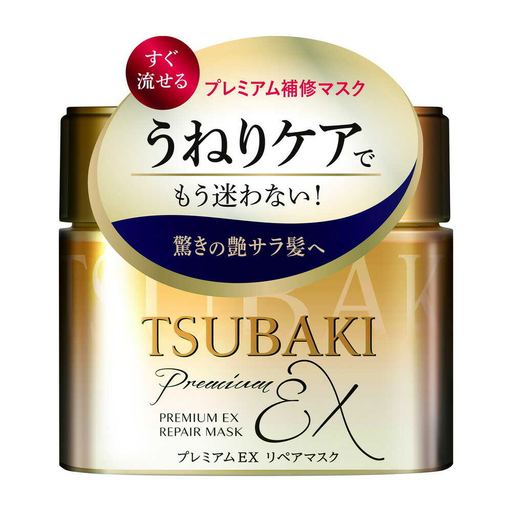
Why it's a great match: Ideal for an intensive treatment on very dry and damaged hair. This mask for dry, damaged hair is the perfect solution for those short on time who refuse to compromise on effectiveness.
It provides a fast, intensive treatment that relies on a cocktail of active ingredients (camellia oil, royal jelly, soy protein) rather than a single "miracle" ingredient.
Its express effectiveness: zero waiting time! Simply apply and rinse, making it incredibly practical for a weekly treatment.
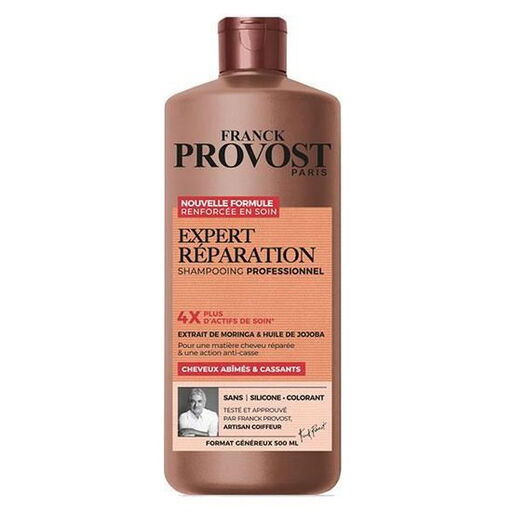
Why it's a great match: This is a reliable choice for frequent use. Its large size and silicone-free formula offer excellent value for money for maintaining damaged and brittle hair.
It fits perfectly into a complete routine. Its silicone-free formula prevents the build-up of residue that can suffocate the hair fibre and mask its true condition over the long term.
Its winning combination: a generous, professional-inspired size and renowned active ingredients like Moringa extract and Jojoba oil to nourish and strengthen without weighing hair down.
Discover our full selection of expert-approved treatments, all chosen for their effectiveness and high-quality formulations.
To put it simply, a conditioner works on the surface to detangle and smooth, while a mask is a deep treatment. The former is used after every shampoo for 1-3 minutes and makes styling easier. A mask for dry, damaged hair, on the other hand, is much more concentrated in repairing actives (proteins, oils, ceramides). It requires a longer application time (5 to 20 minutes) to penetrate deep into the hair fibre and rebuild it.
It all depends on the condition of your hair. A repairing shampoo and its matching conditioner can be used with every wash. An intensive mask should be applied once or twice a week in place of conditioner. As for a leave-in anti-breakage treatment or a repairing oil, they can be applied daily, using a small amount on the ends to protect them.
Not always! A sulfate-free shampoo is an excellent choice, especially for sensitive scalps or for preserving colour. However, if your hair is very brittle but also tends to get greasy, a formula with gentle sulfates, used occasionally, can help to "detox" the hair fibre. This allows repairing treatments to penetrate more effectively afterwards. The golden rule: listen to your hair and don't hesitate to adapt your routine.