
Livraison le jour même ou le lendemain

Qualité garantie

Débloquez vos offres de bienvenue: Livraison GRATUITE | Jusqu'à -80 % | 30 jours d'essai gratuits à JoyPlus
Téléchargez l'application
A travel neck pillow can make a car, plane or train journey far more comfortable, provided you choose a model suited to your position and travel habits. However, a poorly adjusted U-shape, over-firm inflation or overly bulky cushion can quickly turn a practical accessory into a genuine nuisance.
Before placing your order, here are the most common pitfalls to avoid and the key criteria to consider when looking for neck support that genuinely suits the way you travel.
A very firm cushion does not necessarily provide better support. Thick foam or an overfilled inflatable chamber can push your head forwards, particularly in an aircraft or car seat with limited depth. The ideal level of support depends on your build, the height of the headrest and your position when resting.
For a car neck pillow, check in particular that its thickness does not stop you from leaning properly against the backrest. On a plane, choose a shape that supports the nape of your neck without putting excessive pressure on your chin.
The stated dimensions often refer to the product when fully expanded. A bulky travel pillow can take up a significant amount of space in a cabin bag, whereas an inflatable model or one made with compressible foam is much easier to pack away.
Weight also deserves your attention if you travel frequently. An accessory weighing 100 to 300 g will be perfectly suitable for a commuter or camper. An electric model, however, means allowing space for the battery and cable, as well as suitable storage.
Terms such as ‘ergonomic’ or ‘memory foam’ are not enough to assess a product. Instead, look at the material, dimensions, fastening system and care instructions. In everyday use, a removable, washable cover may prove far more useful than an additional feature you will hardly ever use.
For heated or massaging devices, also check the maximum usage time, charging method and heat-related warnings. Naturally, these products are not a substitute for medical advice if pain persists.
A U-shaped design supports the sides of your neck, but its effectiveness depends greatly on the height and density of the filling. An ergonomic neck cushion should stay in place without compressing your throat. A fastening, strap or adjustment system can limit movement while you are having a nap.
Cushions designed for sleeping through the night generally meet different requirements. A memory foam neck pillow will often be better suited to a bed or an extended nap, while a compact model will fit more easily into a travel bag.
Viscoelastic foam gradually moulds itself to the contours of your head and neck. However, it can retain more heat than an inflatable cushion. Where the information is available, choose a breathable, removable and washable cover.
PVC is widely used for inflatable models. It should be protected from sharp objects and stored completely dry. Polyester fabrics are practical outdoors, particularly for a lightweight camping pillow, but the cleaning instructions must be followed. Also avoid leaving the cushion near a heat source.
An inflatable travel pillow should have a valve that is easy to operate and sufficiently airtight. Some models are inflated by mouth, while others feature a button-operated mechanism. In both cases, it is better to adjust the pressure gradually rather than trying to reach maximum inflation.
For an electrical accessory, check that the required regulatory information is provided: CE marking where applicable, the contact details of the responsible person established in the European Union, clear instructions and usage guidance. These details do not guarantee comfort, but they contribute to safer use and make it easier to take action if there is a problem after purchase.
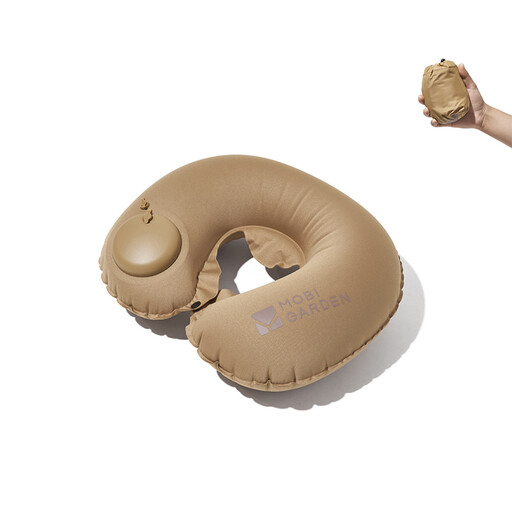
Why this choice suits this profile : Its U-shape and travel-friendly size are ideal for first car journeys, camping trips and occasional travel. Its pressure-inflation system means you do not have to carry a bulky cushion.
Its compact size makes it easy to store, while the pressure can be adjusted to suit your position.
Integrated pressure inflation, U-shape and travel-friendly design for use in the car or while camping.
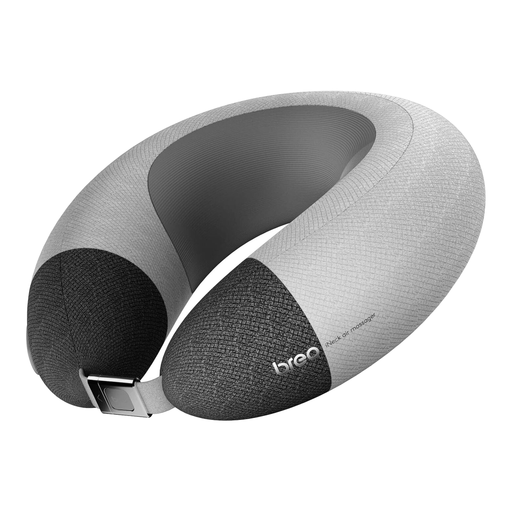
Why this choice suits this profile : This model combines an inflatable cushion, three massage modes and a heating function. It is aimed at users looking for more adjustment options, whether travelling, working in the office or relaxing at home.
Continuous use is limited to 15 minutes, and the instructions recommend allowing the device to cool down. This helps reduce the risk of excessive use.
Button-operated inflation and deflation, USB charging, three modes and a storage pouch.
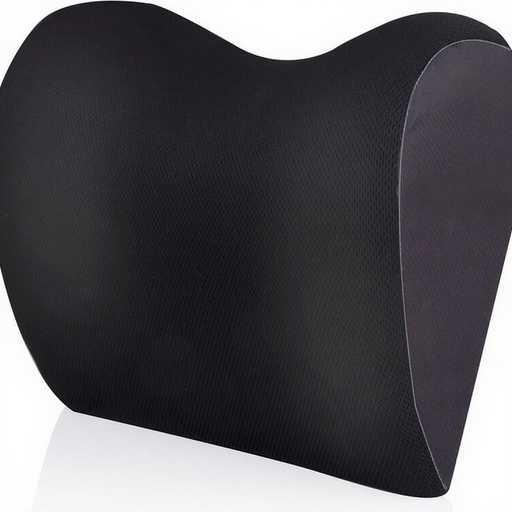
Why this choice suits this profile : Its dimensions of 23 × 10 × 20 cm and adjustable strap make it suitable for drivers and passengers who regularly use a vehicle fitted with headrest posts.
The adjustable fastening keeps the cushion from slipping, while the removable, washable cover is practical for frequent use.
Advertised as 100 % memory foam, with a breathable mesh cover and stated compatibility with several types of vehicle.
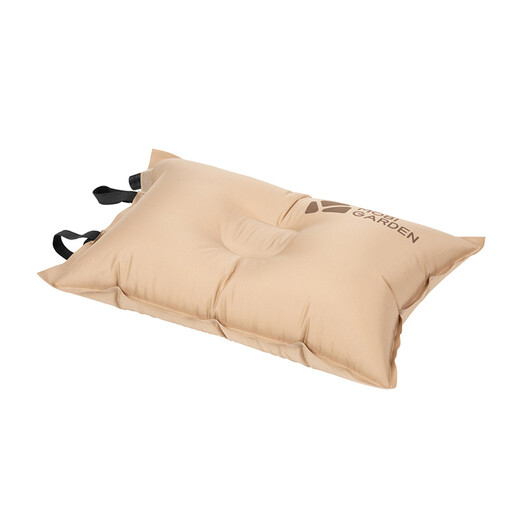
Why this choice suits this profile : It is suitable for camping, naps at the office and travel, thanks to its packed size of 30 × 10 × 5 cm. Its design can also be used as lumbar support or a backrest outdoors.
The non-return valve and fast-rebound foam let you adjust the inflation instead of imposing a single firmness level.
Advertised weight of approximately 260 g, water-resistant 210T polyester fabric and dual use for the neck or lower back.
We have brought together a complete, real-time updated selection of products that meet these demanding criteria, as well as European safety requirements.
Inflate it gradually, then place it around your neck while sitting upright. Your head should remain supported without being pushed forwards. If the cushion feels too rigid or presses against your chin, release a little air. After use, open the valve, expel the air and only store the product once it is completely dry.
This depends on how often it is used, rubbing and maintenance. Keep an inflatable model away from metal fasteners and sharp objects. Foam can also become compressed over time, especially if it remains permanently squashed. Follow the manufacturer’s recommendations and replace the product if the valve leaks, the cover is damaged or the support becomes uneven.
A USB-rechargeable model does not require any particular consumables, but you will need to remember to recharge its battery. For short sessions, electricity consumption generally remains limited. Nevertheless, follow the stated usage time: it is 15 consecutive minutes for the breo iNeck Air 2, according to its product listing. Do not apply heat directly to sensitive skin and do not use the device while sleeping.