
Livraison le jour même ou le lendemain

Qualité garantie

Débloquez vos offres de bienvenue: Livraison GRATUITE | Jusqu'à -80 % | 30 jours d'essai gratuits à JoyPlus
Téléchargez l'application
A travel hair dryer needs to take up minimal space, dry efficiently, and be easy to use in a hotel bathroom, a student studio or a gym changing room. Yet some devices marketed as compact disappoint in practice: limited power, an awkward handle, or incompatibility with foreign plug sockets.
Before comparing models, here are the main pitfalls to avoid and the criteria that really matter.
A high wattage doesn’t necessarily mean faster drying. The motor design, airflow and heat distribution all play a part. A compact 1,200 W hair dryer can be perfectly adequate for occasional use, while a 2,000 W model is better suited to thick hair or regular drying sessions.
Claims like “high speed” should therefore be weighed against concrete data: power, motor type, airflow or stated RPM, where available.
A device designed only for the French 220-240 V mains may be unusable in certain countries. If you travel outside Europe, check that it’s a dual voltage hair dryer, typically compatible with both 110-120 V and 220-240 V networks.
Bear in mind: a plug adapter does not convert voltage. If there’s a manual selector, set it before plugging in the device, following the instructions in the manual.
A foldable hair dryer slips easily into a suitcase, but the hinge, handle lock and cable length also affect comfort of use. A very compact model may have a narrow air intake, run hotter, or offer fewer settings.
For a long-lasting purchase, choose a handle that locks firmly in the open position and a rear grille that’s easy to clean.
For occasional use, a power rating between 800 and 1,200 W often helps keep consumption and size down. For long or thick hair, or for regular home use, higher power can reduce drying time — provided the airflow is well designed.
Models with a fast motor, sometimes marketed as high-speed hair dryers, can be more compact. However, it’s better to compare the data that’s actually available than to rely solely on a marketing promise.
Two speeds and at least two temperature levels let you adapt drying to different hair types. The cool shot button is handy for setting your style and avoiding prolonged exposure of one area to high heat.
A concentrator nozzle is useful for blow-drying and targeted drying. A hair dryer with diffuser will be more beneficial for distributing air over curly or wavy hair. This accessory does add bulk, though: check that it’s included with the device.
A lightweight hair dryer is more pleasant to carry on a business trip or to the gym. However, do check whether the stated weight includes the cable. A removable filter is also a real everyday advantage: dust and hair that build up on it can reduce airflow.
Ionic technology, found on an ionic hair dryer, is generally intended to reduce static electricity. Its effects can vary depending on hair type and condition, as well as ambient humidity. Think of it as a styling and comfort feature, not a medical claim.
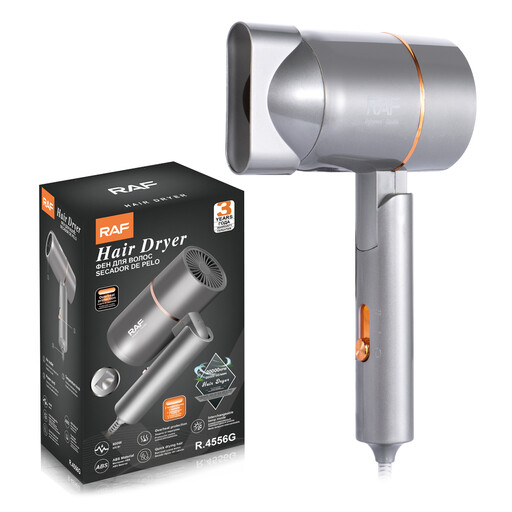
Why this choice suits this profile: Its foldable design and 800 W power make it ideal for students, occasional trips and storing in a small bag.
The listing mentions overheat protection and advises not to block the air inlets or outlets.
Foldable handle, compact dimensions stated at around 15 × 20 cm and an 800 W motor.
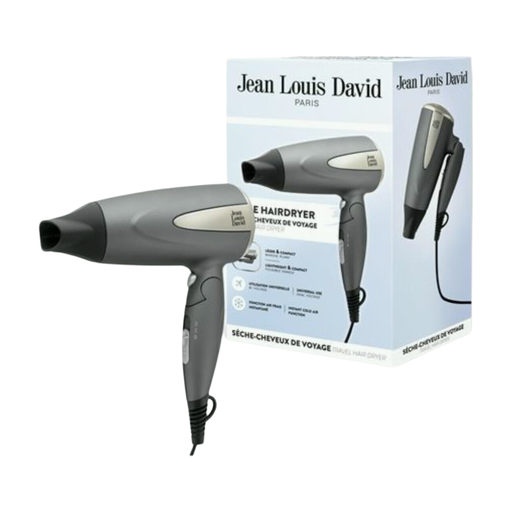
Why this choice suits this profile: Travellers moving between different electrical systems will appreciate the manual dual voltage and the foldable handle.
The 110-120 V / 220-240 V selector solves the compatibility issue, as long as you choose the correct setting before plugging in.
DC motor, 1,200 W power, cool shot function and concentrator nozzle included.
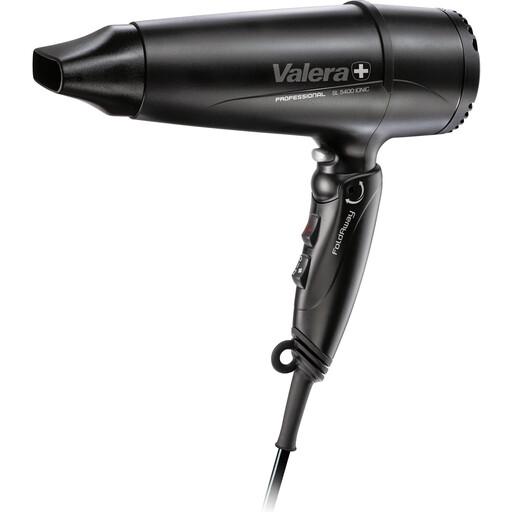
Why this choice suits this profile: This model combines a foldable design, ionic technology and multiple settings for regular use at home and on the go.
The listing states a weight of 390 g without the cable, a removable metal filter and six temperature and speed combinations.
2,000 W power, ion generator, cool shot button, concentrator nozzle and Swiss-made construction.
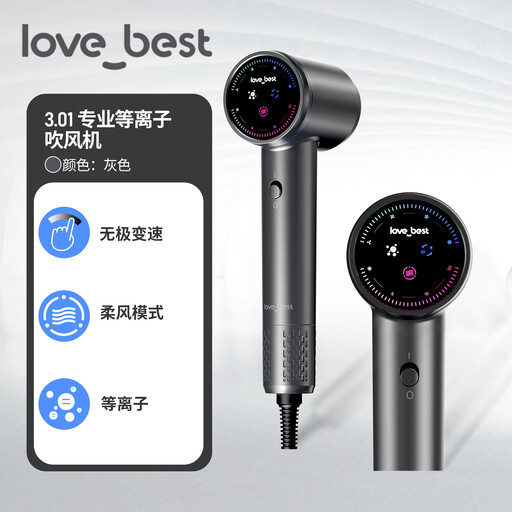
Why this choice suits this profile: Its mini format and motor rated at 110,000 RPM are aimed at users who want a fast, compact device.
The listing mentions a bladeless design and quiet operation, but the actual noise level should be checked before purchase.
Portable format, motor rated at 110,000 RPM and plasma technology claimed to deliver 1.3 billion ions.
We’ve put together a comprehensive, real-time updated list of products that fully meet these strict selection criteria and European safety regulations.
To keep your device in good condition and minimise risks:
A travel hair dryer should never be used near a bath, a basin full of water, or with wet hands. To dispose of an electrical appliance, use a local WEEE collection scheme rather than household waste.
It depends on the motor, airflow and available power. For thick or long hair, choose a device with multiple settings and a power rating of at least 1,200 W, or more if you use it frequently. A compact 800 W model can manage occasional drying, but you’ll generally need to be a little more patient.
Yes, if you plan to use the device in countries with 110-120 V mains. Check for a manual selector or automatic switching. In France and most European countries, the standard voltage is 220-240 V. A simple plug adapter is not enough to change the voltage.
An anti-frizz hair dryer with an ionic function can help reduce static electricity and make styling easier. The result varies depending on hair texture, ambient humidity, the products you use and your drying technique. Treat this feature as a bonus criterion, after weight, voltage, settings and build quality.