
Livraison le jour même ou le lendemain

Qualité garantie

Débloquez vos offres de bienvenue: Livraison GRATUITE | Jusqu'à -80 % | 30 jours d'essai gratuits à JoyPlus
Téléchargez l'application
Travelling with a child is about more than filling a bag until you can fasten it. Whether you’re making everyday journeys, heading off on holiday or facing long waits while travelling, travel accessories for children and babies should above all meet practical needs: safety, storage, comfort and ease of use.
However, some marketing claims deserve a closer look. An accessory that is too bulky can quickly become a nuisance to carry, a car seat may not be compatible with your vehicle, and a suitcase with an appealing design may turn out to be far less spacious than expected. Here are the key points to check before placing your order.
The age shown on a product page is not always enough. For a car seat, the child’s height and weight, the installation method and the vehicle’s configuration are all crucial. An ISOFIX child car seat must be compatible with your car’s anchorage points and installed in accordance with its instructions.
For an ECE R129 car booster seat, check the stated height range in particular. The ECE R129 standard sets precise regulatory requirements, but you must still check that the seat belt is positioned correctly and follow the manufacturer’s recommendations.
A double pushchair, children’s travel bag or children’s wheeled suitcase needs to fit in the boot, at home or in the storage areas available on public transport. Compare both the unfolded and folded dimensions, and don’t forget the weight. A pushchair that is easy to handle in a park may be far less practical on stairs or in a small car.
Licensed children’s luggage can encourage your child to get involved, but an attractive pattern is no substitute for a reliable fastening, suitable handles or a compartment that is spacious enough. For a screen-free creative activity, also check the number of pieces, the recommended age and any potential risks associated with small parts.
For a car seat, note the following information:
The Jovikids 360° seat shown below is advertised for children measuring 40 to 150 cm, from birth to approximately 12 years old according to the product description. This range does not mean that the settings will be the same at every stage: the cushions and seat height must be adjusted to suit the child’s build.
For bags and suitcases, prioritise specific information:
A 14-litre suitcase can hold a few clothes, books and toys for a short stay, but it will not necessarily replace a family-sized piece of luggage. Similarly, a pushchair organiser should be attachable without interfering with folding or shifting the pushchair’s centre of gravity.
A removable cover or fabric that can be wiped clean with a damp cloth makes maintenance much easier. Also check the usage limitations: the Momcozy organiser, for example, is intended for adults or accompanying adults and should not be treated as a toy. Hot drinks should remain in closed containers, and the organiser should not be overloaded.
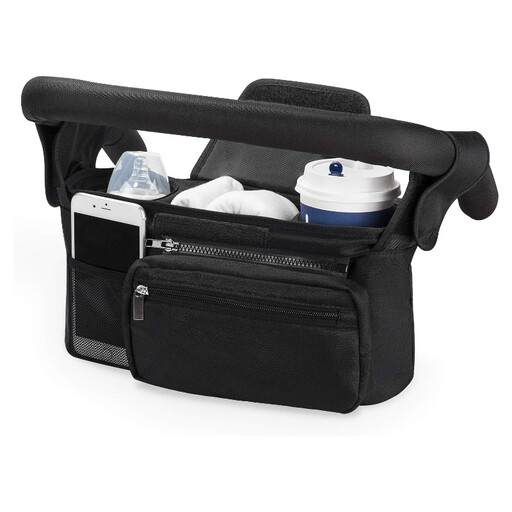
Why this choice suits this profile: It is designed for parents who want to keep everyday outings better organised without buying a different bag for every use.
Its multiple pockets and Velcro attachments mean you won’t have to rummage around at the bottom of the basket. However, it’s best not to overload it, so that the pushchair remains stable.
Three insulated cup holders, a main compartment, a removable pouch and an adjustable shoulder strap.
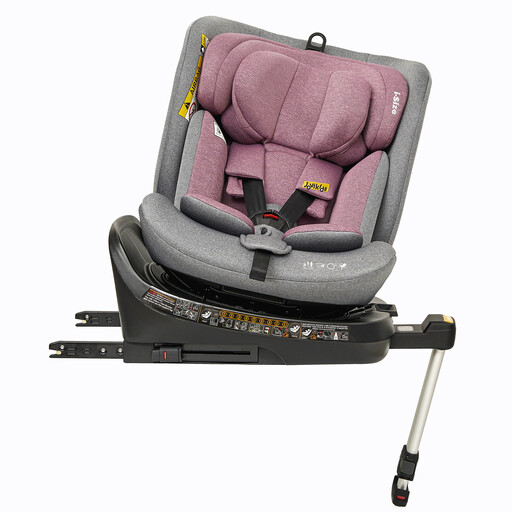
Why this choice suits this profile: Its adaptable design and wide range of settings are aimed at families looking for car equipment that can keep up with several stages of their child’s growth.
The product page mentions ECE R129 certification and an ISOFIX fitting. Even so, check that it is compatible with your car before buying.
Advertised 360° rotation, adjustable recline, removable cushions and a detachable sun canopy.
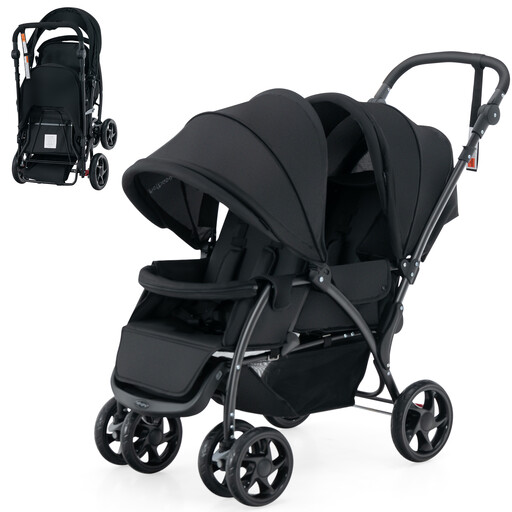
Why this choice suits this profile: This double pushchair is designed for families transporting two young children on walks, while shopping or during regular journeys.
Both seats have a five-point harness and the front wheels can be locked. Check the dimensions of 123 × 57 × 95–110 cm before ordering.
Adjustable backrests and leg rests, adjustable canopy, lower basket and advertised folding design.
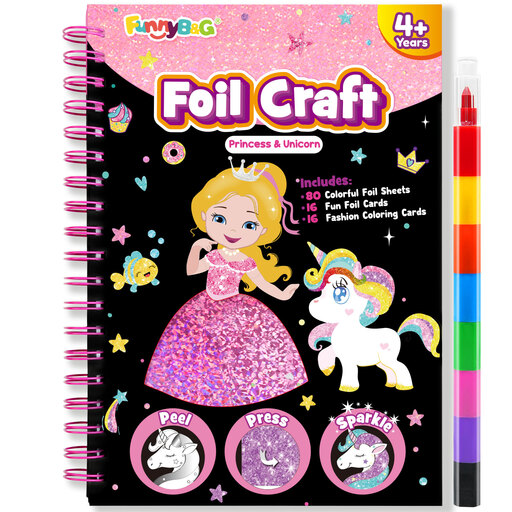
Why this choice suits this profile: Compact and easy to take along, this kit is ideal for car journeys, waiting times or a rainy afternoon for children aged 4 to 10.
With its stated dimensions of 18.5 × 26 × 1.8 cm and no need for glue or scissors, it takes up little space and is easy to clean.
The set contains 112 pieces, including metallic sheets, backings, colouring cards and an eight-colour pencil.
We’ve put together a comprehensive, real-time updated selection of products that meet these demanding criteria and European safety regulations.
For a family trip, a practical combination could include:
The Hello Kitty, Frozen, Jurassic World and Gabby’s Dollhouse models featured in the selection have, according to their product pages, a main compartment, straps or a zip fastening. Their official licences may appeal to children, but their dimensions should still be considered in relation to the intended use.
Height is still the main point of reference. Some ECE R129 car booster seats are indicated for children measuring 125 to 150 cm, with ISOFIX fitting and use of the vehicle’s three-point seat belt. Always consult both the seat’s instructions and the car’s manual before installation.
It depends on how often it is used, the weight carried and the condition of the attachments. Regularly inspect the brakes, harness, wheels, stitching, fastenings and Velcro strips. Replace any accessory with a tear or a fastening that no longer holds securely.
Not necessarily. Its dimensions may vary depending on the airline and the type of cabin baggage permitted. Measure the suitcase with its wheels and handle, then check the conditions associated with your ticket before departure.