
Livraison le jour même ou le lendemain

Qualité garantie

Débloquez vos offres de bienvenue: Livraison GRATUITE | Jusqu'à -80 % | 30 jours d'essai gratuits à JoyPlus
Téléchargez l'application
Mastering a foreign language is a powerful asset. But let's be honest: who has the time to learn Japanese before a trip to Tokyo, or to perfect their Spanish for a meeting in Madrid? This is where translator earbuds come in, promising to break down the language barrier. The problem is, the market is flooded with models making questionable marketing claims, and bad experiences are common. Before you pull out your credit card, here's how to avoid the most common pitfalls.
Here are the two most frequent and costly mistakes buyers make:
To make the right choice, ignore the marketing jargon and focus on the technical features that truly matter in daily use.
The fluidity of a conversation depends on the speed of the translation. There are two main approaches: some models offer near-simultaneous translation with minimal latency, while others work in sequences (you speak, you wait, the translation is played). The most advanced AI translator earbuds rely on powerful algorithms, but their performance often depends on your internet connection. Therefore, check if an offline mode is available: it's a decisive criterion for travel earbuds in areas where network coverage is scarce.
Wireless earbuds with noise cancellation are not a luxury, but an absolute must for reliable translation in the field. ANC (Active Noise Cancellation) technology helps isolate your voice and your interlocutor's from the surrounding hubbub, so the microphones can capture a clean sound. Without it, the translation engine is likely to struggle and misinterpret what is being said. Let's also not forget that these are, first and foremost, earbuds: good audio quality for music and calls is often a sign of the product's overall quality.
A trip or a long day of meetings requires durable equipment. Check the battery life of the earbuds themselves (often between 3 and 5 hours), but more importantly, the number of recharge cycles the case provides. A good case ensures you won't run out of power at the wrong moment. Ergonomics are just as crucial: uncomfortable earbuds or ones that constantly fall out will end up at the bottom of a drawer, no matter how well they translate.
Rather than a single ranking, we've selected models tailored to specific needs to help you find the product that truly matches your use case.
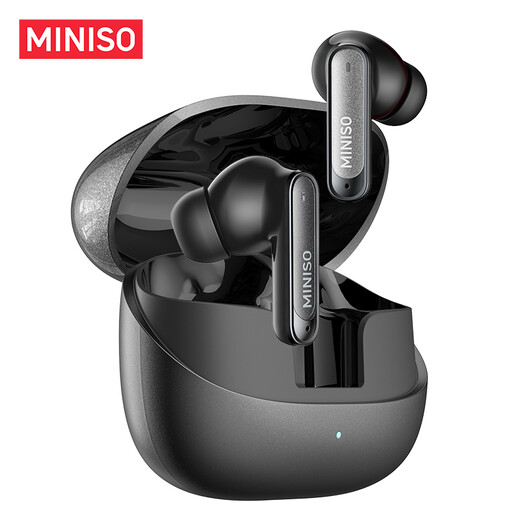
Why we chose it: For those looking for an occasional translation solution without investing in a dedicated device. These earbuds can be used like classic wireless models for music and calls, and connect to a smartphone translation app when the need arises.
This model doesn't pretend to be something it's not. It's priced as standard Bluetooth earbuds, with the app-based translation function being a simple bonus. You're not overpaying for an unfulfilled promise.
Versatility: Perfect for the office, sports, or studying, with IPX5 water resistance. Universal Compatibility: Works with all Bluetooth devices (iOS and Android).
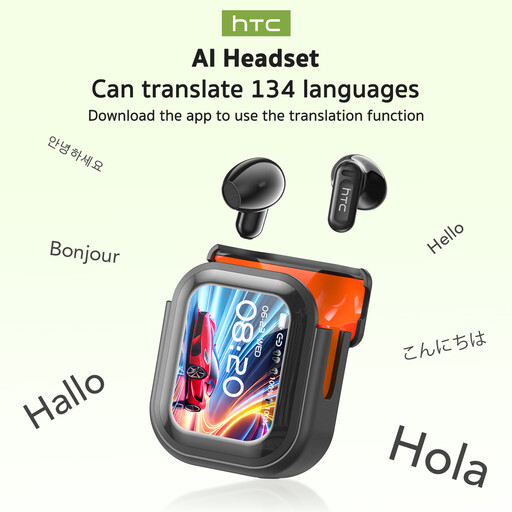
Why we chose it: Designed for frequent travellers who need a more integrated solution. The touchscreen on the case lets you control certain functions without taking out your phone, and the adaptive noise cancellation is a major asset in transit or public places.
It counteracts the noisy environment trap with its hybrid and adaptive active noise cancellation. The touchscreen, while not a complete replacement for the app, reduces dependency on the smartphone for basic controls.
Simplified Control: The LED touchscreen on the case offers a welcome interactive experience. Extended Battery Life: Up to 55 hours of listening time with the charging case.
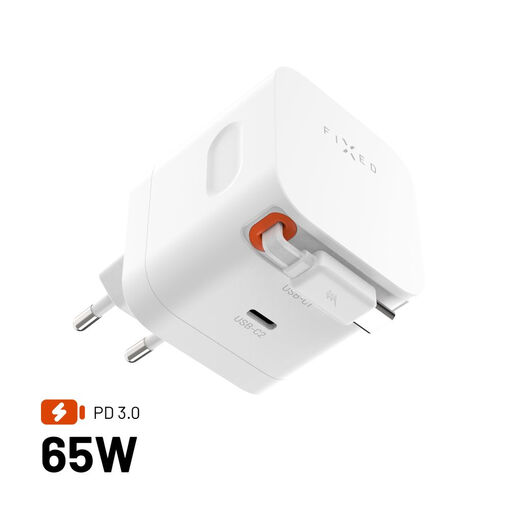
Why we chose it: Your earbuds and smartphone are useless with a dead battery. For the traveller juggling a laptop, phone, and earbuds, a single, powerful, and compact charger is non-negotiable. This model perfectly meets that need.
It avoids the traveller's nightmare: being burdened with multiple chargers and tangled cables. GaN technology makes it ultra-compact, and the integrated retractable cable ensures you always have what you need on hand.
High Power (65W): Capable of quickly charging a laptop, tablet, and phone. Dual USB-C Port: Simultaneously charge your phone and your earbud case.
Good translation gear is only effective if it's always charged and ready to go. Make sure you never run out of battery during your trips.
The main difference lies in ergonomics and integration. A simple app forces you to hold your phone between you and your conversation partner, which breaks the spontaneous flow of the exchange. Earbuds, on the other hand, allow for a more natural conversation, with the translation delivered directly to your ear. Be careful, though: as we've seen, most earbuds still depend on the app to function.
The word "instantaneous" is more of a marketing claim than a reality. There is always a slight delay (generally 1 to 3 seconds) for the voice to be captured, sent to the server, translated, and then sent back to the earbud. An excellent internet connection is therefore essential to minimize this delay.
It depends on the model. The vast majority of translator earbuds require a Wi-Fi or 4G/5G connection to query powerful cloud-based translation engines, which handle a large number of languages. A few high-end models are starting to offer downloadable language packs for offline use. Performance and language selection are often more limited in this mode, but it's a crucial point to check if you're travelling in areas with poor network coverage.