If you want to eat on the train without cutlery, an individually wrapped filled biscuit is ready to eat, but it isn’t a spread to put on bread. A mini tub gives you a set amount if you bring something to spread it on; a jar is more versatile for different uses, but takes more preparation during the journey. Before choosing, compare the weight per unit, nutritional information and allergens for the exact product.
Who are these formats suited to?
Travellers without cutlery
If you want to eat at your seat without opening a jar or making a sandwich, an individually wrapped biscuit is one option. Nutella France describes its Cookies as individually wrapped; a tub of spread, on the other hand, needs something to spread it on.
People who want a set portion
A mini tub lets you plan how much to take without bringing a whole jar. Coffee Choc, for example, sells 15 g Nutella tubs in multipacks. Check how many you’re likely to use.
Travellers who check the label
If ingredients or allergens are important to your choice, read the packaging for the exact product before setting off. The DGCCRF reminds shoppers that allergens must be highlighted in the ingredients list for relevant food products.
What should you look for?
Mini tub of spread
Choose this if: you’re bringing bread or something else to spread it on, and want a separate portion for the journey.
Bear in mind: the 15 g Nutella tubs listed by Coffee Choc are sold in packs of 25, 60 or 120.
Individually wrapped filled biscuit
Choose this if: you want a snack you can eat without bread or cutlery; Nutella France says its Cookies are individually wrapped.
Good to know: this is a biscuit with a filling, not a portion of spread to use on your own bread.
Jar of spread
Choose this if: you plan to use the jar after your journey or share its contents.
Bear in mind: make your sandwiches before boarding, or bring something to spread it on and a utensil to scoop it out.
| Consideration | What to check | Who is it for? |
|---|
| Convenience during the journey |
Check whether you can eat the product as it is, or whether you need to bring something to spread it on and a utensil. |
If you want to eat at your seat without making a sandwich, a ready-to-eat product may be preferable. Around 42% of consumers would make this convenience their main priority. |
| Portion size and label |
Check the weight per unit, then compare the sugars and saturated fat per 100 g and per portion. |
If you need to decide in advance how much to take, nutritional information can help you choose between formats. Around 33% of consumers would prioritise this. |
| Amount purchased and future use |
Check how many units are in a pack and consider whether you’ll use the rest. |
Buying lots of portions for a single journey may not suit your needs. Around 25% of consumers would put the amount purchased and how they can use it later first. |
Mistakes to avoid
-
Assuming “mini” means sold individually
A tub contains a small amount, but it may come in a pack with lots of portions. Coffee Choc lists its 15 g Nutella tubs in packs of 25, 60 or 120.
Check the number of tubs and the total weight against how many journeys you’re planning.
-
Assuming Nutri-Score is compulsory
In July 2025, the French Ministry of the Economy stated that displaying Nutri-Score was still voluntary in France. If it’s not shown, you should still check the nutrition declaration: the DGCCRF’s June 2025 guidance explains that it is mandatory for relevant prepacked foods.
If the logo appears on the packaging, consider it alongside the values per 100 g, the amount you plan to eat and the ingredients list. Don’t use it as your only guide when choosing.
-
Taking a jar without planning how to use it
A jar on its own won’t make you a sandwich on the train.
Prepare your snack before setting off, or bring something to spread it on and a suitable utensil.
-
Assuming allergens are the same across formats
A tub of spread and a filled biscuit don’t necessarily have the same recipe. Nutella France lists wheat and egg among the ingredients in its Cookies.
Check the ingredients list and allergen information on the exact packaging you’re taking with you.
Brands and retailers to consider
Nutella
There are two distinct formats to consider: the 15 g tubs of spread listed by Coffee Choc, and the individually wrapped Nutella Cookies described by Nutella France.
- The tub gives you a set amount of spread to take with you; the biscuit can be eaten without preparing anything to spread it on.
- The tubs mentioned are sold in multipacks, while the cookie is a biscuit, not a spread to put on bread.
Carrefour
The retailer lets you compare jars of spread from different brands and in different sizes before you set off.
- The Carrefour range includes 220 g jars of Nutella, as well as other sizes.
- With a jar, you’ll need to plan separately how you’ll eat its contents during the journey.
Auchan
The Auchan range includes different recipes in jars, including Auchan Pasta Cao and other cocoa and hazelnut spreads.
- You can compare ingredients and jar sizes to find the recipe you’re looking for.
- Check which format is available in your store if you need an individual portion.
ALDI
The retailer’s range includes jars of spread under its CUCINA and TARTICHOC brands.
- According to ALDI France, the listed products include a 400 g CUCINA milk and hazelnut spread and a 750 g TARTICHOC hazelnut spread.
- Check which product is available at your chosen store before relying on it for your journey.
An option for your journey from Joybuy
This selection features a Nutella & Go spread-based snack to consider for a train journey if its packaging suits your needs. It doesn’t replace comparing a mini tub, filled biscuit and jar.
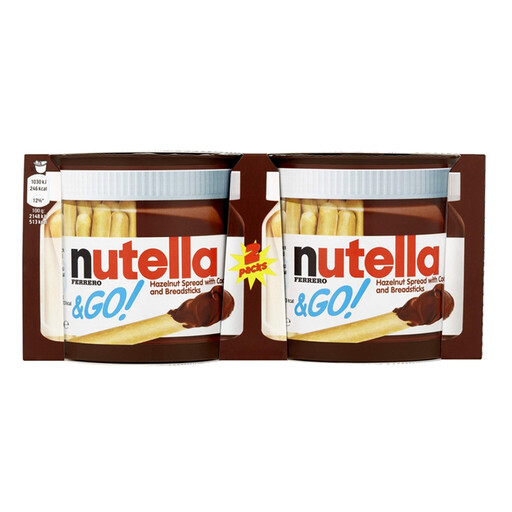 Image unavailable
Nutella & Go, 78 g spreadable snack
If you’re having a spread-based snack during your journey, check what’s in the pack and how to eat it at your seat. This format weighs 78 g; check the packaging for the amount you plan to eat, the pack contents and allergens.
View on Joybuy
Frequently asked questions
Is Nutri-Score compulsory on spread sold in France?
No. In July 2025, the French Ministry of the Economy stated that displaying it was still voluntary in France. When comparing prepacked products, check their nutritional information and ingredients list, whether or not the logo is shown.
What should you look for on the label of a prepacked mini portion?
Check the net quantity, ingredients and nutritional information, including the values per 100 g and for the amount you’ll eat. The DGCCRF explains that the nutrition declaration applies to relevant prepacked foods, and that allergens must be highlighted in the ingredients list.
Does a filled biscuit have the same allergens as a mini tub?
Not necessarily. Check each recipe on its own packaging. Nutella France lists hazelnuts, milk, soya, wheat and egg among the ingredients in its Cookies; this information doesn’t automatically apply to a tub of spread.
Can you rely on onboard catering instead of bringing a snack?
Check what’s available on your train before setting off. SNCF Voyageurs describes an onboard catering service on some INTERCITÉS routes, but this doesn’t mean the same options are available on every journey.


