Travellers keeping an eye on fat
You want to compare bars of different sizes without confusing a stated fat content with the regulated “reduced fat” claim. Figures per 100 g and per bar answer two different questions.


To choose a protein bar to take on the train while keeping fat content down, compare the figures per 100 g and per bar, then check the sugars, fibre, ingredients and allergens. A low figure on its own is not enough to justify a “reduced fat” claim: under EU rules on nutrition claims, the fat content must be at least 30% lower than that of a similar product. If your journey covers a mealtime, think of the bar as a snack and plan what else to have with it, depending on your needs.
You want to compare bars of different sizes without confusing a stated fat content with the regulated “reduced fat” claim. Figures per 100 g and per bar answer two different questions.
A wrapped bar can be handy during your journey, but it isn’t necessarily a meal. SNCF Connect says catering services vary by train and route, so check your journey if you’re planning to buy something else on board.
Depending on the recipe, products listed by E.Leclerc, Auchan and Carrefour contain milk, soya, wheat, egg or nuts, and may carry warnings about traces. Check the information for the flavour you’ve chosen.
If your journey covers a mealtime, start by deciding what matters most to you: ingredients, ease of carrying, what each bar provides or ingredients you need to avoid. Then consider whether a snack on its own is right for what you plan to eat during the journey.
| Criteria | What to check | Who is this for? |
|---|---|---|
| Fat | Compare the fat content per 100 g and per bar. If the “reduced fat” claim matters to you, check what similar product it is being compared with. | If my main aim is to keep fat content down, the word “protein” isn’t enough to help me choose. Around 33% of consumers put reducing fat first. |
| Portability | Check the bar size and packaging. If you plan to have something else on board, check the catering options on your train. | On a train, I want to be able to take a snack out of my bag without any preparation. Ease of carrying is the top priority for around 27% of consumers. |
| What each bar provides | Check the protein per serving, then the sugars and fibre. Don’t confuse a figure per 100 g with the amount in the bar you’ll actually eat. | Between meals, I look at what the portion I’ll actually eat provides, rather than just how the range is presented. Around 20% of consumers prioritise what each bar provides. |
| Ingredients | Check the ingredients list and allergen declaration for the exact flavour, including any warnings about traces. | If some ingredients aren’t suitable for me, I need to be able to identify the recipe before setting off. For around 20% of consumers, this is the top priority. |
Auchan and Carrefour’s product listings show why the category name alone isn’t enough: the Inshape Nutrition coconut and milk chocolate bar contains 16 g of fat per 100 g, while the Carrefour Sensation chocolate bar contains 14 g per 32 g bar.
Compare both measures before choosing a portion.
Under EU rules on nutrition claims, a reduction claim requires the fat content to be at least 30% lower than that of a similar product. A nutrition table alone doesn’t tell you which product is being used for comparison.
If this claim is essential to your choice, check the wording and the comparison that supports it.
The recipes listed by E.Leclerc, Auchan and Carrefour contain various allergens or warnings about traces. Don’t assume that two flavours from the same brand have the same ingredients.
Read the packaging for the exact product, even if you already know the range.
E.Leclerc’s listing describes the Milical vanilla bar, for example, as a snack or dessert replacement. That doesn’t mean one bar is a meal in itself.
If your journey covers a mealtime, take water and something to go with your snack, or check the catering options on your train in advance.
The Milical high-protein vanilla bars, sold in a pack of six by E.Leclerc, are positioned as a snack or dessert.
Carrefour offers a chocolate protein bar in a 32 g size, among other options.
Auchan lists a 55 g coconut and milk chocolate bar in this range.
E.Leclerc lists Eafit bars in several sizes, including 28 g, 46 g and 60 g.
These protein bars are suitable as snacks to take on the train. Compare their portion sizes and ingredients before choosing. Their inclusion here doesn’t confirm a “reduced fat” claim or mean they’re equivalent to a meal.
 Image unavailable
Worth considering if you’re looking for a 55 g bar to take as a snack. Check the packaging for the fat content per bar and per 100 g. The listed recipe contains milk, soya and almonds. If a “reduced fat” claim is important to you, check that it’s supported by an appropriate comparison.
 Image unavailable
This multipack could be a good option if you’re planning to take several snacks with you. Check the packaging for the protein content per bar, as the product descriptions give conflicting figures. The ingredients list mentions peanuts, but the allergen declaration is inconsistent. If you have a peanut allergy, don’t rely on this listing to establish whether the product is suitable.
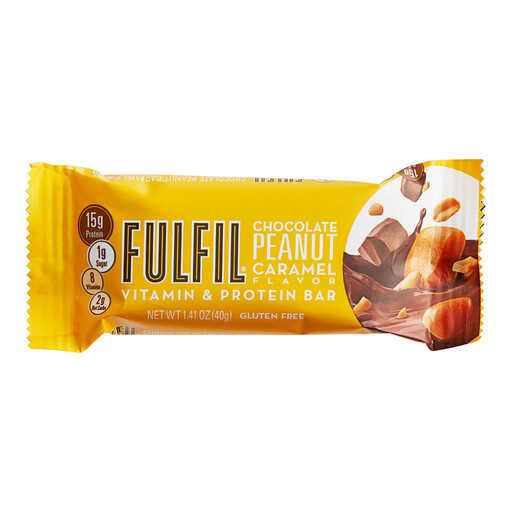 Image unavailable
The 40 g bar can make a handy individual snack for your journey. Check the pack quantity before buying: the title says there are three bars, while the description mentions twelve. Also check the fat content per 100 g and the allergen declaration on the packaging. The listed recipe contains milk, soya and peanuts.
Not based on its stated fat content alone. Under EU rules on nutrition claims, a reduction claim requires the fat content to be at least 30% lower than that of a similar product. Compare figures to help you choose, but check the basis for comparison before relying on the claim.
Don’t assume that a bar sold as a snack is a meal in itself. If your journey covers a mealtime, take water and something to go with it, depending on what you plan to eat.
Check the service available on your train and route before you set off. SNCF Connect describes catering options on some journeys, but they vary from one service to another.
Depending on the recipe, products listed by E.Leclerc, Auchan and Carrefour may contain milk, soya, wheat, egg or almonds, and may carry warnings about possible traces of other allergens. Check the ingredients and warnings on the packaging for the exact flavour.