For a dry snack to take on the train, plain or roasted hazelnuts with no added salt are a simple choice. But if you’re planning a post-workout meal, don’t rely on them alone as your main source of protein. The E.Leclerc and Auchan products listed provide 17 g and 19 g of protein per 100 g respectively. Compare the portion you’ll take with you, the nutritional information and the ingredients before choosing between hazelnuts and a hazelnut-based protein product.
Who are these options for?
People planning a post-workout meal
If you’re eating on the train after exercising, distinguish between hazelnuts and a product that lists its protein content per portion. Hazelnuts can complement a meal, but their presence alone doesn’t make it a “high-protein” meal.
Travellers looking for a dry snack
Plain or dry-roasted hazelnuts are easy to take with you and need no preparation. If salt matters to you, check for a “no added salt” statement or look at the salt content. E.Leclerc lists 0.1 g of salt per 100 g for its Couleurs Vives product.
People mindful of allergens and ingredients
Check the label on the bag or prepared product you’re buying. For its 175 g bag of shelled hazelnuts, Auchan warns that it may contain traces of peanuts and other nuts. Don’t assume the same warning applies to another product.
What should you compare for a meal on the train?
First decide whether the hazelnuts will be a snack alongside your meal, or whether you’re mainly looking for a product whose protein content per portion meets your needs.
| What to consider |
What to check |
Who it matters to |
| Protein content |
Protein per 100 g and per portion you’ll take with you; whether another source of protein is included in the meal. |
After exercising, I want to know how much protein is in my meal rather than relying on the word “hazelnut”. For around 33% of consumers, protein content is the top priority. |
| Portability and salt |
Ready-to-eat format; a “no added salt” statement or the stated salt content. |
For a snack I can eat on the journey without any preparation, I’m looking for something dry and easy to take with me. Convenience comes first for around 25% of consumers. |
| Portion and energy |
Energy per 100 g and the amount you’ll actually put in your bag. |
If I take a bag of hazelnuts with me, I prefer to decide in advance how much I’ll eat. Around 25% of consumers prioritise the portion and its energy content. |
| Allergens and chewing |
Allergens and traces listed for the specific product; whether the format is suitable for the person who will eat it. |
Before sharing this snack, I need to know what’s in the bag and whether whole hazelnuts are suitable for the person eating them. Allergen or chewing safety comes first for around 17% of consumers. |
What should you avoid?
-
Assuming “hazelnut” means “high in protein”
The presence of hazelnuts in a product doesn’t tell you what proportion of its energy comes from protein. In the European Union, Regulation (EC) No 1924/2006 restricts the “high protein” claim to foods that derive at least 20% of their energy from protein.
Check the protein and energy listed for the portion you plan to eat, rather than guessing from the product name.
-
Comparing granola with a bag of hazelnuts based on the name alone
Chocolate and hazelnut granola is a cereal product containing hazelnuts, not the equivalent of a bag of plain hazelnuts. Check its ingredients and nutritional information separately.
Compare the ingredients list, sugars, salt and protein per portion for the specific product you’re interested in.
-
Assuming another product’s allergen information applies
Hazelnuts are tree nuts and are an allergen. Auchan warns that its 175 g bag of shelled hazelnuts may contain traces of peanuts and other nuts.
Check the ingredients and any precautionary allergen statements on the packaging you’ll be taking with you.
-
Giving whole hazelnuts to a young child without taking precautions
Auchan warns that its shelled hazelnuts are not suitable for young children because of the risk of choking.
Don’t choose whole hazelnuts as a snack for a young child without taking this warning into account.
Hazelnut brands to consider
Carrefour
Carrefour Le Marché’s product is a 125 g bag of hazelnuts with their skins on, listed as being from France.
- Made with hazelnuts with their skins on, it’s a simple option if you’re looking for a straightforward snack.
- Carrefour lists 669 kcal and 63 g of fat per 100 g, so bear in mind how much you take with you.
E.Leclerc / Marque Repère
The Couleurs Vives range includes a 200 g bag of dry-roasted hazelnuts with no added salt.
- E.Leclerc lists roasted hazelnuts as the ingredient, with 17 g of protein and 0.1 g of salt per 100 g.
- Check availability with the shop or Drive service where you plan to buy them.
Auchan
Auchan sells shelled hazelnuts in a 175 g bag.
- Auchan’s product information lists 19 g of protein and 653 kcal per 100 g.
- It warns that the product may contain traces of peanuts and other nuts, and that it poses a choking risk for young children.
Monoprix
Monoprix offers 125 g of shelled hazelnuts, listed as being from France.
- This format makes it easy to take a bag of hazelnuts with you on your journey.
- If protein or salt content is guiding your choice, compare the nutritional information on the packaging.
A hazelnut option from Joybuy
This selection features an individual dark chocolate and hazelnut snack to consider for your journey. You can compare it using its nutritional label, but it isn’t a like-for-like alternative to bags of plain or roasted hazelnuts.
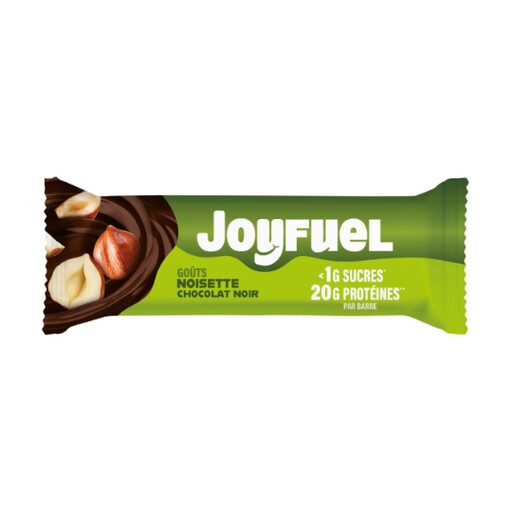 Image unavailable
Joyfuel dark chocolate and hazelnut, 55 g
This individual portion is worth considering if you’d rather take a hazelnut-based product than whole hazelnuts.
To see how it fits into a post-workout meal, check the protein per portion, ingredients and allergens on the packaging. Also follow the storage instructions and keep it away from light, heat and moisture.
View on Joybuy
Frequently asked questions
Are hazelnuts on their own necessarily “high in protein”?
No. Their protein content alone isn’t enough to justify that claim. Under European Regulation (EC) No 1924/2006, at least 20% of a food’s energy must come from protein for it to carry the “high protein” claim. Check the nutritional information for the product you choose rather than relying on the word “hazelnut”.
What type of hazelnuts should I take on the train?
For a snack that needs no preparation, plain or dry-roasted whole hazelnuts are a convenient choice for the journey. If you want to limit added salt, check for this claim or look at the salt content, then decide how much you plan to eat.
What should I check if I have a food allergy?
Check the ingredients and any precautionary allergen statements on the packaging of the specific product. Hazelnuts are an allergen in their own right; Auchan’s 175 g bag of shelled hazelnuts also warns that it may contain traces of peanuts and other nuts.
Can I rely on onboard catering for this meal?
Check what’s available on your journey before you set off. SNCF Connect notes, for example, that at-seat sales are only available on certain routes. If ingredients or protein content matter to you, preparing your own snack means you can check the label in advance.


