
Livraison le jour même ou le lendemain

Qualité garantie

Débloquez vos offres de bienvenue: Livraison GRATUITE | Jusqu'à -80 % | 30 jours d'essai gratuits à JoyPlus
Téléchargez l'application
A drop in pressure, a slow leak or a rise in temperature can go unnoticed between visits to the petrol station. For owners of motorhomes, caravans, trailers, SUVs and commercial vehicles, a TPMS tyre pressure monitoring system lets you keep an eye on your tyres while you're on the road.
However, not all devices meet the same needs. A model designed for four car tyres won't necessarily suit a long caravan or a semi-trailer. Here are the criteria to consider to avoid buying the wrong one.
A kit with four sensors typically covers the needs of a standard car or SUV. For a motorhome with twin wheels, a caravan or a trailer, you may need to monitor six, eight or even ten tyres. Some systems allow you to add extra sensors, while others are limited to the configuration supplied.
Before ordering, count the tyres you actually use, including those on the trailer or an additional axle.
Wireless transmission can become unstable when the sensors are several metres away from the display. A TPMS signal repeater is particularly useful for motorhomes, caravans, lorries and semi-trailers.
A mention of compatibility with a long vehicle doesn't necessarily mean the repeater is included. Check whether it's in the box, and also how it's powered.
Pressure is just one piece of useful information. Monitoring both tyre pressure and temperature also helps you spot an abnormal temperature rise or a variation that warrants a check.
However, alert thresholds are only an aid. They don't replace inflating to the manufacturer's recommendations, a visual inspection, or stopping the vehicle when an issue appears.
For a car, a system covering 0 to 8 bar or 0 to 116 PSI may be sufficient. Motorhome, lorry or trailer tyres may require a wider range, for example up to 14 bar or 188 PSI, depending on the manufacturer's data.
Check the recommended pressure on the vehicle's label, in the manual or on the tyre documentation. A wide measurement range doesn't automatically mean the device is suitable for your vehicle.
External TPMS sensors screw directly onto the valves. Installation is generally quick, but check compatibility with your valves, especially if your vehicle has metal valves or twin wheels.
After fitting, each sensor must be assigned to the correct position on the display. Tighten them according to the instructions in the manual, without over-tightening. Take the opportunity to regularly check the seals and the condition of the valves.
A tyre pressure alarm can signal a rapid leak, pressure that's too low or too high, excessive temperature, or a low sensor battery. Having multiple alert types is handy, provided the thresholds are clearly understandable.
A colour LCD TPMS display makes it easier to read the data, especially when several tyres are shown at once. For long journeys, also compare the display's battery life, charging time and whether it has USB-C or solar charging. Solar charging reduces the need for cables, but you should still check the charge level before setting off at night or in bad weather.
The CE and RoHS markings on product pages correspond to the declarations of conformity provided for the relevant references. They don't replace reading the manual, the fitment restrictions or the warranty conditions.
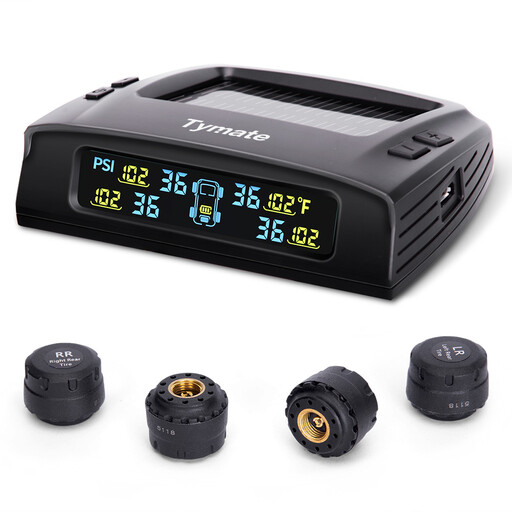
Why this choice suits this profile: This kit is suitable for cars, SUVs and everyday journeys with four tyres to monitor. Its colour display shows pressure and temperature in real time.
The product page states a range of 0 to 8 bar, four sensors and a recommended vehicle length of up to 20 feet. These limits prevent you from mistakenly choosing it for a long trailer.
Alarms for rapid leaks, abnormal pressure, excessive temperature or low battery. The sensors use CR1632 batteries, claimed to last around two years.
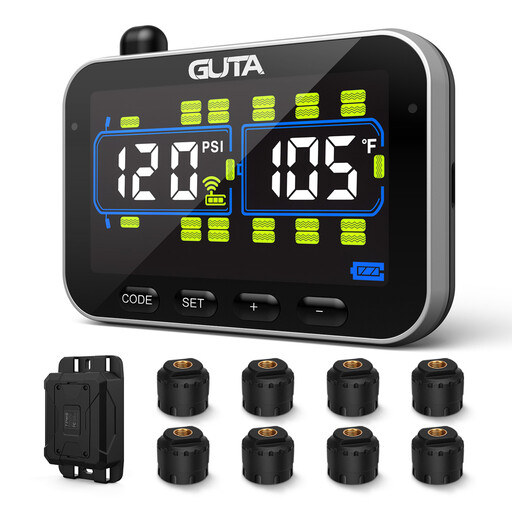
Why this choice suits this profile: This system is designed for motorhomes, caravans, semi-trailers and other long vehicles under 50 feet, thanks to its long-range communication.
The repeater is included and the sensors are pre-paired. The stated range reaches 0 to 14 bar, with a recommendation for metal valves.
78 × 44.5 mm colour LCD display, six types of alerts and CR2032 sensors claimed to last around four years.
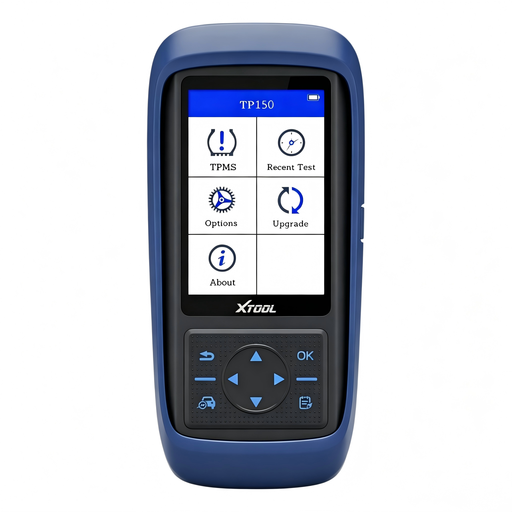
Why this choice suits this profile: It's aimed at garages, tyre workshops and fleet managers who need to activate, programme, reset or diagnose sensors.
Its stated compatibility with 315 and 433 MHz frequencies, along with its code reading and erasing functions, makes it easier to choose a tool suited to diagnostics.
3.95-inch colour screen, 3,000 mAh battery and updates claimed via Wi-Fi or USB.
We've put together a comprehensive, real-time updated list of products that fully meet these strict selection criteria and European safety regulations.
A TPMS is an information device. If an alarm sounds, slow down, stop in a safe place and check the tyre before continuing your journey.
Yes, especially when the tyres are far from the driving position or difficult to check while on the move. Choose a model compatible with the number of wheels, the required pressure and the length of the trailer. A TPMS for a caravan or a TPMS for a trailer equipped with a repeater can make monitoring much easier.
The lifespan depends on the model, temperature and usage. The product pages for the references shown claim around two years for some CR1632 batteries and up to four years for some CR2032 batteries. This is an estimate: replace the battery as soon as a low-voltage alert appears.
For simple monitoring with external sensors, no. However, a workshop may need a TPMS diagnostic and programming tool to activate a sensor, copy an ID, perform a relearn or clear a code linked to the vehicle's system.