
Livraison le jour même ou le lendemain

Qualité garantie

Débloquez vos offres de bienvenue: Livraison GRATUITE | Jusqu'à -80 % | 30 jours d'essai gratuits à JoyPlus
Téléchargez l'application
A children’s toy kitchen can become an essential play area for several years. Yet some purchases disappoint after just a few weeks: unsuitable dimensions, tiny accessories or electronic features that are impractical to use. Marketing promises alone are not enough to make the right choice.
Before comparing a wooden children’s kitchen, a plastic model or a toy kitchen with accessories, check three things: the recommended age, the actual space it takes up and the exact contents of the box. A pretend-play kitchen should also suit your child’s usual way of playing: alone, with brothers and sisters, with figurines or in a shared room.
A highly detailed toy kitchen can take up a lot of space without offering enough storage or a suitable play surface. Measure the available space, taking the unit’s depth and the door opening into account. In a small flat, a compact model or a children’s toy sink may sometimes be easier to fit in than a large complete kitchen.
Toy kitchen accessories — cutlery, handles, pretend food and removable parts — may present a choking hazard. The models featured here are suitable from 3 years, but adult supervision is still recommended, particularly before the age of 6 when the set contains many small components.
Also inspect the condition of the parts regularly. Any broken component or small part that could come loose should be removed from play.
A toy kitchen with sounds and lights enhances the realistic effect, but it runs on batteries and can quickly become noisy in a living room. A manual model, by contrast, requires less maintenance and encourages quieter play. The choice should therefore be based on your family’s habits, not on the number of features shown on the box.
Compare the dimensions of the unit once assembled, not just those of the box. A kitchen measuring 90 to 95 cm high is generally suitable for children from age 3, but the child’s height and the presence of an adult nearby remain decisive factors.
In particular, check the following:
Mobile doors, drawers and taps add to the play scenarios, but they should operate smoothly and without force. For a wooden kitchen, choose a smooth surface, rounded edges and a clearly described finish. The FSC label provides information about the certified origin of the wood or fibres used, but it does not replace reading the safety instructions.
MDF offers the appearance of a real piece of furniture and is often heavier. Plastic, on the other hand, can generally be cleaned quickly with a damp cloth. In both cases, avoid immersing the item if the instructions do not permit it, as well as using harsh household cleaning products.
A pretend-play toy must never be used to prepare or heat real food. Illuminated or sound-producing hobs create a visual or audio effect, but you must not expect them to provide a genuine source of heat under any circumstances.
A set packed with accessories allows children to start playing straight away, but it also requires more storage space. Check whether the utensils, pretend food, figurines and batteries are included or sold separately.
For models with sounds and lights, check the type and number of batteries required. Battery compartments should be handled by an adult, and used batteries should be kept out of reach of young children. A model that does not require batteries, such as some furniture sets, may be better suited to families looking for a simple set-up.
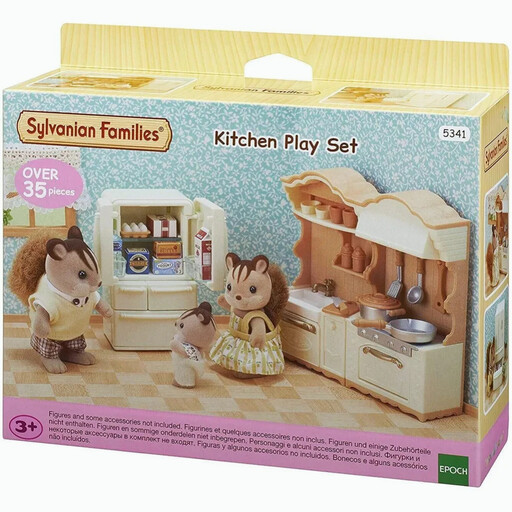
Why this choice suits this profile: This set is ideal for families who want to furnish a doll’s house or introduce pretend play with furniture in a small scale.
It avoids buying a large structure when your child mainly plays with figurines. The cupboard doors and moving drawers add a touch of realism without requiring batteries.
Kitchen and dining furniture included, with moving elements and stated compatibility with other Sylvanian Families houses and figurines.
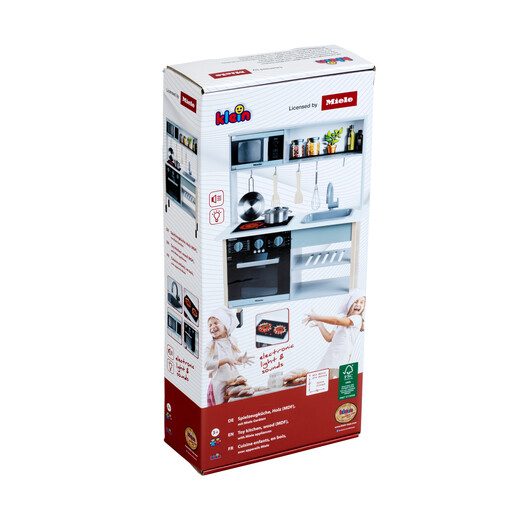
Why this choice suits this profile: Its FSC-certified MDF construction and dimensions of 70 × 30 × 91 cm are suited to households looking for a well-structured wooden children’s kitchen.
The functions are clearly identified: hobs with sounds and lights, oven, microwave and sink. The description makes it clear that this is not a real cooking appliance.
Sound and light hob, sink, storage rail, metal pans and wooden spatulas included.
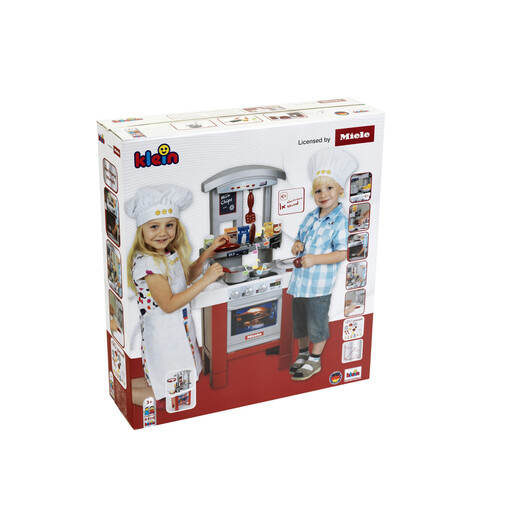
Why this choice suits this profile: Its comprehensive equipment is suitable for several children or a play area used regularly to invent mealtime, serving and cooking scenarios.
With its dining area, sink, oven and numerous accessories, it reduces the need for additional purchases from the outset.
90 cm height, sound module, pretend coffee machine, crockery, utensils and play food included.
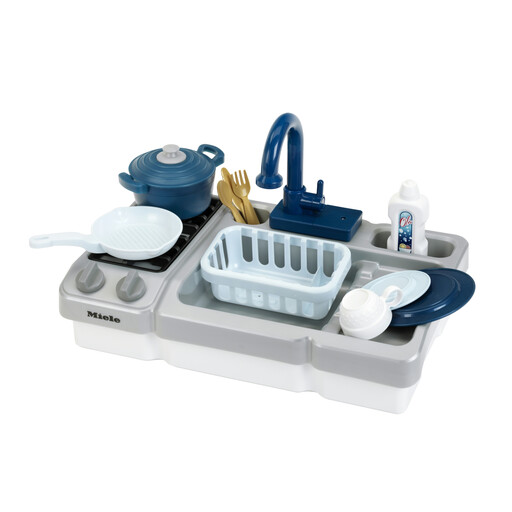
Why this choice suits this profile: This children’s toy sink is ideal for families who want to add washing and serving activities without installing a complete kitchen.
The tap’s operation is described separately and the required batteries are specified: 3 AA batteries, not included. Plan to use it under supervision and away from any electrical installation.
Working tap, draining rack, two decorative hobs and crockery included, in a format stated as suitable from age 3.
We have put together a comprehensive, real-time updated selection of products that meet these demanding criteria and European safety regulations.
Choose a model explicitly marked suitable from age 3, which is stable and suited to the available space. Check the size of the small parts, the safety warnings and whether supervision is required. To begin with, a kitchen with fewer accessories can also make storage easier.
Lifespan depends on the quality of construction, use and care. MDF can provide a stable structure, while plastic generally stands up well to frequent cleaning. In both cases, avoid prolonged exposure to moisture, knocks and direct sunlight whenever the instructions advise against them.
These features can enrich pretend play, but they require batteries and additional maintenance. Before buying, check the battery type, how accessible they are and the sound level. To encourage calm play or use in a shared room, a manual kitchen with accessories will often be more practical.