
Livraison le jour même ou le lendemain

Qualité garantie

Débloquez vos offres de bienvenue: Livraison GRATUITE | Jusqu'à -80 % | 30 jours d'essai gratuits à JoyPlus
Téléchargez l'application
Is a bolt too loose? You risk vibrations, leaks, or even a critical part coming loose on the road. Too tight? You risk stripping a thread or warping an expensive component. For the DIY mechanic and the seasoned pro alike, the torque wrench is not a luxury—it's an essential tool for ensuring safety and mechanical longevity.
But with a maze of available models, how do you find your way? This guide is here to break down the essential criteria and present our selection of the best tools for maintaining your car, motorcycle, or for more intensive use.
By our product experts
Before diving into our top picks, let's review the key points to find the perfect tool for your needs.
The choice between these two technologies will depend on your priorities: precision, features, or working conditions.
The torque range, expressed in Newton-metres (N.m), is the most important criterion. A single wrench cannot cover all needs.
Accuracy is the entire purpose of this tool. For quality work, aim for an error margin of ±4% or, ideally, ±3%. Electronic models often go as low as ±2%, a real advantage for high-performance mechanics. If your needs are varied, a complete torque wrench kit or a versatile adapter will undoubtedly be the best investment.
Here is our selection of tools designed for every profile, from the demanding DIY mechanic to the seasoned professional.
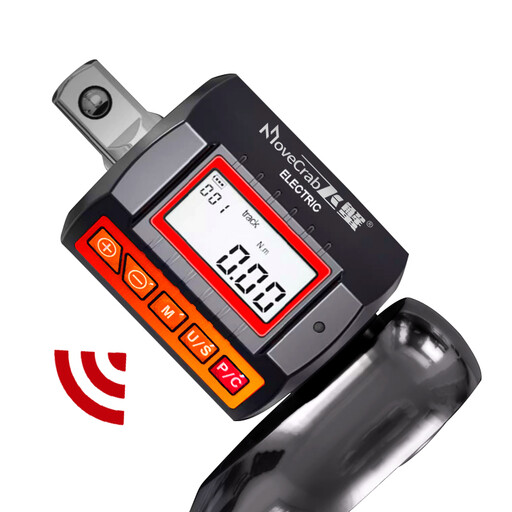
Why It Stands Out: This clever adapter transforms any 1/2-inch ratchet into an ultra-precise electronic torque wrench. Its very wide torque range (6 to 200 N.m) makes it incredibly versatile: it handles delicate tightening on a motorcycle just as well as changing wheels on a car.
Highlights:
Who It's For? For mechanics and DIYers who are already equipped with ratchets and are looking for digital precision without wanting to buy several complete wrenches.
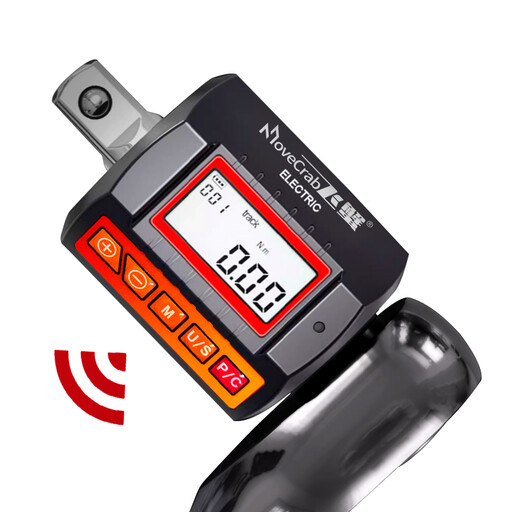
Why It Stands Out: This version specialises in a narrower torque range (4.05-135 N.m), making it ideal for high-precision jobs: engine components, competition bicycles, or delicate parts on a motorcycle.
Highlights:
Who It's For? For bicycle and motorcycle enthusiasts, or auto mechanics working on engine parts where torque values are low to moderate and every Newton-metre counts.
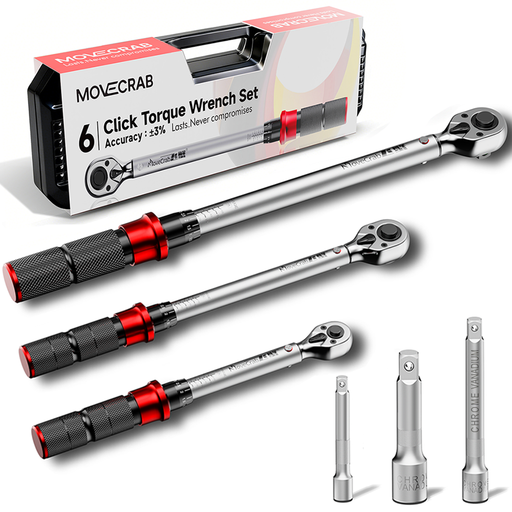
Why It Stands Out: This torque wrench kit is the all-in-one, reliable solution built to last. It covers almost all auto and motorcycle mechanic needs with its three mechanical wrenches, each perfectly calibrated for its torque range.
Highlights:
Who It's For? For professionals and discerning hobbyists who want to invest in a complete, reliable, and durable set, ready to tackle any situation from the smallest to the largest tightening job.
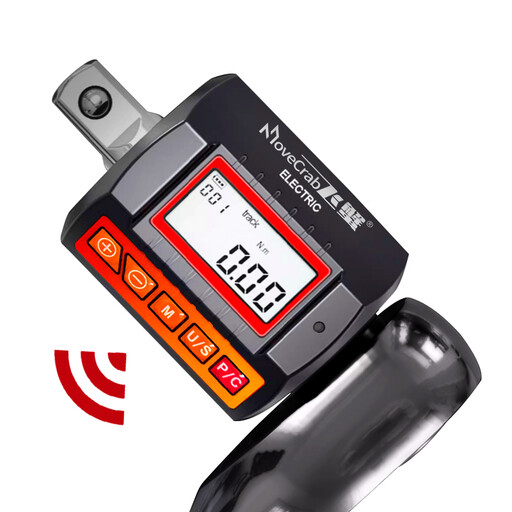
Why It Stands Out: Designed for heavy-duty jobs, this adapter pushes the limit up to 340 N.m. It's the tool of choice for heavy goods vehicle mechanics, agricultural equipment, or industrial maintenance, where tightening torques far exceed those of a standard car.
Highlights:
Who It's For? For heavy-duty mechanics, industrial maintenance technicians, and farmers looking for a precision tightening tool for very high-torque applications.
If none of these products check all your boxes, or if you simply want to explore other avenues, feel free to browse our complete category of Essential DIY Tools. A wide selection of tools for all your projects awaits you there.
The mechanical wrench emits a clearly audible "click" when the target torque is reached. It is the quintessential simple and robust model. The electronic wrench uses a digital screen and alerts (sound and light) to offer greater precision and advanced features, such as saving measurements.
The tightening torque is always specified by the vehicle or equipment manufacturer. It is imperative to consult the workshop manual or technical service manual for your vehicle. Never try to guess a torque value; it's the surest way to make a costly mistake.
Yes, it is essential to guarantee its long-term accuracy. For daily professional use, an annual recalibration is recommended. For occasional use, a check every 2-3 years or after being dropped is a wise precaution. Most importantly, always remember to set a mechanical wrench back to its minimum value after each use to avoid fatiguing the internal spring.