If space is tight or you prefer loading laundry from the top, start by looking at top-loading models. If you have room to access the front and want a wider choice of capacities, consider front-loading machines. Whichever type you choose, match the capacity to your usual loads, then compare spin performance, noise, water and energy use, and the durability rating for the exact model.
Who is this choice for?
Homes with limited space
If space is limited or you prefer to load laundry while standing, check the machine’s dimensions and the room needed to open it before choosing a capacity. Que Choisir and Darty identify the available space and access to the drum as key factors when choosing between a top-loader and a front-loader.
Homes with varied laundry loads
If you alternate between small washes, everyday laundry and bulky items, start with the loads you actually wash. ADEME and Que Choisir recommend matching capacity to how you use the machine, rather than choosing based only on the number of people in your household.
Homes where noise and running costs matter
If your machine runs near a living area or drying time matters, compare the noise level and spin efficiency of the specific model, along with the water and energy figures on its label. Que Choisir’s test results can also help, provided they relate to the same model.
What should you check?
Top-loading washing machine
Worth considering: if you have limited width or find top-loading more convenient for everyday use.
Bear in mind: you’ll need enough room to open the lid fully, and capacities are generally more limited than for front-loaders, according to Que Choisir.
Front-loading washing machine
Worth considering: if you can access the front of the machine and want to choose from more capacities or use the top surface.
Bear in mind: you’ll need to leave enough room in front for the door and check the installation depth of your chosen model.
| Criteria | What to check | Who is it for? |
|---|
| Size and access |
Measure the space available, including the clearance needed to open the door or lid and access the connections. |
If space is tight or I want to load laundry while standing, I need to be able to use the machine once it’s installed; around 27 % of consumers would prioritise size and access. |
| Capacity and programmes |
Compare the loads you wash regularly, in kg of dry laundry, with the capacity of the programme you use; the maximum stated capacity doesn’t apply to every fabric. |
When laundry piles up, I want to wash my usual loads without running extra cycles unnecessarily; capacity is the main priority for around 33 % of consumers. |
| Spin performance and noise |
Check the spin efficiency class, as well as the noise level and class; look for a test of the specific model if these factors are important to you. |
If laundry needs to dry quickly or the machine runs near a living area, spin performance and noise affect my choice; around 20 % of consumers would put them first. |
| Water, energy and durability |
Check the kWh per 100 cycles and litres per cycle on the label, then look up the durability rating for the model in question. |
To compare everyday running costs and documented durability, I need information specific to the model I’m buying; this would be the priority for around 20 % of consumers. |
Mistakes to avoid
-
Choosing capacity based only on the number of people
Two households of the same size may wash different amounts of laundry and different types of fabric. ADEME says that a capacity of 7 kg is usually enough, but the maximum load varies between programmes.
Think about the loads you wash most often and check the manual for the limits of the programmes you plan to use.
-
Judging spin performance by rpm alone
The spin efficiency class and noise level provide useful extra information. Bosch, for example, states that the maximum speed of its WGE03207FR may be reduced if the load is unbalanced; this behaviour shouldn’t be assumed for all models.
Compare the spin and noise information on the label, then look for an independent test of the exact model, if one is available.
-
Using the rating for a similar model
In France, the durability rating is assigned to individual models of the washing machines it covers. According to the Ministry for the Ecological Transition and Légifrance, the rating has applied to this category since 8 April 2025. A score for a different model therefore won’t tell you how durable the one you’re buying is.
Check the rating and its breakdown for the full model identifier you’re considering.
-
Assuming the style of machine guarantees washing results
Que Choisir tests washing, rinsing, spinning, noise and ease of use separately. Whether a machine is top-loading or front-loading doesn’t, by itself, tell you how it will perform in these areas.
Once you’ve found a format that suits your home, compare models against the criteria that matter for your laundry.
Brands to know when comparing styles
Whirlpool
Whirlpool France’s catalogue includes both top-loading and front-loading washing machines, making it easy to compare both styles from the same brand.
- The top-loading models in the catalogue reviewed have capacities ranging from 6 to 7 kg.
- Check the specifications for each model: features listed for one style or model don’t necessarily apply across the whole range.
Electrolux
Some French Electrolux front-loader product pages provide specifications and documents for the specific model.
- The Electrolux France page for the EW2F6812AW includes details such as its capacity and energy and water use.
- These figures apply to the EW2F6812AW, not to the other Electrolux front-loaders shown below.
Bosch
Bosch Home Appliances France publishes dimensions, capacity and spin performance data for some of its front-loaders.
- The WGE03207FR product page lists an 8 kg capacity, 1 200 rpm and dimensions of 848 × 598 × 588 mm.
- Bosch says its maximum speed may be reduced if the load is unbalanced; the specifications and conditions stated for this model don’t prove the durability of all its components.
Washing machines available on Joybuy
These top-loading and front-loading models let you compare the loading style and stated capacity with the laundry you wash regularly. Before you choose, also check the installation dimensions, label information and durability rating for the exact model.
 Image unavailable
Haier T Series 7 THASN276TM6-S, 7 kg top-loader
Worth a look if you prefer to load from the top and 7 kg suits your usual loads. The model name lists a maximum spin speed of 1 200 rpm; make sure you have enough room to open the lid.
View on Joybuy
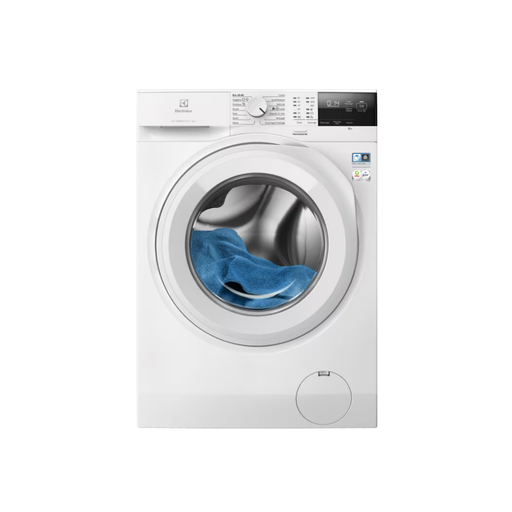 Image unavailable
Electrolux EW6FI4805AW, 8 kg front-loader
Consider this model if you have access to the front and an 8 kg capacity suits your loads. It’s listed with a steam function, SensiCare and a maximum spin speed of 1 400 rpm; check the clearance needed in front of the door.
View on Joybuy
 Image unavailable
Hisense WF5I8043BWF, 8 kg front-loader
An option to compare for regular loads suited to an 8 kg capacity, provided you have access to the front. The model name lists a maximum spin speed of 1 400 rpm; check the full dimensions before installation.
View on Joybuy
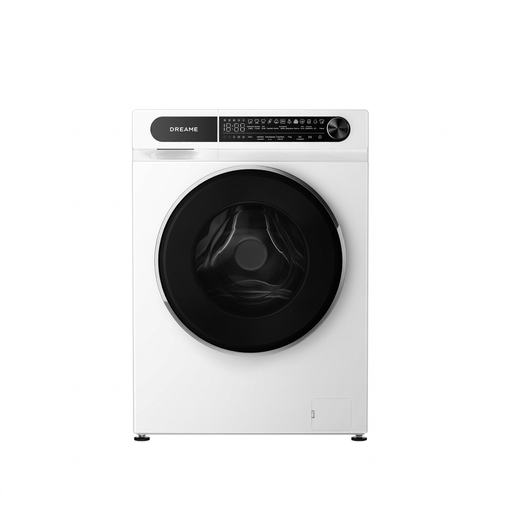 Image unavailable
Dreame DRWASHS8KG Washing Machine S, 8 kg front-loader
Worth a look if you’re after a front-loader with a stated capacity of 8 kg. To see if it suits your laundry, check the load limits for the programmes you use, the space needed to open the door and the spin efficiency class for this model.
View on Joybuy
 Image unavailable
Candy TCA464TM4-S ProWash 500, 6 kg top-loader
Worth comparing if top-loading is your priority and your usual loads fit within the stated 6 kg capacity. The model name lists 17 programmes and a maximum spin speed of 1 400 rpm; check the load limits for each programme and the noise level on the label.
View on Joybuy
Frequently asked questions
How do you check a washing machine’s durability rating?
Look for the rating and its breakdown for the full model reference on the retailer’s or manufacturer’s product page. In France, the rating has applied to washing machines since 8 April 2025, according to the Ministry for the Ecological Transition and Légifrance. ADEME says the calculation details can also be viewed on data.gouv.fr. Don’t use the rating for a different capacity or a similar model.
What should you compare on the energy label?
For machines suited to your laundry loads, check the energy class, kWh per 100 cycles, litres per reference cycle, spin efficiency class and noise information. ADEME notes that the QR code on the label links to the model’s product information in EPREL.
Should you choose a large drum if laundry tends to pile up?
Not necessarily: choose a capacity that suits the loads you wash most often. ADEME says that 7 kg is enough most of the time, while Que Choisir points out that choosing the wrong capacity can increase running costs. Also check the maximum loads for the programmes you usually use.
What matters when choosing between a top-loader and a front-loader?
First check the space available, the clearance needed and which loading style suits you. A top-loader is loaded from above; a front-loader needs access from the front and, depending on the installation, its top may be usable. To compare washing, rinsing or noise, look at the specific models: Que Choisir has found differences between models that can’t be predicted from the style alone.


