
Livraison le jour même ou le lendemain

Qualité garantie

Débloquez vos offres de bienvenue: Livraison GRATUITE | Jusqu'à -80 % | 30 jours d'essai gratuits à JoyPlus
Téléchargez l'application
A brief twinge when you sip a hot coffee, bite into ice cream or eat something acidic can make daily brushing uncomfortable. Yet not all products marketed as sensitivity toothpaste address the same need. Some focus on fluoride, others on protecting sensitive areas, gentle whitening or gum care.
Before you buy a toothpaste for sensitive teeth, it’s worth avoiding three common pitfalls.
For everyday adult use, fluoride toothpaste remains an important ally in preventing cavities. Its concentration should be listed on the packaging, usually in parts per million, or ppm. In the selection featured here, several products contain between 1,100 and 1,450 ppm of fluoride.
Avoid combining multiple sources of fluoride without following your dentist’s advice. Toothpaste should not be swallowed. For children, pay close attention to age and the amount used.
Formulas can rely on different active ingredients, such as stannous fluoride, strontium chloride or certain mineral compounds. However, their mere presence doesn’t predict your personal experience.
Also check the instructions for use. Some products recommend brushing twice a day, while others suggest applying the paste directly to the sensitive area before brushing. Lasting relief for sensitive teeth also depends on regular, gentle brushing with a soft-bristled toothbrush.
A whitening toothpaste for sensitive teeth can work well if you want to reduce surface discolouration. However, a formula that is too abrasive or brushing too hard can make discomfort worse. For gums that bleed easily, a product like parodontax toothpaste focuses more on plaque removal and a fresh feeling.
Finally, compare the total volume rather than just the number of boxes. A pack of 4 tubes of 75ml gives you 300ml, compared with 150ml for a pack of 2 tubes. This makes it easier to compare the price per litre or per 100ml.
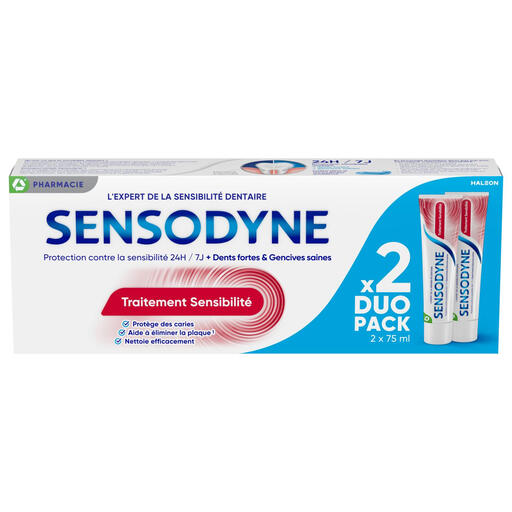
Why this choice suits this profile: With two tubes, this pack lets you start a care routine without building up a large stock. The formula contains strontium chloride hexahydrate and is designed for daily use twice a day.
This smaller pack reduces the risk of buying a large multi-pack before you’ve checked whether you tolerate the formula and like the taste.
Two 75ml tubes and an active ingredient clearly stated on the product page.
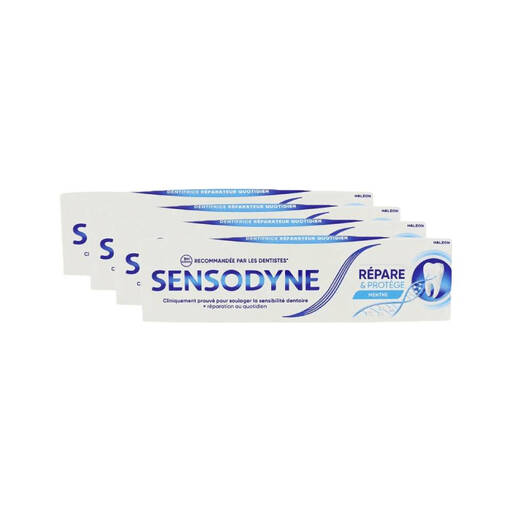
Why this choice suits this profile: With four tubes, this pack is ideal for those who want to follow a regular routine with a formula focused on repair and protection, plus a fresh minty flavour.
The product page details the NovaMin technology and recommends continuous use, rather than relying on a simple protection claim.
A 300ml pack, a formula described as protective, and a Cool Mint flavour.
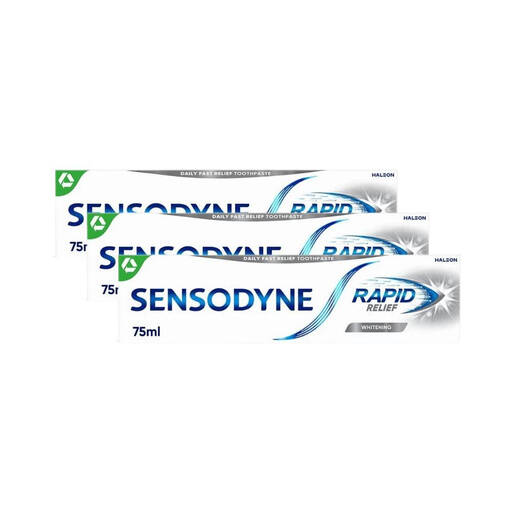
Why this choice suits this profile: This product combines a formula for sensitive teeth, action on surface stains and a fluoride content of 1,450 ppm. It’s ideal for people who want several functions in one toothpaste.
The product page distinguishes between removing surface stains and full whitening, and details the product’s composition.
A pack of 3 tubes, whitening action on surface stains, plus sodium fluoride and stannous fluoride.
We’ve put together a comprehensive, real-time selection of products that meet these strict criteria and comply with European safety regulations.
If sensitivity persists or gets worse, especially if it’s accompanied by bleeding gums, you should see a dentist. Toothpaste cannot replace a diagnosis of the underlying cause, such as a cavity, a crack or gum recession.
Choose a formula that is explicitly designed for sensitive teeth, with a clearly stated active ingredient and a fluoride content suitable for adult use. Results depend on brushing regularly and may vary depending on the cause of the sensitivity.
Yes, some products combine sensitivity care with the removal of surface stains. However, check the usage instructions and brush gently. If discomfort increases, stop using the product and ask a dental professional for advice.
Not necessarily. Compare the price per tube or per 100ml, the ingredients, the best-before date and your actual needs. A pack of 2 to 4 tubes is often enough for regular use, while a pack of 12 tubes only makes sense for households that will actually use that amount.