
Livraison le jour même ou le lendemain

Qualité garantie

Débloquez vos offres de bienvenue: Livraison GRATUITE | Jusqu'à -80 % | 30 jours d'essai gratuits à JoyPlus
Téléchargez l'application
DIY, outdoor maintenance, pet care or car upkeep: tools and equipment for the home and garden cover a wide range of needs. Yet when it comes to buying, the same mistakes keep cropping up. A device marketed as multi-purpose may lack power, a pair of pliers might not suit the cable diameter, and a robot mower could require a setup that’s incompatible with your garden.
The best approach is to start with how you’ll actually use the tool, then check a few technical specifications before comparing prices.
A tool that can cut several materials isn’t necessarily built for heavy-duty use. Cordless electric scissors designed for cardboard, fabric or leather shouldn’t be used on metal or any material thicker than the blade can handle. The same logic applies to a compact cable cutter: its maximum cutting diameter must be respected.
Always check the product page for compatible materials, the maximum diameter accepted and any accessories included.
The stated battery life varies depending on the load, the material being worked on, the temperature and the battery’s condition. On a pet clipper, thick fur will put more strain on the motor than a short coat. For cordless power tools, also check the charging time, battery type and whether a spare cable or battery is available.
A robot mower without a boundary wire can simplify installation, but it still needs to be suited to your lawn area, slopes, obstacles and network coverage — or the mapping method it uses. A car battery charger must also be compatible with your battery’s voltage and technology.
Cutter blades, pliers and cutting tools should always be stored safely, cleaned regularly and inspected before each use.
For electrical or network installation, a wire stripper needs markings that match the wire gauges you’re using. According to its product page, the WORKPRO pliers accept gauges 10, 12, 14 and 16 AWG, with a stated cutting capacity of up to 2 mm for solid wires.
A kit that combines crimping pliers, a cable cutter, a wire stripper and a tester saves you from constantly switching tools during a network installation. For cables, also go for an adjustable blade if the insulation thickness varies. The Zenitech 165 mm knife has a screw that lets you adjust the cutting depth.
To work safely, switch off the power, check there’s no voltage with a suitable device and use equipment that’s compliant with its intended use. A CE mark or clear instructions don’t replace good electrical practice or the skills needed to carry out the work.
For everyday tasks, check three things:
A polystyrene cutter, on the other hand, should be chosen based on the length of the hot wire, the heating time and the stability of the base. For cardboard, thin plastic, felt or leather, the GARTOL rotary scissors claim a 4 V rechargeable power supply, USB-C charging and up to two hours of battery life under the conditions specified by the manufacturer.
For a robot mower, the stated lawn area is just a starting point. Check the maximum slope it can handle, the width of pathways, the presence of trees or flower beds, and the boundary method. The LawnMaster VBRM16-03 is rated for lawns up to 150 m² and works without a boundary wire, according to its product page. It’s still essential to follow the usage instructions, especially regarding rain, cleaning and storage.
A car battery charger must be compatible with your battery’s voltage, capacity and technology. The EAFC model on offer has modes for 12 V and 24 V batteries, plus dedicated settings for lead-acid, AGM, GEL and LiFePO4 batteries. Check the technology marked on your battery before selecting the charging mode.

Why this choice suits this profile: These pliers combine stripping and cutting for small household repairs, electronics and occasional DIY jobs.
The compatible wire gauges and maximum capacity are clearly stated, which helps prevent use outside the specifications.
Chrome-vanadium steel, non-slip TPR handles and a design that combines two functions in one.
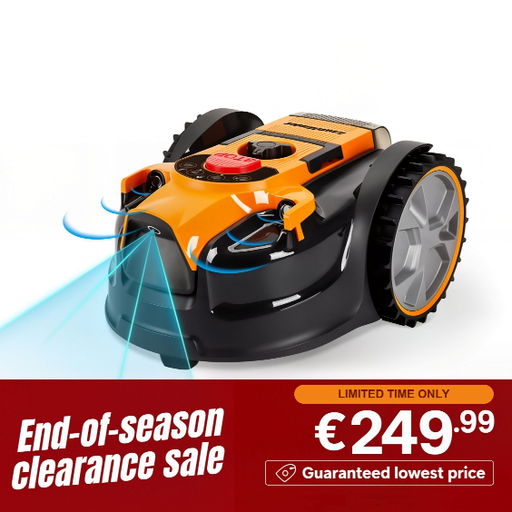
Why this choice suits this profile: Its boundary-wire-free design is ideal for homeowners with a small lawn who want to automate its maintenance.
The stated 150 m² coverage and the lack of a boundary wire are clearly specified, making it easy to compare with your garden.
Automatic operation, claimed obstacle detection and rechargeable power supply.

Why this choice suits this profile: Owners of dogs or cats with thick coats get multiple cutting heights and a cordless device.
The stated charging time, battery life and blade settings are all listed separately.
Ceramic blade, five settings from 0.5 to 3.5 mm, ten comb guides and a display showing the battery level.
We’ve put together a comprehensive, real-time updated list of products that meet these strict selection criteria and European safety regulations.
It all depends on how often you’ll use them and how specialised they need to be. A manual pair of pliers or cutter blades remain affordable, whereas a robot mower, a smart charger or cordless power tools require a bigger budget. To compare effectively, focus on the accessories included, the battery, the warranty and the availability of spare parts.
Clean the blades after each use, dry any metal parts and lubricate the joints when the instructions recommend it. Recharge the batteries using the cable or charger provided. Store cutting tools locked, in a dry place and out of reach of children. For a robot mower, also remember to clean the sensors and follow the storage conditions specified by the manufacturer.
A wire stripper suited to the wire gauge, a suitable cable cutter, an insulated screwdriver and a device for checking that there’s no voltage are a good starting point. Your choice should take into account the type of cable and the safety rules that apply in the UK. If the work involves the mains electricity supply or is beyond your skill level, call in a qualified professional.