
当日/次日达

品质保障

开启新人专享福利: 全场免邮 | 低至 2 折 | 免费试用 30 天 JoyPlus 会员
下载 Joybuy
Whether you're a weekend DIYer or an avid mechanic, buying a toolbox can quickly become a headache. Between the promises of ultra-comprehensive kits and eye-catching designs, it's easy to end up with equipment that doesn't hold up. Tools that rust after just a few uses, flimsy plastic cases with failing latches, and sets packed with useless gadgets at the expense of core components: the pitfalls are numerous and often lead to buyer's remorse.
The goal isn't to collect tools, but to invest in reliable equipment that's truly suited to your needs. This guide is here to help you decode the labels, identify the true markers of quality, and choose a tool storage solution that will serve you for years to come in all your tooling and DIY projects.
Before you pull out your credit card, it's crucial to look past the marketing and focus on the technical details that truly make a difference in performance and longevity.
The durability of a hand tool depends almost entirely on the quality of its steel. Many entry-level sets use simple carbon steel, which is prone to rust and deforming under stress. For a long-term investment, opt for tools made from Chrome Vanadium (Cr-V) Steel. This alloy offers far superior resistance to corrosion and wear, an essential feature for parts subjected to high torque, like the components of a socket set or a ratchet wrench.
The "box" is just as important as the tools it holds. Your choice should match your workspace and how you work.
In a socket set, the ratchet wrench is the star player. An often-overlooked technical detail is its tooth count. A standard ratchet has 48 teeth, whereas a higher-quality model will have 72 teeth. This difference is crucial: a 72-tooth mechanism needs only a 5-degree swing arc to "click", compared to 7.5 degrees for a 48-tooth one. The result: tightening and loosening fasteners becomes a breeze, even in the tightest spaces like an engine bay.
To help you see more clearly, here are a few models that perfectly illustrate these criteria, each tailored to a specific user profile.
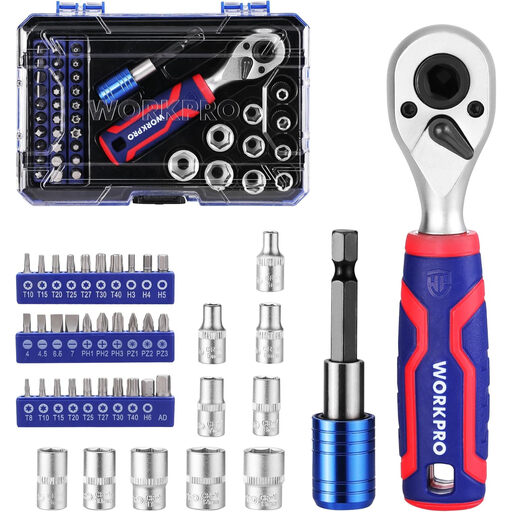
Who is it for? For those looking for a compact, versatile kit for everyday small repairs, furniture assembly, or basic car maintenance. It stores anywhere without taking up much space.
This set gets straight to the point with quality components. Chrome Vanadium steel sockets and bits, a high-performance 72-tooth ratchet... It avoids the classic trap of cases filled with useless, low-quality accessories.
2-in-1 ratchet (socket and bit driver), 72-tooth precision mechanism ideal for hard-to-reach corners, compact and well-designed carrying case.
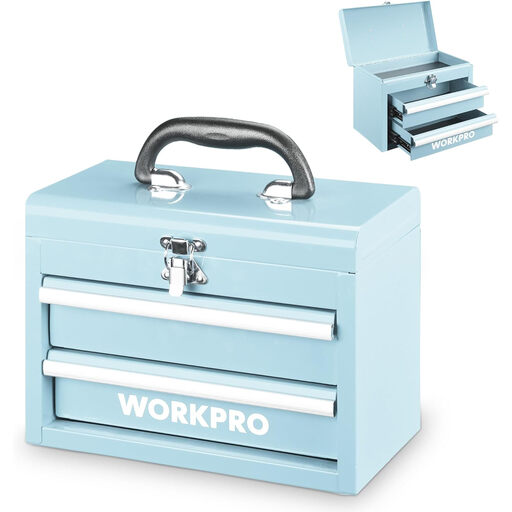
Who is it for? For anyone who wants a storage solution that is as stylish as it is functional, whether for small tools, office supplies, or crafting materials. Its sleek design fits in anywhere, from the workbench to the desktop.
This model doesn't pretend to be a heavy-duty site box. It excels in its role as a portable organizer by focusing on build quality: ultra-smooth ball-bearing slides, protective liners... This helps avoid the trap of low-end plastic organizers that are impractical and not built to last.
Drawers on ball-bearing slides, carrying handle with security latch, removable protective liners in each compartment.
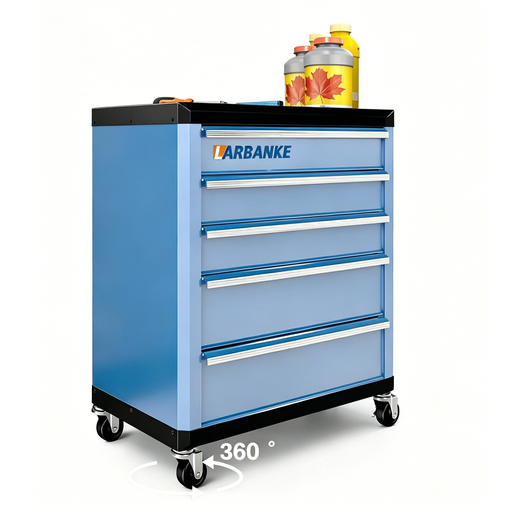
Who is it for? Designed for those with a workshop or garage whose tool collection is constantly growing. This mobile cabinet is the ultimate serious, organized, and scalable storage solution for maintaining a clean and functional workspace.
This cabinet meets a clear need: robust, high-capacity storage. Its modular (stackable) design and full-extension drawers optimize space and security, a far cry from storage solutions that are quickly outgrown or poorly designed.
Large storage capacity (5 drawers), modular and stackable design to grow with your needs, perfect mobility thanks to 4 swivel casters (2 with brakes).
Discover our full selection of products that check all the boxes from our guide: quality, durability, and safety.
Chrome vanadium (Cr-V) steel is an alloy that incorporates these two metals to increase its strength and corrosion resistance. Carbon steel, while strong, is more brittle and much more susceptible to rust. For tools like wrenches, sockets, or driver bits, Cr-V is a true guarantee of durability and safety.
Not necessarily. For occasional repairs, a complete and portable tool case is often more than enough. A rolling tool cabinet really comes into its own if you're a serious mechanic, a woodworking enthusiast, or if you have a dedicated space (garage, workshop) and your tool collection is starting to get large. It allows you to centralize everything and keep your workbench clear.
Even the best Cr-V steel tools aren't completely immune to corrosion in a humid environment.