
Livraison le jour même ou le lendemain

Qualité garantie

Débloquez vos offres de bienvenue: Livraison GRATUITE | Jusqu'à -80 % | 30 jours d'essai gratuits à JoyPlus
Téléchargez l'application
Whether you're a weekend DIYer or a passionate mechanic, choosing a tool kit can quickly become a headache. Faced with an overwhelming selection, it's easy to fall into the classic traps and regret your purchase. My role, as a product expert at Joybuy, is to help you see things more clearly. Let's review the mistakes to avoid and the criteria that truly matter to make the right choice.
Marketing is incredibly effective at highlighting features that mask a product's true quality. Here are three classic traps you shouldn't fall into.
car tool kit into a jumbled mess of loose tools.To make the right choice, forget the marketing hype and focus on objective technical criteria. Here are the three essential checkpoints before you head to the checkout.
This is THE number-one criterion. Two alloys stand out as a guarantee of longevity and performance:
socket set made of Cr-V will handle high torque without flinching, a prerequisite for any good mechanic's tool set.precision screwdriver kit.A good complete tool kit is not defined by the number of pieces, but by their relevance. The essential thing is that the kit is suited to YOUR needs:
electric screwdriver or a manual precision model is a must, accompanied by a wide range of micro-bits (Pentalobe, Tri-wing, etc.).Don't underestimate the case! It's a tool in its own right. Opt for metal latches or, failing that, very thick plastic ones. Inside, each tool should have its own moulded, snug-fitting slot to prevent it from rattling around during transport. A sturdy case is the guarantee of an investment that stays organised and protected for the long term.
To help you put this advice into practice, here is our selection for three distinct user profiles.
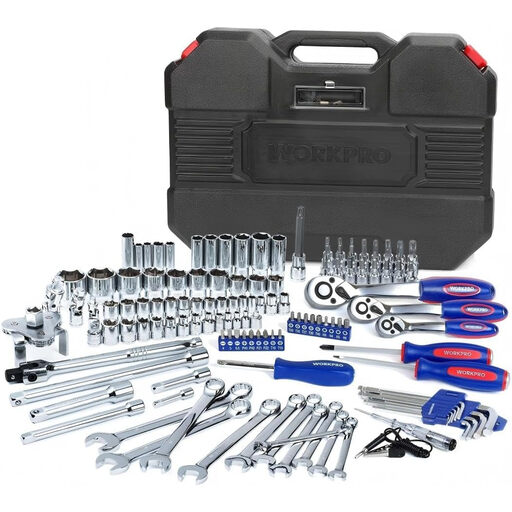
Who is it for? Ideal for anyone looking for a reliable starter kit that can handle common household repairs and basic car maintenance, without investing in professional-grade garage equipment.
This kit gets straight to the point: tools made of heat-treated and chrome-plated Cr-V steel for excellent corrosion protection. The sturdy case holds each piece firmly in place.
The perfect balance of versatility (home, auto), quality materials, and a compact footprint. Easy to store, always ready to use.
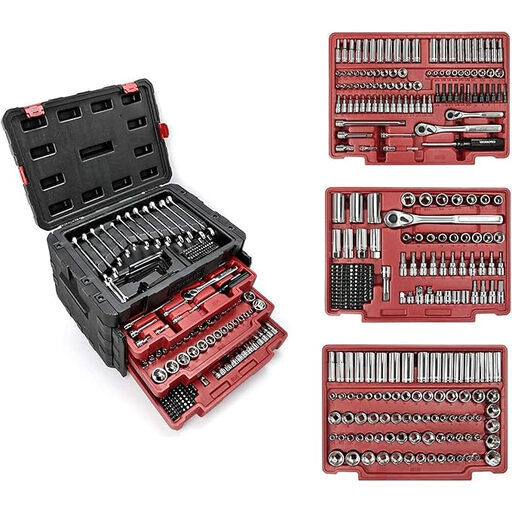
Who is it for? For the advanced amateur or semi-pro mechanic who tackles complex repairs and needs a nearly complete arsenal of sockets, wrenches, and bits.
Here, quantity doesn't sacrifice quality. No useless fillers: every tool is forged from corrosion-resistant chrome-plated steel. The four-tray case is built for heavy-duty use in a workshop.
A `complete tool kit` that covers nearly all mechanical needs thanks to its three ratchet sizes (1/4", 3/8", and 1/2"). The guarantee of always having the right tool on hand.
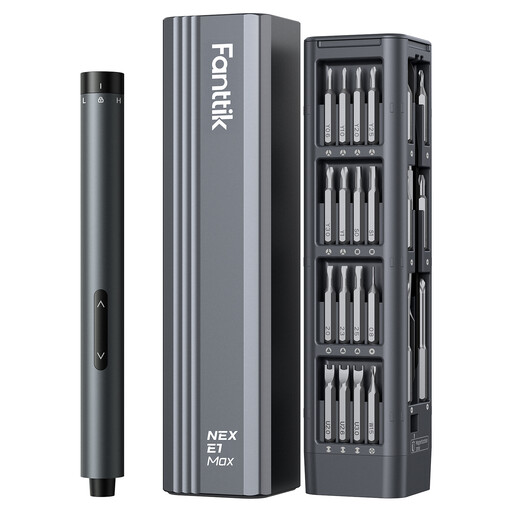
Who is it for? For anyone who disassembles smartphones, laptops, drones, or watches. Here, the absolute priority is precision, torque control, and protecting the most fragile components.
Far from a general-purpose kit, this one is entirely dedicated to precision with its 50 S2 steel bits. Its electric motor with adjustable torque (0.05 N.m / 0.2 N.m) is key to tightening screws without ever risking damage to a circuit board.
The combination of a precise motor, good battery life, and a magnetic storage case makes it the go-to tool for all high-precision operations.
Explore our full selection of products, all rigorously chosen for their quality and compliance with safety standards.
It all depends on the tool! Cr-V (Chrome-Vanadium) steel, which is more flexible, is perfect for tools subjected to high torsion, like wrenches and sockets. S2 steel, which is harder, excels for screwdriver bits that need to resist wear and friction. Ideally, a good tool set combines both.
Absolutely not. For common tasks (assembling furniture, hanging a shelf, tightening a doorknob), a well-thought-out kit of 100 to 150 pieces is more than enough. The very large sets are primarily intended for auto mechanics or professional use, which require a wide variety of highly specific sockets and wrenches.
A precision electric screwdriver becomes a valuable ally if you regularly disassemble electronic devices. The time savings are real, wrist fatigue is reduced, and most importantly, it ensures a low and consistent torque, which is essential for not damaging micro-screws and printed circuit boards. For an occasional repair, a good manual precision kit will do the job.